

REVIEW · HONOLULU HISTORY, PALACE & GHOST TOURS
Downtown Honolulu Self Guided Walking Audio Tour
A 90-minute walk that tells real stories. This self-guided Downtown Honolulu tour strings together the people, politics, and pivotal moments that shaped Hawaii, with hands-free GPS audio that plays as you move. I like that it is offline-ready, so you are not stuck hunting for signal downtown, and you can start when you want.
The big win here is value: it is $9.99 per person for a route of about 1.6 miles, with more than 23 audio stories, and the listed stops are free to enter or view. The main drawback to consider is tech comfort, because several unhappy moments can come down to downloading the app, entering the password, and getting the audio to start on the first landmark.
Key highlights I’d bank on

- Offline maps and GPS-based audio keep the walk going even with weak or no cell service.
- More than 23 location-triggered stories means you get context without reading walls of text.
- A tight loop of major landmarks packs monarchs, government buildings, and memorials into about 1 to 2 hours.
- Free access at each listed stop helps you keep the day budget-friendly.
- Lifetime access, no expiry lets you reuse the tour on future trips.
- Clear walking guidance helps you stay on the route instead of wandering around downtown.
How this self-guided Honolulu audio walk actually works
This is not a guided group with a person leading the way. Instead, you use the Action’s Tour Guide app on your phone, and the audio runs automatically based on your location.
You start at Aloha Tower Marketplace (1 Aloha Tower Dr) and finish at the Queen Lili‘uokalani Statue (21024001 Honolulu, HI 96813). The whole walk is about 1.6 miles long, and the tour usually takes 1 to 2 hours, which is a good fit if you want a culture hit without committing to a half-day bus tour.
One practical point: the audio needs GPS, so you should plan to keep your phone handy and powered. Bring headphones or earbuds so you can clearly hear the narrator while you walk.
You can also read our reviews of more walking tours in Oahu



Price and what you really get for $9.99
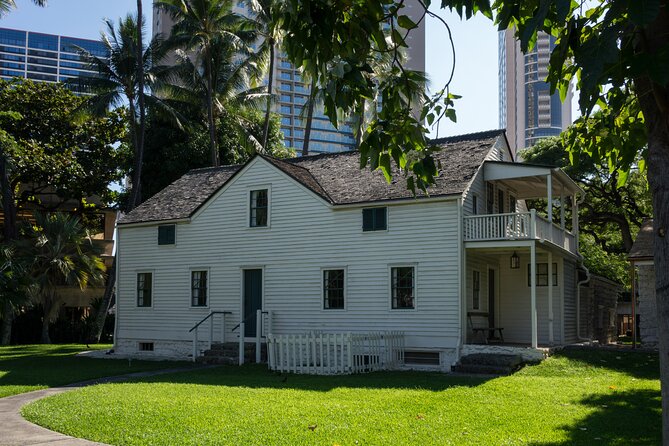
At $9.99 per person, this falls into the “cheap enough to try” category, especially because the route covers major downtown sites and multiple themes.
Here is why the math tends to work for most people:
- You get more than 23 audio stories for one price.
- You get offline maps and the ability to use the app even when signal drops.
- Every listed stop is marked as admission ticket free, so you are not paying extra to see the points of interest along the way.
The main “watch out” is not the price. It is your willingness to manage your own app setup. If you are not a phone-planning person, do yourself a favor and do the download and password step before you are on the street.
Your best way to time this walk in Honolulu
Downtown Honolulu can get hot, and you are walking between landmark clusters that do not always have shade. If you can, aim for the morning for a more comfortable pace.
The tour is also designed for flexibility. You can start and pause whenever you like, take breaks for photos and snacks, and skip anything you do not care about. That matters because some stops involve sitting areas, and some are mostly for looking and listening from outside.
Also, keep in mind the tour ends at the Queen Lili‘uokalani Statue. That is great if you want to continue exploring nearby, but you should plan how you will get back to where you are staying.
The full walking route, stop by stop
You will follow audio cues from one landmark to the next. The stop timing is listed at about 10 minutes per stop, but treat that as a guide, not a strict rule, since you will naturally pause for photos or to read small details around each site.
1) King Kamehameha Statue, start with power and conflict
The tour opens at the King Kamehameha Statue, and it sets the tone quickly. The stories frame Kamehameha as a warrior-figure at a time when multiple chiefs fought for control across the islands.
Why this is a smart start: it gives you a lens for everything else you will see later, especially when you get to government buildings and the story of political change. If you want a quick grounding before you hit the royal sites, this is it.
You can also read our reviews of more guided tours in Oahu






2) Kawaiahaʻo Church, where faith and history meet
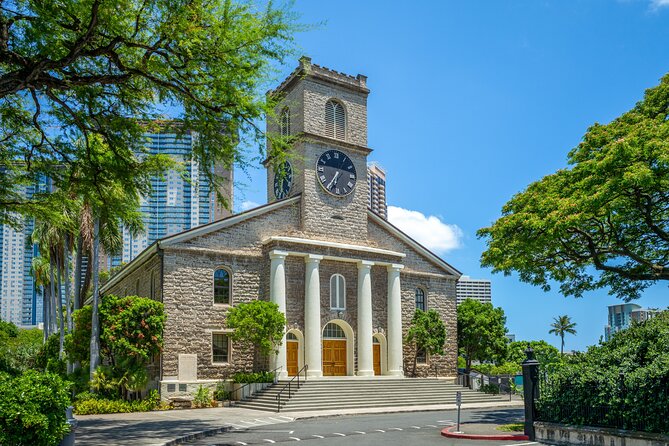
Next is Kawaiahaʻo Church, described here as the former national church of the Hawaiian Kingdom. Even if you are not deep into architecture or religious history, the audio helps you understand why the location matters.
Possible drawback: churches are living places. You may want to keep your voice down, dress respectfully, and be mindful of any services or on-site staff.
3) The missionary-period museum stop
After that, you reach a museum focused on Hawaii’s missionary period. This is a useful mid-route shift, because it moves you from royal power and kingdom-era changes into the cultural and religious influences that arrived in later years.
What to expect: since the specific museum details are not spelled out in the tour info you provided, you should come ready for a stop where the audio gives context for the objects you are seeing.
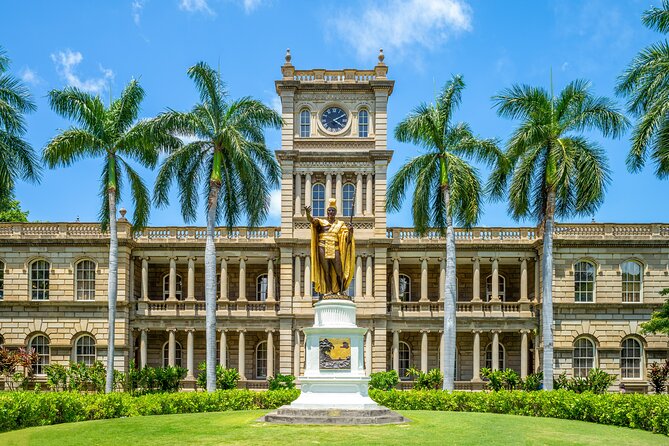
4) Ali‘iolani Hale, from palace origins to government offices
Then you get Ali‘iolani Hale. The tour explains it began as a palace built by Kamehameha V, and later King Kalakaua converted it to government offices.
This is one of those stops where the exterior makes more sense after the audio. It is not just a historic building, it is a symbol of how spaces shifted with power and administration.
5) Honolulu Hale (City Hall), a welcome home with political danger
At Honolulu Hale, you hear about King Kalakaua returning from his world tour at the end of 1881. The audio adds that Hawaiians decorated the city and strung a grand welcome banner across Honolulu Harbor, then it pivots to the darker part: others plotted his downfall.
You also get a specific political thread about the Reform Party, described as mostly American and slowly taking control after the 1875 Reciprocity Treaty. That detail helps you connect downtown politics to what comes later in the story of overthrow and annexation.
6) Patsy Takemoto Mink Statue and Memorial, modern history with roots in Hawaii
The tour moves to the Patsy Takemoto Mink Statue and Memorial. The audio frames Mink as a third-generation Japanese-American who grew up in Hawaii.
Why this stop works in the middle of a royal-and-government route: it pulls the timeline forward. You are reminded that Hawaiian history is not only about monarchs and treaties, it is also about representation and public service.
7) Sky Gate by Isamu Noguchi, public art with a point of view
Next is Sky Gate by Isamu Noguchi. The audio asks what you see in it, then points to Noguchi’s own description of the work as an evocation to the skies of Hawaii.
Practical tip: this is a great spot to slow down and look from different angles. The audio encourages you to interpret, not just admire.
8) Hawaii State Capitol, government today with older seats of power in the background
At the Hawaii State Capitol, you get a timeline reminder. Before the Capitol was built, Hawaiians used ‘Iolani Palace as their seat of government.
This stop helps you read the downtown skyline with better context. You can look around at modern governance while the audio connects it to where that authority used to sit.
9) Eternal Flame Memorial, Pearl Harbor in one quiet statement
The tour heads to the Eternal Flame Memorial, honoring men and women who died in the December 7, 1941 attack on Pearl Harbor. The audio references how that date is often remembered in American history.
This is a reflective pause. If you want a walk that includes loss and remembrance, not only royal drama, do not speed through this one.
10) Washington Place, the Queen’s home and constant visits
At Washington Place, you see the mansion set back from the road. The audio explains it as the former home of Queen Lili‘uokalani.
This stop adds a human scale. You hear that Lili‘uokalani lived there later in life, and Native Hawaiians visited her often, and that she continued seeing herself as their queen.
11) Iolani Barracks, Royal Guard before the coup
Next is the Iolani Barracks. The audio notes that before Dole and the Annexation Club completed their coup against Queen Lili‘uokalani, the barracks housed the Queen’s Royal Guard.
This is one of the moments where the story becomes very specific, and that specificity is what makes the audio useful. You leave this stop with a clearer picture of the power struggle behind the palace era.
12) Iolani Palace, the only royal palace in the United States
Finally, you reach ‘Iolani Palace, dating back to 1879, and the tour highlights that it is the only royal palace in the United States.
Even if you do not enter, the audio helps you understand what you are looking at. It also sets up the final thought with Lili‘uokalani.
13) Queen Lili‘uokalani Statue, closing with devotion
The tour ends at the Queen Liliuokalani Statue. The audio describes how she retreated from public life over time, lived at Washington Place, and maintained a deep bond with Native Hawaiians.
Why this ending works: the route closes where the story began, with the focus on people. It is a strong way to wrap up a walk through power, politics, and cultural change.
The two biggest practical pros, based on how people find it
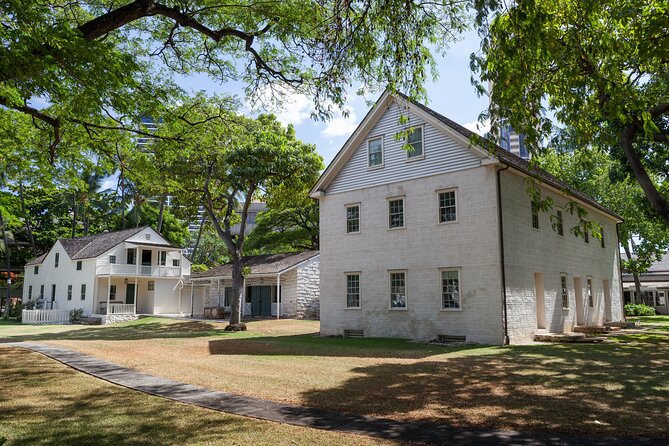
The best part of this kind of audio tour is that you can learn without getting stuck in a lecture or racing a group.
Here are the two things I would emphasize before you buy:
- The app is designed for hands-free playback that triggers by location, so you do not need to press play at every stop.
- The walking directions are meant to be explicit and precise, which matters on a downtown grid where it is easy to drift off route.
Common stumbling blocks, and how you dodge them

This tour is easy once it is set up, but it can be frustrating if setup goes sideways.
The biggest issues to plan around:
1) Downloading and password setup. You need to download the tour using strong Wi-Fi or cellular while you are still in a good signal zone. After that, it should work offline.
2) Starting at the correct first landmark. Since the audio begins based on your location, you want to line up at the start point so the first story plays correctly.
3) Tech comfort. If you are not confident with apps, give yourself extra time. Think of this as a 2-step experience: app setup, then the walk.
If audio ever acts strange, the tour notes that you should contact support, and it also says to follow the tour route and speed limit for the best experience.
What kind of traveler should book this?
You will probably enjoy this most if you:
- Want a self-guided afternoon or morning walk, not a scheduled group.
- Like your history in story form, with a narrator tying locations together.
- Appreciate offline maps for downtown days where cell service can be spotty.
You might rethink if you:
- Hate app setup and do not want to handle download steps or passwords.
- Need constant human help, since no one meets you at the start.
It is also friendly for pairs. The tour suggests couples can share one tour by splitting headphones.
Should you book this Downtown Honolulu audio walk?
Yes, if you want a low-cost way to connect a cluster of Honolulu landmarks with the stories behind them. At $9.99, the value is strongest when you use the offline features, enjoy audio narration, and let the route do the timeline work for you.
Book it if you plan to start in the morning or at least give yourself time for app setup. Skip it only if you know you will not manage downloading and launching the tour smoothly. If that is your situation, you may prefer a guided option where someone else handles the tech and you just show up.
FAQ
How long is the Downtown Honolulu self-guided walking audio tour?
The tour is listed as about 1 to 2 hours, and the route length is about 1.6 miles.
Where does the tour start and end?
It starts at Aloha Tower Marketplace, 1 Aloha Tower Dr, Honolulu, HI 96813 and ends at the Queen Lili‘uokalani Statue, 21024001, Honolulu, HI 96813.
Does it work without cell service?
Yes. You can download offline maps and the tour is described as working offline after you complete the download while you have strong Wi-Fi or cellular signal.
What do I need to use the tour on my phone?
After booking, you receive setup instructions and a password by email and text. You download the Action’s Tour Guide App, enter the password, and then open the tour in the app onsite so it can use location to trigger audio.
Are there entrance fees for the stops?
The tour info lists the featured landmarks as admission ticket free, and it says attraction passes, entry tickets, or reservations are not included.
Can I cancel and get a refund?
You can cancel for free up to 24 hours in advance for a full refund. Changes inside 24 hours of the start time are not refunded.
More Walking Tours in Oahu



More Tours in Oahu






More Tour Reviews in Oahu



Not for you? Here's more nearby things to do in Oahu we have reviewed












Honolulu History, Palace & Ghost Tours, compared.
 ★ 4.5Bishop Museum General Admission TicketFrom $38243 reviews
 ★ 4.5Honolulu Haunts and Hauntings Ghost TourFrom $32170 reviews
 ★ 5.0Historical Honolulu Bike TourFrom $14976 reviews
 ★ 5.0Waikiki Night Marchers Ghost TourFrom $3564 reviews
 ★ 5.0Downtown Honolulu Food Tour with 5 Local Favorites TastingsFrom $10754 reviews
 ★ 5.0Honolulu Night Marchers Ghost TourFrom $3526 reviews
 ★ 4.7Honolulu: Bishop Museum General Admission TicketFrom $3820 reviews
 ★ 4.0Waikiki Ghost Tour: Torches & TerrorsFrom $3216 reviews
Browse the lists this tour appears in