
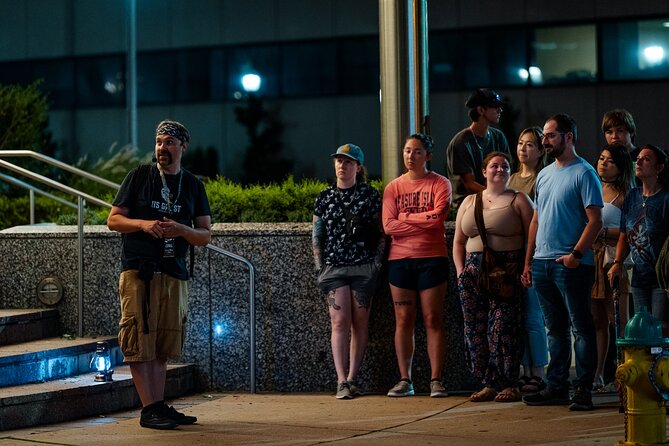
REVIEW · HONOLULU HISTORY, PALACE & GHOST TOURS
Honolulu Haunts and Hauntings Ghost Tour
Honolulu at night has a different pulse. This ghost-and-history walk takes you past landmark corners and cemetery grounds where legends linger, with guides weaving eerie claims alongside the real events that shaped the city. Expect spooky stories tied to specific sites, not vague foggy tales.
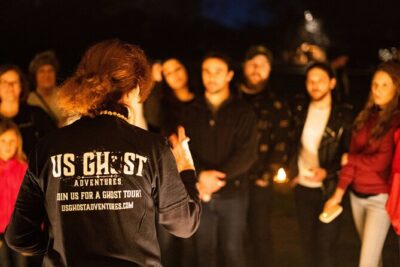
I like that it’s built for a small-group feel, and that shows up in how guides pace the walk. Names that pop up in recent visits include Jade, Lon, Hope, and Terry, and people praise guides for taking time to answer questions and keep the evening moving at a natural speed.
One possible drawback: the spooky portion can feel more like “whispery lore” than full-on movie-style scares, and a couple of experiences mention issues like softness of voice over street noise or uneven fact-checking in the storytelling.
Key things to know before you go
- Iolani Palace grounds get center stage, including the story of a coup and a queen whose spirit is said to linger
- Flat, easy walking fits an easy night stroll, and the tour is described as low-stress for kids
- Cemetery and courthouse stops bring the most ghostly atmosphere, with legends tied to banyan trees, whispers, and smells
- Old building white-kimono rumors add a local-news-style twist to the usual ghost lore
- Guides matter, and reviews highlight both standout storytelling and the occasional “too quiet” or too-light approach
How This Honolulu Haunts Tour Works After Dark
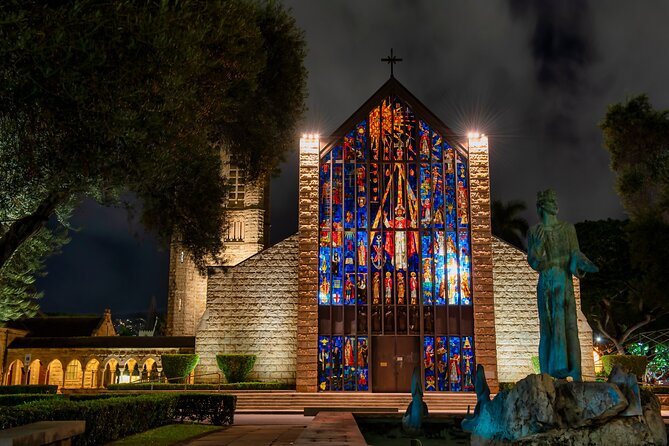
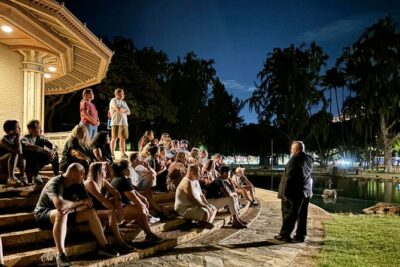
This is a straightforward format: you meet in downtown Honolulu, then you move on foot from one historic site to the next. The whole experience runs about an hour, so it’s not a long grind. It’s more like a timed walking show, with your guide pointing out details and telling stories as you stand in place.
The big idea is that you’re not just chasing chills. You’re also learning how Honolulu became Honolulu, with stops tied to monarchy, missionaries, and the courts that shaped lives. One reviewer even said the tour helped them get off the tourist track and see a different side of island life. If you want a “history with a spooky filter,” this format fits.
Also, expect nighttime vibes. People describe it as a night stroll with different energy when buildings look darker and closer. Street lighting and flickering effects can play tricks on you, so if you’re hoping for constant paranormal proof, manage that expectation early. You’ll get stories. You might get goosebumps. You probably won’t get a guaranteed wow-moment at every stop.
You can also read our reviews of more tours and experiences in Oahu.



Price, Group Size, and What You Really Get for $32
At $32 per person for about 1 hour, the pricing lands in the middle of what you’d expect for a guided night experience in a major tourist city. You’re paying for three things: a trained guide, site-to-site storytelling, and the time cost of getting everyone together and moving efficiently.
You also get value from what’s included. The tour lists all fees and taxes, and you’re promised intensely researched true stories of history plus documented accounts of hauntings and paranormal activity. That doesn’t mean every ghost claim will satisfy a skeptic. But it does suggest the guide has a backbone of historical anchors.
A major plus for comfort is the group size. The tour caps at 35 travelers, and reviews mention very small groups like four people, eight people, and even two with a guide. Smaller groups usually mean more questions and more time spent talking instead of rushing. That’s a big deal when the whole tour is short.
One practical note: motorized transportation is not included, so you’re going to rely on your own legs and what the walking route allows. The good news is that reviews say the walking is easy, mostly flat, and not heavy on distance.
Entering The Iolani Palace Story: Coup, Royalty, and a Queen’s Spirit
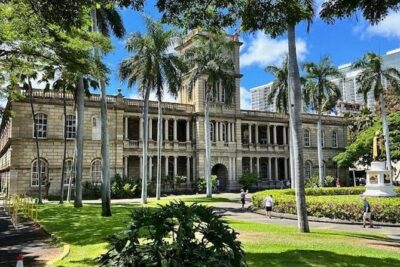
The tour’s opening stop is the grounds of Iolani Palace, built around 1879. This is one of those places where history and haunting claims naturally overlap, because the site holds deep meaning. You’ll hear about Honolulu’s royal era, and you’ll also get a standout story point: the coup tied to the monarchy.
This is not just trivia. The tour frames the palace as a sacred-feeling place. People mention that the last queen fought for a free Hawaii until her death, and that her spirit is said to still linger, watching over Honolulu.
What to do with this stop: slow down and look at the surroundings rather than waiting for a scary moment. Palace grounds have a “stillness” quality at night that can make you feel like you’re in a time capsule. If your guide asks you to notice something specific, take a moment. Reviewers often point out that guides set a respectful tone for sacred places, and that respectful framing makes the experience better, even if you don’t fully buy every ghost detail.
Potential drawback here: one review mentioned flickering lights that people found intriguing but could have normal explanations. That’s a fair reminder. If you’re sensitive to disappointment, go in expecting stories, not proof-by-flashing-light.
Kaua’nona’ula: Where Rain Means Red and the Ghost Stories Multiply
Next up is an intersection known as Kaua’nona’ula, meaning rain with the red rainbow. Here’s the twist: the tour notes there’s no major historic event tied to this specific intersection. That means the stop leans more on unexplained encounters than on documented political history.
If you’re the type who likes ghost tours that go beyond battles and bodies, this is your stop. You’ll hear eerie accounts tied to visitors and odd sightings. It’s the kind of location where your guide might ask you to stay alert, look around, and keep an open mind, even if your rational brain is already building a list of mundane causes.
How to enjoy it: don’t treat this as a break where you just listen. Instead, treat it like a “street-level observation challenge.” City corners feel different after dark, and your brain notices movement more. If you’re with friends who love creepy stories, this is the piece that usually satisfies that craving.
The Old Building and the White Kimono Legend
One of the most specific rumor stops in the tour description is an old building with stories from workers and customers. The headline claim involves a ghost in a white kimono, and the legend gets extra drama because it’s said to have been covered in a news article involving a tragedy after the host reveals herself to you.
This is where the tour leans hard into folklore. It’s also where you may notice the difference between a tour that gives you tight historical grounding and one that prioritizes atmosphere. One review criticized parts of the tour as lacking verifiable history, with some stories framed as secondhand. That criticism lines up with what this kind of stop tends to do, because legends often grow through storytelling layers.
Still, even if you’re skeptical, the mechanics of the legend can be fun. You’re seeing how local people attach meaning to a space. You’re also learning how Honolulu’s past keeps showing up in modern street corners, even when the facts are less tidy.
My practical tip: if you care about history, ask your guide how much of this story is documented versus how much is local lore. A good guide can usually separate dates and records from the spooky “it happened to someone” details.






Supreme Court Grounds: Banyan Trees, Orphans, and Haunted Laughter
The tour brings you to the grounds of the Supreme Court, which opened in 1871. This stop covers heavy themes: courts where cases came as a last resort, and punishments that carried real consequences.
Then the tour adds a complicated layer. Before some later use, the site is described as having held an orphanage. This matters because it changes the tone. Orphanage stories can land emotionally, and emotional sites tend to generate stronger haunting claims.
The ghost legend gets very specific: if you sit under the banyan trees at the edge of the lot, you can supposedly hear the laughter of children playing. The tour also mentions rumors of lost souls connected to criminals sentenced in the early 1900s.
How to experience this stop without overthinking it: stand where your guide suggests, and let the soundscape be part of the show. In a city, you’ll hear traffic and normal noise, so you might not catch anything supernatural. But the idea is to notice what kind of mood the location creates. Reviews commonly mention guide pacing and respectful tone, and that helps this stop land instead of turning into a cheap thrill.
Watch-outs: this stop can be emotionally intense if you’re sensitive to justice or child-related themes. If you want lighter scares, you might feel this one more than you expect.
The First Christian Church Cemetery: Whispers, Smells, and a Young Boy
This is arguably the most haunting-feeling stop on paper: the first Christian Church built in Hawaii, tied to the cemetery, and described as the oldest cemetery in the state.
You’ll learn the cemetery has 296 gravestones, but it’s estimated many more bodies lie beneath the ground than the stones suggest. That gap gives the stop a “how much do we really know” energy.
The haunting claims are also more sensory than jump-scare style. Visitors report strange smells, quiet whispers, and sightings of the ghost of a young boy who wanders the cemetery.
How to handle this as a visitor: be patient. If your guide points out specific areas or tells you to listen, don’t rush your own senses. Also, respect matters here. This tour’s tone, in multiple reviews, stresses respect for sacred places. That matters most at cemeteries.
Also, the tour is described as safe for children, but cemeteries are still cemeteries. If you’re bringing kids, it’s smart to frame it as spooky stories tied to real people, not as a dare.
Two Old Homes and Missionary Ghosts in Long Dresses
The final stop described is a haunted historic museum area with two of the oldest homes in Hawaii, built by New England missionaries to spread Protestant beliefs.
Here, the ghost stories shift again. You’ll hear reports of missionary women appearing dressed in long dresses, along with sounds of children. It’s more “presence” than “action,” and that aligns with the overall style many people seem to like: slow, atmospheric, and story-driven.
What makes this stop useful is that it connects the dots between religion, colonization, and daily life. Even if you only care about the haunting part, it gives the stories a setting. That is usually the difference between a tour that feels like entertainment and one that feels like local context.
Practical advice: take a few photos only if you do it lightly. If you go heavy on picture-taking, you’ll miss what your guide is asking you to notice in the building lines and surroundings.
Guides Make or Break the Evening
Your experience on this tour can swing based on your guide, and the reviews give you a clear pattern.
Positive themes show up over and over:
- Standout storytelling names like Jade, Lon, Hope, and Terry
- Guides taking time to answer questions
- An “easy to follow” pace that doesn’t feel rushed
- A consistent message about respecting sacred places
- Small-group intimacy that lets the guide adjust the flow
Several reviews call out that the walk is easy and fairly light on distance. One person specifically said their guide kept a natural pace so they did not feel pushed to the next stop.
But there are also drawbacks worth taking seriously:
- One reviewer felt there was little verifiable history, with more modern secondhand stories than they wanted.
- Another mentioned the guide’s voice was too soft for hearing over the street noise and traffic.
- A few described the paranormal effects as subtle, like not expecting major goosebumps.
One more detail to keep in mind: one review said the tour is run out of Tennessee from a large company, not purely local. You might not feel that on the street. But if you’re loyal to truly local operators, that’s a fair point to consider.
My practical take: if you’re picky about facts, ask your guide where the history ends and the legend begins. If you’re there for atmosphere and story, you’ll likely have more fun letting the night do its work.
Who This Tour Fits Best, and Who Might Want to Skip
This is a good fit if you want:
- A 1-hour night activity without a huge walking commitment
- A mix of history and ghost lore
- A chance to see parts of downtown Honolulu after dark that you might otherwise skip
- A respectful tone, especially for sacred sites and cemeteries
It’s also a solid pick if you’ve visited Honolulu before and want something different from the usual postcard stops. One review even described it as a way to avoid the busiest tourist route.
You might want to skip or at least adjust expectations if:
- You want lots of documented, verifiable history at every stop
- You’re looking for nonstop paranormal “proof”
- You have trouble hearing in street noise and you’re worried your guide may speak softly
For families, multiple comments say it feels safe for kids and not overly intense. Still, the cemetery material may not thrill every child, so it helps to know your kid’s comfort level with ghost stories.
Should You Book Honolulu Haunts and Hauntings Ghost Tour?
I’d book it if you like your Honolulu with a side of folklore, and if you’re happy mixing researched history with legends that don’t always come with lab-grade evidence. The pace, the short duration, and the strong location choices help a lot. Iolani Palace, a courthouse site with orphanage lore, and a cemetery with whispers and a boy ghost give you variety.
I would pause before booking if your idea of a ghost tour is theatrical and action-heavy, or if you need every ghost story to be tightly verifiable. One or two experiences described the history as thin or the storytelling as more rumor than record.
If you book, do one thing that improves the odds: bring curiosity, not a checklist. Ask your guide for the line between history and legend, then enjoy the rest as a street-level story of Honolulu after dark.
FAQ
How long is the Honolulu Haunts and Hauntings Ghost Tour?
It runs about 1 hour (approx.).
What is the price per person?
The tour costs $32.00 per person.
Where do I meet for the tour?
The meeting point is 447 S King St, Honolulu, HI 96813, USA.
Is the tour offered in English?
Yes, it’s offered in English.
Will I get a mobile ticket?
Yes, the tour provides a mobile ticket.
Is food or drink included?
No. Food and drink are not included.
Is motorized transportation included?
No. Motorized transportation is not included.
How big is the group?
The tour has a maximum of 35 travelers.
Are service animals allowed?
Yes, service animals are allowed.
Can I cancel for a full refund?
Yes. You can cancel up to 24 hours in advance for a full refund. If you cancel less than 24 hours before the start time, the amount paid will not be refunded.
More Tours in Oahu


More Tour Reviews in Oahu
Not for you? Here's more nearby things to do in Oahu we have reviewed












Honolulu History, Palace & Ghost Tours, compared.
 ★ 4.5Bishop Museum General Admission TicketFrom $38243 reviews
 ★ 5.0Historical Honolulu Bike TourFrom $14976 reviews
 ★ 5.0Waikiki Night Marchers Ghost TourFrom $3564 reviews
 ★ 5.0Downtown Honolulu Food Tour with 5 Local Favorites TastingsFrom $10754 reviews
 ★ 5.0Honolulu Night Marchers Ghost TourFrom $3526 reviews
 ★ 4.7Honolulu: Bishop Museum General Admission TicketFrom $3820 reviews
 ★ 4.0Waikiki Ghost Tour: Torches & TerrorsFrom $3216 reviews
 ★ 5.0Through A Glass Darkly The Strange and Tragic History Of HonoluluFrom $3912 reviews
Browse the lists this tour appears in