
REVIEW · WAIKIKI & DIAMOND HEAD TOURS
Waikiki Trolley Red Line Heroes & Legends Hop-on Hop-off Tour
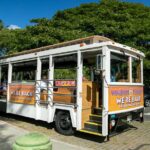
Trolley hopping beats guessing bus routes. This hop-on hop-off Red Line takes you around Waikiki and through central Honolulu with onboard commentary, from Hawai’i’s monarchy to World War II. You can treat it like a moving city orientation, then hop off when something grabs you.
I love the combo of easy transportation and storytelling. The guides connect landmarks to real moments, and the open-air ride makes it feel more like sightseeing than commuting. I also like that you can manage your own pace, whether you want quick photo stops or a longer break at a few major sights.
One thing to plan for: the trolley can get crowded, and that can mean long waits between buses or standing room on busier stretches. If you’re sensitive to heat, wind, or noise, factor in extra time and be ready to sometimes tune in instead of perfectly hearing every word.
Key Things to Know Before You Ride
- Onboard narration ties big landmarks together, from the monarchy era to WWII and beyond
- 14 major stops let you design a mini itinerary, from Punchbowl Crater to Ala Moana
- Guides matter, and names like Sam, Chuck, Turk, Chico, Big Tony, and Kie show up in standout experiences
- Crowding happens, including reports of limited seating and a tough ride on busy days
- Stop-finding can be tricky, especially if signage is limited, so double-check where the trolley picks up
- Sound quality varies, with engine noise and wind sometimes making commentary harder to catch
Red Line Basics: Flexible Trolley Sightseeing for $35
For about $35 per person, you get a simple deal: ride a trolley through Waikiki and Honolulu, then get on and off as often as you want. The official duration is listed at about 1 hour 20 minutes, but in real life it often stretches closer to two hours when you hop off and linger.
That flexibility is the value. Honolulu is big, and the area outside Waikiki can feel like a different city. This route is built to help you connect the dots fast, so you can decide what deserves your time later, like Chinatown streets, the memorial at Punchbowl, or a calmer walk at Ala Moana.
This is also a great choice if you’re traveling light and want fewer decisions. You do not need to plan every turn, you just need to pick a few stops you care about and move with the schedule. Most people can participate, and service animals are allowed.
You can also read our reviews of more tours and experiences in Oahu.

How the Hop-On Hop-Off Works in Real Life
The whole point is that you are not locked into one fixed tour. You can stay on for the full loop or hop off at any stop, grab photos, then re-board when the next trolley comes by.
Here’s what I’d do to make it smooth. Start early in the day and treat it like a moving map. Then choose your hop-off windows based on the kind of time you want, quick photos and exits, or slower sightseeing.
Pay attention to two practical issues that come up in real experiences. First, pick-up locations can be harder to spot than you expect, so don’t assume every stop is obvious from across the street. If you are unsure, look for a helpful staff member at the start, since multiple people note that a rep can assist when you first arrive.
Second, crowding can affect your ride quality. Some days you may not find a seat right away, and if that happens, plan to stand with good grip and take breaks at a stop when you can.
Waikiki Opening Stretch: Shopping Plaza to Beach Culture Icons
Your route begins in Waikiki, at Waikiki Shopping Plaza. This is a smart first move because you start where most people are staying, and the rest of the tour becomes an easy “go see what’s beyond the beach” plan.
From there, you roll past the Duke Paoa Kahanamoku Statue, a name that carries serious weight in Hawai’i’s sports and ocean culture. Nearby sights like the Twin Fin Hotel also help you orient to Waikiki’s geography, the way major roads and coastlines line up in your head.
This early section works well for a couple of reasons. You’ll get the ocean and skyline atmosphere right away, and the ride gives you a sense of direction before you go inland. If you only have one day and want to feel like you saw more than the beach strip, this start does that job.
If you prefer to hear commentary, sit where sound is clearest. One common complaint is that the speaker audio can be tough when the trolley is crowded or when engine noise and wind get loud. Early in the route, you are more likely to find a comfortable spot.
Up Toward the State Capitol and Punchbowl Crater
As the trolley heads inland, you’ll pass the Honolulu Museum of Art (HoMA). Even if you do not spend long there, it’s a useful stop because it marks a shift from beach energy to civic Honolulu.
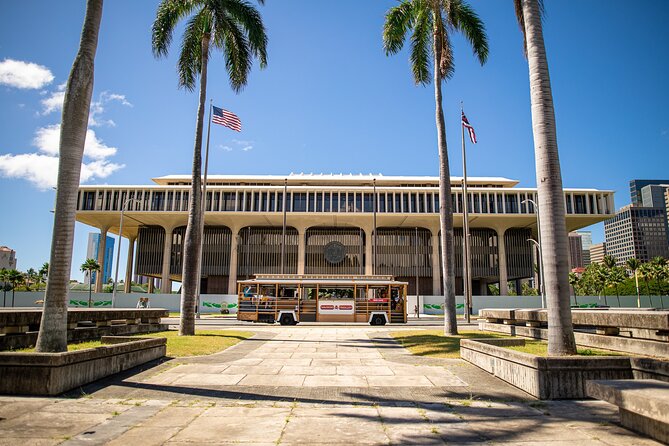
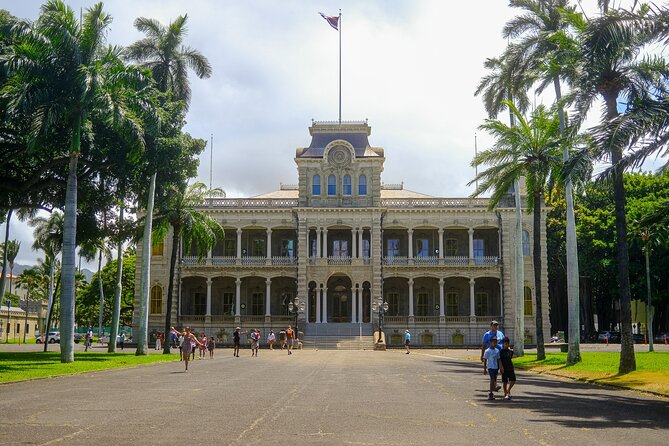
Next is the Hawai’i State Capitol, one of the biggest “you are in the government center now” signals on the route. The value of including these inland landmarks is that you learn where power and public life sit in the city layout.
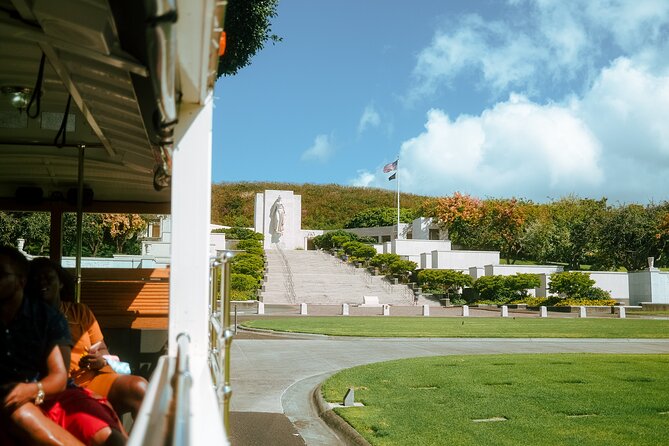
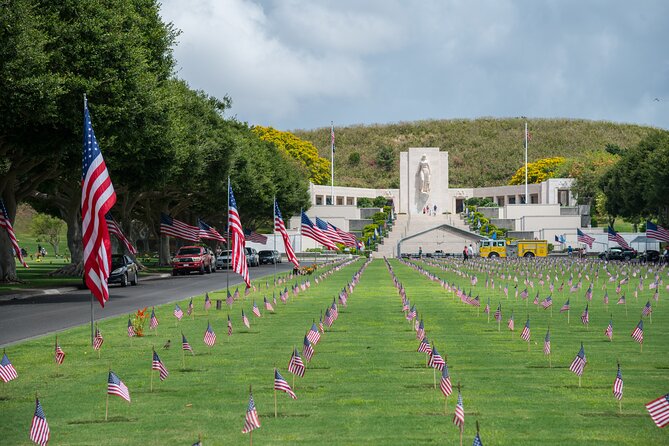
Then comes one of the most meaningful stops on the whole line: the National Memorial Cemetery of the Pacific, also called Punchbowl Crater. This is a place that benefits from a slower pace. If you only glance, it’s easy to miss what the site is trying to communicate, so I’d recommend hopping off with at least a little time set aside for quiet looking and photos.
A practical note from real experience: HoMA can be closed on certain days, and you could end up skipping it if it is shut. Since this affects your time, check operating days before you assume the museum stop will be open.
Foster Botanical Garden and the Izumo Mission Stop
After Punchbowl, the route turns toward calmer, more restorative Honolulu with Foster Botanical Garden. If you want a break from roads, traffic, and the constant “move move move” feeling, this is where the tour can slow down nicely.
Then you reach the Izumo Taishakyo Mission of Hawaii, paired with the Royal Kitchen area. This is one of the most interesting culture stops on the Red Line because it gives you a clear view of how different communities are part of Honolulu’s public spaces.
What I like here is that the commentary can connect the meaning of these places, not just their location. And if you like taking photos, religious and garden stops tend to give you angles that you cannot get from the trolley windows.
If the wind is strong on the open-air ride, consider using your time at these stops to take in details without worrying about the audio. You get better quality attention on the ground than you do from a noisy moving vehicle.



Chinatown to Aloha Tower: Downtown Honolulu’s Real-World Mix
Next up is Chinatown, followed by Downtown Honolulu and Hawaii Theatre. This part of the route is all about contrasts. Chinatown feels lively and busy, and Downtown shifts the mood toward big-city structure and entertainment.
A good strategy here is to hop off and treat the trolley like a permission slip. You do not have to commit to a long stay, but you can walk a few blocks, get a feel for the streets, then decide if you want to come back later or focus your day elsewhere.
Many people also use Chinatown as a food and people-watching stop. If you like trying local flavors and want something more than postcards, this is where you can turn “tour day” into “taste day.”
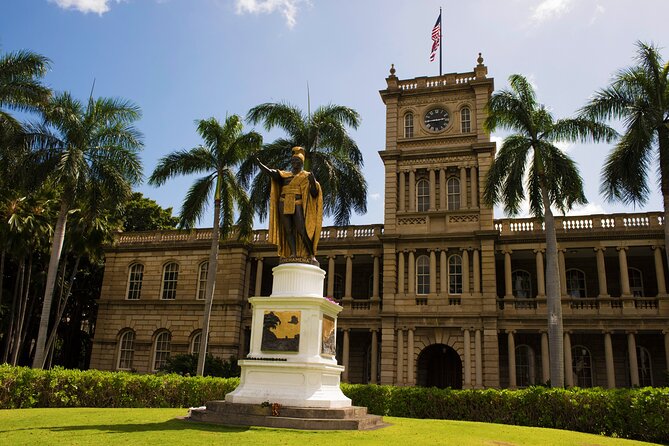
Then you roll toward King Kamehameha Statue, a major visual anchor that helps you understand how Honolulu frames its historical story in public spaces. After that, you arrive at Aloha Tower Marketplace with a brief sightseeing break at Honolulu Harbor.
I love harbor-adjacent stops because they connect the city to why it exists. Honolulu’s identity is tied to the ocean, trade, and movement, and this is a quick way to see that connection without committing to a separate full tour.
Kaka’ako to Ala Moana Park: Modern Honolulu After the Classics
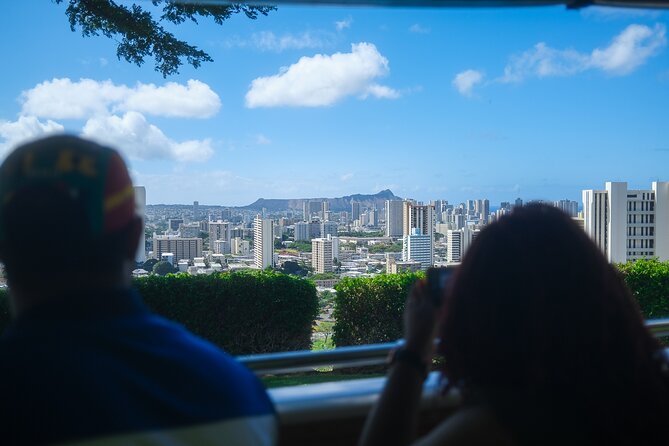
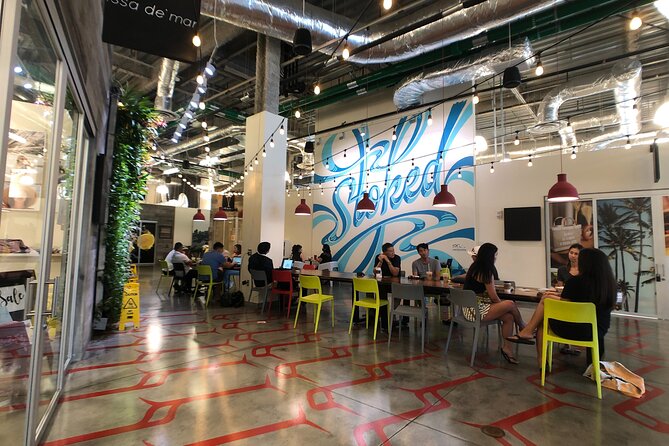
The route continues into more modern city energy with SALT at Our Kaka’ako. Kaka’ako tends to feel like the neighborhood where new ideas and design show up, and it’s a nice counterpoint to the memorial and historic sites earlier in the day.
Next is Ward Centre, then the route reaches Ala Moana Regional Park. This is where you get breathing room. If you want a less intense ending, this stop works because it can feel like a reset after Downtown, Chinatown, and harbor sights.
This final stretch is also useful for practical reasons. It gives you a way to end close to areas many people shop or relax near. If you’re trying to build a full day without hopping into taxis, the Red Line makes that kind of ending easier.
Hearing the Guide and Getting Good Views
The onboard commentary is one of the biggest strengths of this tour. People often praise specific guides by name, including Sam, Chuck, Turk, Chico, Big Tony, and Kie, and the common theme is that they can keep the ride educational without turning it into a lecture.
That said, the audio does not always come through cleanly. Reports mention engine noise, sound system limits, and difficulty hearing with wind on open-air sections. So here’s my practical advice: do not rely on catching every sentence from the trolley.
Instead, listen for key names and stop themes. When you hear a landmark mentioned, use it as your cue to note what stop you should get off at. Then when you’re on the ground, the value becomes clearer because you can match the story to what you see.
Also, crowding affects how much you enjoy the ride. Some days you may find yourself standing for parts of the trip, especially if the bus is full and you board at a stop that’s popular. If you care about comfort, aim to board early in the day or re-board at less hectic stops.
Time-Saving Tips: How to Build Your Own Mini Day
Think of this trolley as a tool for pattern recognition. In one run, you’ll see the shapes of Honolulu: Waikiki’s tourist core, government buildings, memorial grounds, cultural sites, and the downtown mix. That helps you later decide where to spend more time.
Here are a few ways to get more out of the Red Line without overdoing it:
- Choose one “meaningful stop” like Punchbowl for a slower pause, then pair it with one lighter stop later like Foster Botanical Garden
- In Downtown and Chinatown, treat it as short walking time. Walk a few blocks, take photos, then move on if you feel done
- If HoMA is a must for you, check the day first, because it may be closed on certain days
- If you struggle to find a stop, keep your eyes on the area and be ready to move quickly to the correct pickup point when you spot the trolley
A final smart move is to do it early. If you can, consider using the Red Line as your first-day overview. It helps you understand where neighborhoods sit, so your later plans feel easier and more confident.
Should You Book the Waikiki Trolley Red Line?
Book this tour if you want a low-effort way to see a lot of Honolulu in one day, with narration that adds meaning to landmarks. The value is strongest when you are time-limited, first-timing the city, or you want to build a personal itinerary without worrying about routes and transfers.
Skip it or switch to another option if you are very sensitive to standing, delays, or crowded vehicles. The biggest negative theme is that buses can run late early in the day, and the gaps between buses at stops can feel long when you’re hoping to move quickly.
If you go in with the right expectations, you’ll probably enjoy it a lot. I’d say the Red Line is at its best when you treat it like a moving history and neighborhood sampler, then come back later to the places that earned your attention.
FAQ
How long is the Waikiki Trolley Red Line Heroes and Legends hop-on hop-off tour?
The duration is listed as about 1 hour 20 minutes, but your total time can be longer if you hop off and spend time at stops.
What is the price per person?
The price is $35.00 per person.
Where does the tour operate?
The tour operates in Oahu, USA, covering Waikiki and Honolulu.
What language is the tour commentary in?
The tour is offered in English.
How do I get tickets?
You receive a mobile ticket after booking.
What are the operating hours?
The tour runs Monday through Sunday from 8:00 AM to 4:00 PM.
What stops are included on the Red Line?
Key stops include Waikiki Shopping Plaza, Duke Paoa Kahanamoku Statue, Twin Fin Hotel, Honolulu Museum of Art, Hawaii State Capitol, National Memorial Cemetery of the Pacific (Punchbowl Crater), Foster Botanical Garden, Izumo Taishakyo Mission of Hawaii, Chinatown, King Kamehameha Statue, Aloha Tower Marketplace, SALT at Our Kaka’ako, Ward Centre, and Ala Moana Regional Park.
Where do I meet the trolley?
The meeting point is provided with your booking confirmation.
Is the tour refundable or changeable?
No. It is non-refundable and cannot be changed for any reason.
Are service animals allowed?
Yes, service animals are allowed.
More Tours in Oahu


More Tour Reviews in Oahu
Not for you? Here's more nearby things to do in Oahu we have reviewed





Waikiki & Diamond Head Tours, compared.
 ★ 5.0Parasailing Experience in Waikiki, HIFrom $447,692 reviews
 ★ 4.5Waikiki Trolley Hop-On Hop-Off Tour of HonoluluFrom $224,783 reviews
 ★ 5.0Waikiki, Hawaii: Turtle Canyon Snorkel ExcursionFrom $794,656 reviews
 ★ 5.0Waikiki Trolley Blue Line Coastline & Local Grindz Hop-on Hop-offFrom $354,159 reviews
 ★ 5.0Turtle Canyon Snorkel Adventure in Waikiki, OahuFrom $853,197 reviews
 ★ 5.0The Magical Mystery Show! at Hilton Waikiki Beach HotelFrom $992,754 reviews
 ★ 5.0Oahu Grand Circle Island Experience from WaikikiFrom $992,317 reviews
 ★ 5.0Oahu’s Waikiki Coast: Moana’s Sunset Cocktail SailFrom $892,205 reviews