
REVIEW · OAHU SURF LESSONS
Semi-Private Surf Lesson
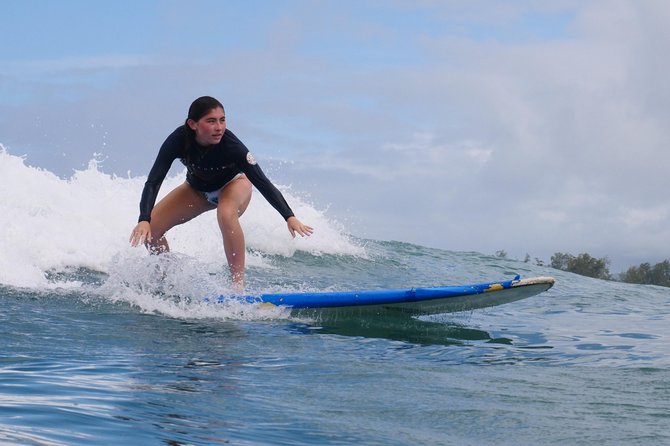
North Shore waves are the whole point here. This semi-private surf lesson in Oahu pairs more instructor attention with a flexible plan built around the ocean conditions that day.
I especially like the pacing: a short land briefing, then straight into the water to catch waves as you improve. And because the lesson is 2 hours with all equipment included, you do not lose time figuring out gear, bindings, or what to carry.
One consideration: you are booking for a real ocean sport, so conditions can change, and your exact spot is chosen based on what the water is doing that day.
Key things I think you will notice
- Semi-private by design, only your group participates, so you get more eyes on your form.
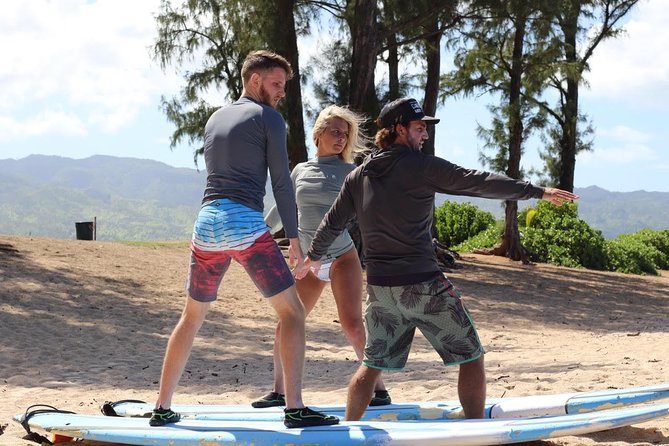
- 10 to 15 minutes of land basics plus ocean safety before you paddle out.
- Equipment is included, so you show up and focus on learning.
- North Shore location, meaning you are training in one of the most famous surfing areas on Oahu.
- Sea turtle spotting is possible, and the lesson happens with that in mind (seasonal).
- Certified instructors, lifeguard and Red Cross CPR certified for extra peace of mind.
Why Oahu’s North Shore works for learning to surf
If you want a first surf lesson that feels like more than a quick demo, the North Shore is a smart starting point. It is world-famous for surfing, and that matters because instructors know how to teach in the kind of waves people actually travel here for.
This lesson also does something practical that many do not: it uses the ocean conditions to determine where you learn. That means you are not locked into a spot that might be too rough, too weak, or just plain not ideal for beginners. You get a plan that is meant to match what the water is offering that day.
And there is an added bonus that fits the place. You may see Hawaiian sea turtles during the lesson, especially depending on season. Seeing wildlife out there adds a sense of wonder, but it also makes you more alert to ocean behavior, current, and basic safety.
You can also read our reviews of more private tours in Oahu

Price and value: what $125 buys you in 2 hours
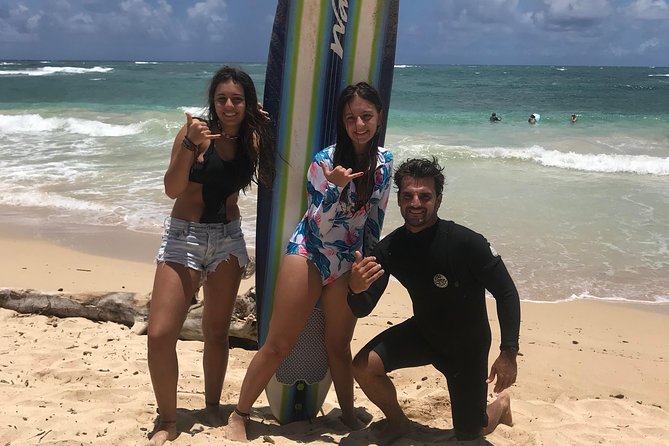
At $125 per person for about 2 hours, this is not a bargain-basement “try it once” experience. But surf lessons on Oahu are time-and-skill heavy, and value comes from what you do with that time.
Here, your money goes to four things that help most beginners learn faster:
- Semi-private attention so you are not blending into a large crowd.
- Equipment included, so you are not shopping or hauling anything complicated.
- A structured lesson flow, starting with basics and safety before the first paddle.
- A certified instructor team, with lifeguard and Red Cross CPR credentials.
If you are comparing options, think about the hidden costs of doing it the hard way. If you have to rent gear, figure out where to go, and then wait around for the next “group moment,” your learning time shrinks. This setup is built to protect your time in the water, which is what actually improves your wave catching.
Where you meet on Oahu (and why it matters)
You meet at 53-360 Kamehameha Hwy, Hauula, HI 96717, USA. The activity ends back at that same meeting point, which keeps things simple when you are planning the rest of your day.
This matters more than it sounds. When a surf lesson has you scattered across multiple pick-ups or unclear end points, it can turn “easy fun” into stress. Here, the start and end are the same, so you can plan dinner or a beach walk without guessing how long the logistics will take.
It is also described as near public transportation, which is helpful if you are not driving. Even if you do have a rental car, it is nice to know you have options.
The 2-hour flow: land briefing, then nonstop wave time
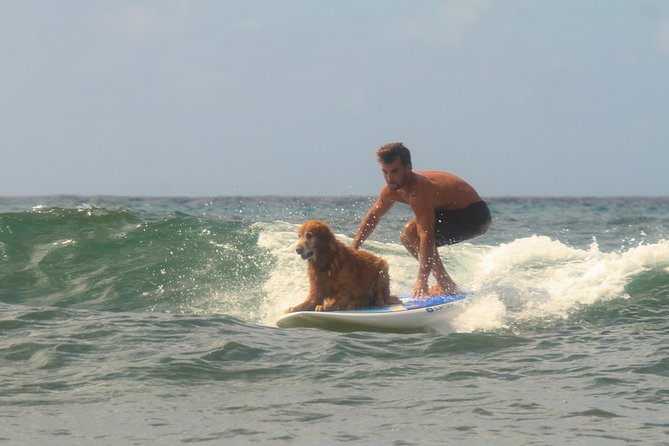
Here is the rhythm you should expect.
Meet and greet
You start with a short meet and greet. This is usually where you confirm basics like your experience level and get a quick feel for how the instructor wants to communicate.
More Oahu tours and island experiences worth comparing


The land briefing (10 to 15 minutes)
Before you hit the water, you get a land briefing focused on surfing basics and ocean safety. For your learning, this part is not filler. It is the fastest way to avoid common first-day problems like scrambling onto the wrong spot, misunderstanding where waves are breaking, or not knowing what to do when you wipe out.
Into the water for many waves
After that, you get in the ocean and work on catching waves as you improve. The goal is repeated attempts, quick corrections, and wave-by-wave feedback. In a semi-private setting, that is where you usually feel the difference most, because your instructor can watch your timing and body position more closely.
A lesson like this is only about 2 hours total, so every step is designed to keep you from waiting around. You are not paying for a long lecture. You are paying for learning through doing.
Getting the most out of the land briefing
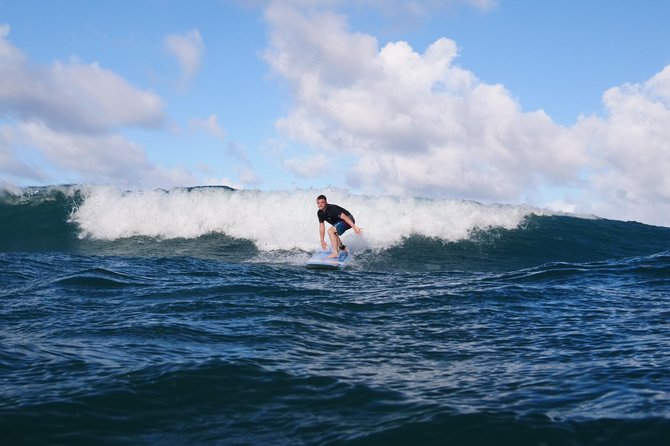
That 10 to 15 minute land briefing is your cheat sheet. Even if you have surfed before, it is often where a good instructor tunes the lesson to you.
You can expect two main topics:
- Surfing basics in a clear, beginner-friendly way
- Ocean safety, which matters because the ocean does not care about your confidence
What to pay attention to here:
- Where you should stand and how you should paddle before a wave
- How to read the water enough to position yourself for a safer, smoother attempt
- What your instructor wants you to do if something goes sideways
This is where you can mentally “turn on” the right habits. If you listen closely here, your time in the water tends to feel less chaotic and more like a progression.
In the water: catching waves and refining your form
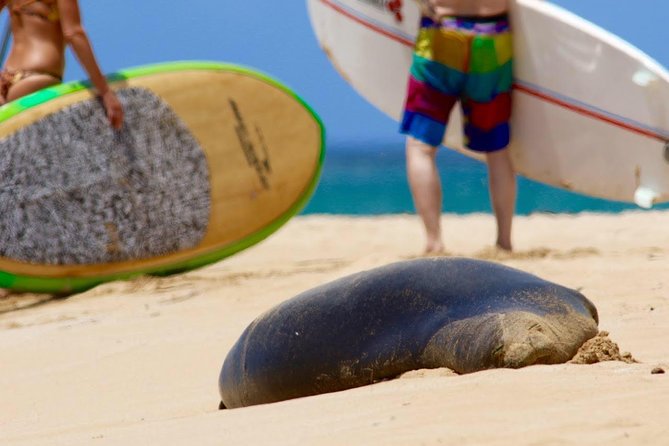
Once you are in the water, the lesson becomes a loop: paddle out, try a wave, get feedback, try again. Because it is semi-private, you should get more direct coaching than a big group lesson.
The instructor also has a lifeguard background and is Red Cross CPR certified. That does not just sound good on paper. It usually translates into calmer teaching, faster safety decisions, and more structured boundaries on what you should or should not do.
If you are a first-timer, you will likely spend some energy just learning balance and timing. The best part of having an instructor close by is that you do not have to guess whether you are doing the right thing. You get correction in real time, and that is how you go from wobbly attempts to more consistent stands.
And because the lesson includes equipment, you are not fighting with gear choices. You can focus on the actual skill.
Sea turtles: how to spot them without getting distracted
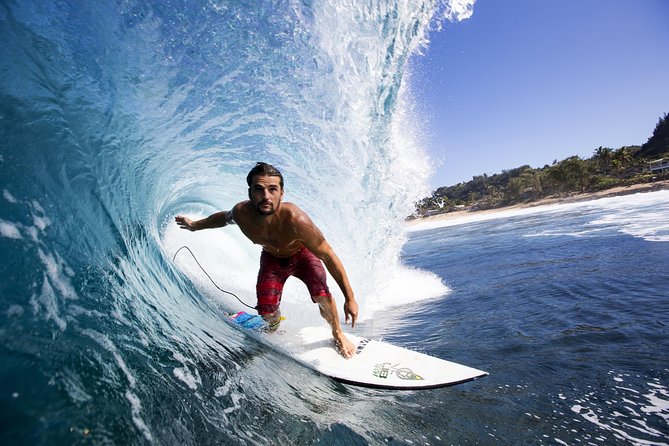
Sea turtles are a seasonal highlight. The lesson notes that you may see Hawaiian sea turtles throughout your time on the water.
Here is the practical way to enjoy this safely:
- Keep your attention on your instructor cues first.
- When you do spot something, take a quick look, then return to your own positioning.
- Do not chase wildlife with your board or scramble in ways that risk you or others.
Turtles make the ocean feel alive, but surf lessons are still about safety and wave strategy. The best experience is when you can appreciate the wildlife while staying fully engaged in your surfing.
Instructor quality: why certification and teaching style are a big deal
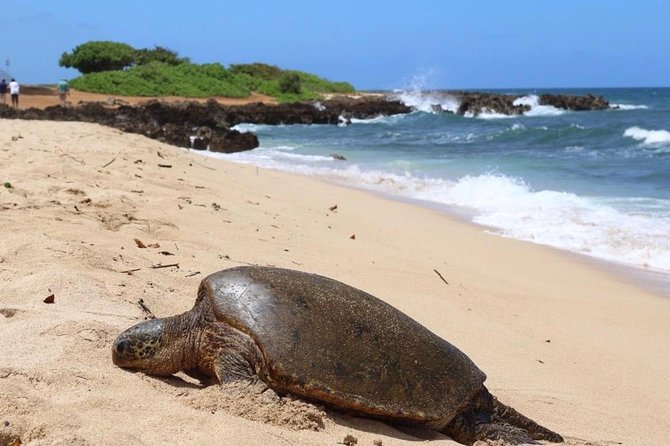
The instructors are listed as lifeguard and Red Cross CPR certified. I treat that as a serious plus, especially in ocean settings where conditions can shift quickly.
Then there is the human side. One review highlighted Hugo as an awesome instructor, with a personal, professional, chill vibe. That combination is exactly what you want for learning a new skill under pressure. You want calm guidance, not frantic yelling.
In real terms, what you should hope for in the experience is:
- Clear coaching that makes sense fast
- Confidence without rushing you
- Safety instructions that you can actually follow
If you get an instructor who is friendly but precise, the whole lesson clicks. That is the difference between leaving with a cool story and leaving with actual progress.
Semi-private teaching: the real advantage over a large class
This is described as a private tour/activity, meaning only your group participates. Even if you are sharing a lesson with a small set of people, the “semi-private” idea is about attention.
In surfing, attention is everything because small tweaks change results. A tiny shift in where you paddle, how you pop up, or where you look can mean the difference between standing and bouncing off the board.
So when the instructor is not stretched across a huge group, you get:
- Faster feedback
- More chances to try
- Less time waiting your turn
That is how 2 hours can feel like a lot more learning than you expected.
What equipment inclusion means for first-timers
All necessary surfing equipment is provided. For you, that removes multiple friction points:
- No last-minute gear rental
- Less time spent coordinating sizes and boards
- More mental bandwidth for technique and safety
Also, equipment compatibility matters. If you start on gear that fits the lesson and the conditions, your learning curve is smoother. You can focus on fundamentals like paddling, balance, and timing instead of troubleshooting uncomfortable setup issues.
If you are new to surf lessons, equipment being included is one of the biggest “hidden value” items, because it keeps your experience from turning into errands.
Who should book this North Shore semi-private lesson
This fits best if you want:
- A true learning session, not just a quick photo op
- More time with an instructor
- A structured 2-hour plan with safety built in
- The chance to learn on Oahu’s famous North Shore
It is also described as suitable for most travelers, and the lesson is offered in English, so it should be accessible for a wide range of visitors.
If you have never surfed, this can be a great first step because you get a land briefing and then consistent time in the water. If you surf a little already, you may still benefit from safety reminders and technique adjustments, especially in changing surf conditions.
A few practical tips before you go
You did not ask for packing advice, but here are a few practical things that help surf lessons go smoothly, based on how these lessons run.
Wear something you can move in and expect to get wet. Bring a small towel, and consider a dry layer for after the lesson since you will be out on the water and then back on shore.
Also, listen closely during the land briefing. Most beginners lose time trying to solve problems in the ocean that could have been prevented in those first 10 to 15 minutes.
Finally, bring patience. Surf learning is not instant. This lesson format is built to give you enough attempts that progress is realistic within 2 hours, but it still takes a few rides to settle your timing.
Should you book 808 Surf School’s semi-private lesson?
If you want a North Shore surf lesson that prioritizes instruction time, safety, and comfort, this is a strong pick. The price of $125 for about 2 hours is reasonable when you factor in semi-private attention, equipment included, and certified instructors.
I would book it if:
- You want more instructor focus than a big group lesson
- You like the idea of short coaching on land, then real wave time
- You care about ocean safety and instructor certification
- You are excited about the seasonal possibility of seeing sea turtles
I would think twice if:
- You are expecting a guaranteed long sequence of perfect rides no matter the conditions (the ocean is the boss)
- You need very flexible timing beyond the scheduled lesson window
Overall, this setup is built for learning, not just trying. If you show up ready to follow the briefing and work through your first-wave nerves, you will likely leave feeling like you understand surfing a lot more than you did when you arrived.
FAQ
How long is the semi-private surf lesson?
The lesson is about 2 hours.
What does the lesson include?
All necessary surfing equipment is provided, and the instructor leads the session in the water.
What happens before getting into the ocean?
You meet briefly, then you get a 10 to 15 minute land briefing covering surfing basics and ocean safety.
Where is the meeting point?
You meet at 53-360 Kamehameha Hwy, Hauula, HI 96717, USA, and the activity ends back at the same meeting point.
Is this lesson private?
Yes. Only your group will participate.
Are the instructors certified?
Instructors are lifeguard and Red Cross CPR certified.
Will we see sea turtles?
It is likely to see Hawaiian sea turtles throughout the lesson, and sightings are described as seasonal.
What is the cancellation policy?
You can cancel for free up to 24 hours in advance for a full refund. Within 24 hours, the amount paid is not refunded.
More Workshops & Classes in Oahu
More Private Tours in Oahu


More Tour Reviews in Oahu




Not for you? Here's more nearby things to do in Oahu we have reviewed








Oahu Surf Lessons, compared.
 ★ 4.5Open Group Surfing Lesson in Waikiki, HawaiiFrom $112582 reviews
 ★ 4.9Beginner-Friendly Waikiki Beach Surfing LessonFrom $125425 reviews
 ★ 5.0Waikiki Private Group Surf LessonFrom $123298 reviews
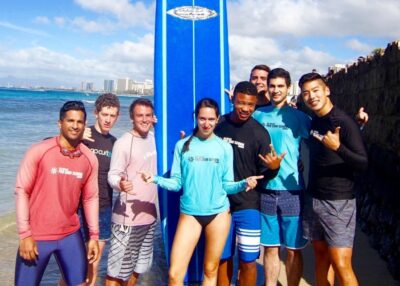 ★ 4.9Waikiki 2-Hour Beginner Group Surf LessonFrom $103191 reviews
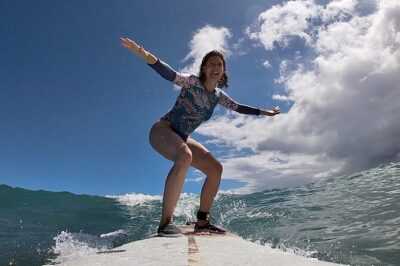 ★ 5.0Surf Lesson Without the Crowds Including GoPRO VideosFrom $125167 reviews
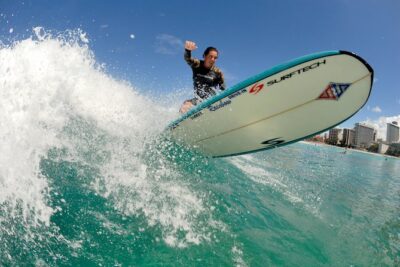 ★ 4.5North Shore Beginner Surf Lesson, HawaiiFrom $104114 reviews
 ★ 5.0Oahu Private Surfing LessonFrom $226113 reviews
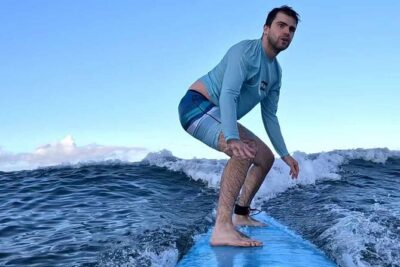 ★ 5.0Private 1-on-1 Surf Lesson with Videos and PhotosFrom $160107 reviews
Browse the lists this tour appears in