
REVIEW · OAHU WHALE WATCHING CRUISES
Oahu: Whale Watching Cruise Whales Guaranteed
Ninety minutes can feel endless at sea. I like the double-decker layout for better viewing, and I love the sunset hour when Waikiki and Diamond Head look unreal from the water. The catch is simple: humpbacks are very common, but not guaranteed, and if you get seasick easily you’ll want to plan.
This cruise is built for whale spotting, with live guide commentary that helps you notice whale behavior instead of just hoping for a surface. You also get a comfortable, West Coast style outing with snacks and drinks, plus a bar on board.
If you’re aiming for the best odds, go in the afternoon or near sunset, and plan around the humpback season from January to April. Meet at Pier B in Kewalo Basin Boat Harbor, and you’ll be on the water fast.
Key points I think matter
- Humpback sightings are very common during the January to April migration season
- Waikiki Beach and Diamond Head both come into view from the water
- Live guide commentary explains whale behavior and marine ecology so you know what you are seeing
- Afternoon and sunset timing gives you the best mix of whales and scenery
- Crew support for photos can make sunset pictures easier
- Free return trip if you do not spot any whales on your outing
Why this 90-minute whale cruise starts at Kewalo Basin Pier B
This isn’t the kind of activity where you waste half a day just getting to the water. You meet at Pier B in Kewalo Basin Boat Harbor, and you’re already in the right zone for watching whales as they move through Hawaiian waters.
The timing also helps. The whole outing runs about 90 minutes, which is long enough to actually search, reposition, and get multiple looks, but short enough that you are not stuck on the water forever. On Oahu, that matters, because it is easy to burn your whole trip on traffic and long days.
The vibe is straightforward: you are there to look, learn, and enjoy the coastline by sea. And when the sunset hits, the whole experience shifts from spotting wildlife to just taking in the view, with the ocean as your front-row seat.
You can also read our reviews of more boat tours in Honolulu


The double-decker power boat: better sightlines and a bar for the ride
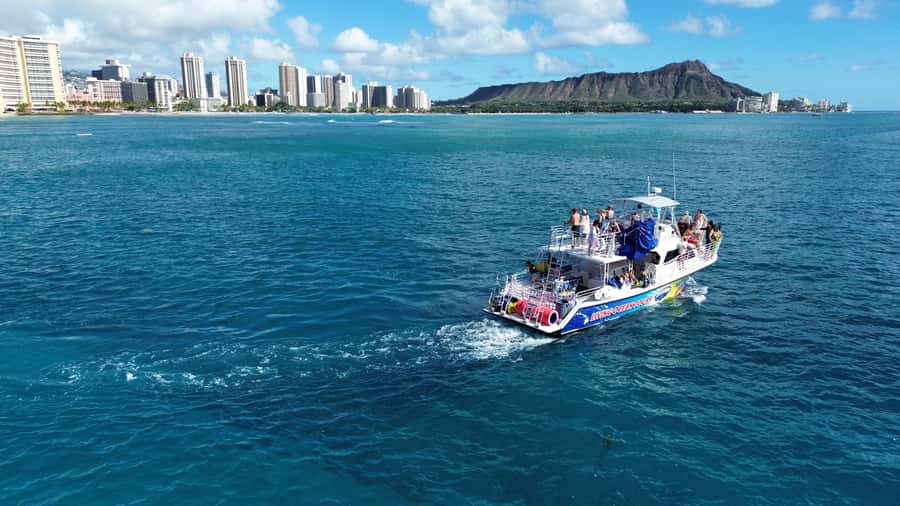
You ride on a double-decker power boat. That is a big deal for whale watching because whales can pop up at different heights and distances. The extra level helps you spread people out and keep sightlines cleaner, especially when something surfaces near the boat.
You get light snacks and drinks as part of the experience, including sodas, juice, and water. There is also a bar on board where snacks and drinks are available for purchase, so you are not stuck with only what comes in the bundle.
What I like about this setup is that it keeps the cruise from feeling like a formal lecture. You can listen to the guide, grab a quick sip, and keep your eyes on the water without constant interruptions.
Practical comfort tip: bring sunscreen and a hat. Even when you think you are safe because it is a breezy ocean day, the sun can still hit hard once you are out past the harbor.
How the guide turns spotting whales into something you can actually notice
This cruise is guided, and the commentary matters. The guides focus on whale behavior and marine ecology, so you are not just staring at the horizon like it is a waiting room.
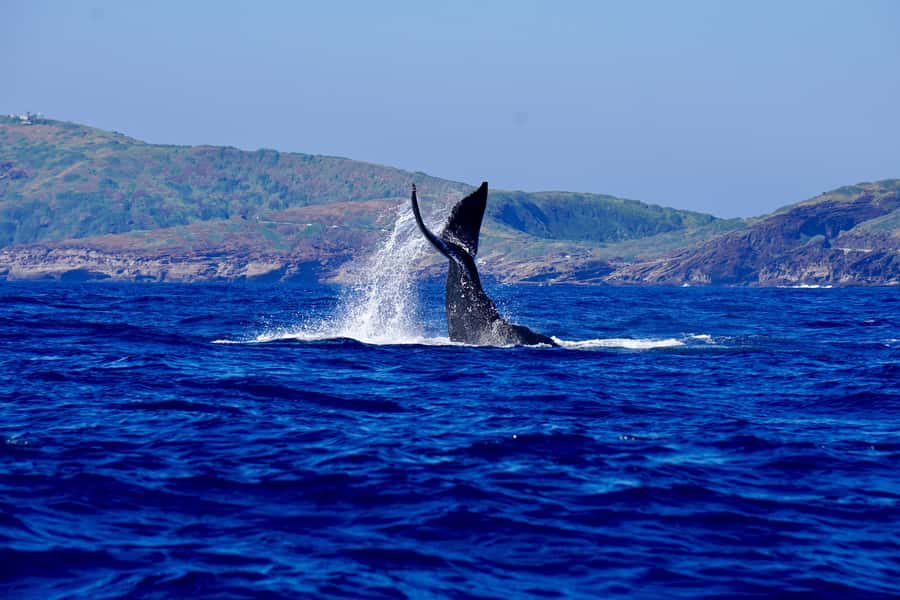
They will point out what to look for: breaches, tail slaps, and playful interactions. If you only see a quick spout, the guide can help you understand whether it is part of feeding, movement, or social behavior.
Also, spotting is often about timing and the angle of approach. On many sailings, the captain and crew work actively to find whales, and that energy is part of why people come back impressed. Several people specifically praised crews and captains for staying focused on searching, including Captain Shawn, Captain Kevin, and Captain Jason, with crew members such as Tanner, Missy, Haley, Taylor, and others supporting along the way.
One more detail I appreciate: the cruise pairs whale watching with scenery without making you choose. As you scan for whales, you are also learning the coastline view, not getting lost in the monotony of just watching water.
The 45 minutes near Waikiki Beach: city views, then whales
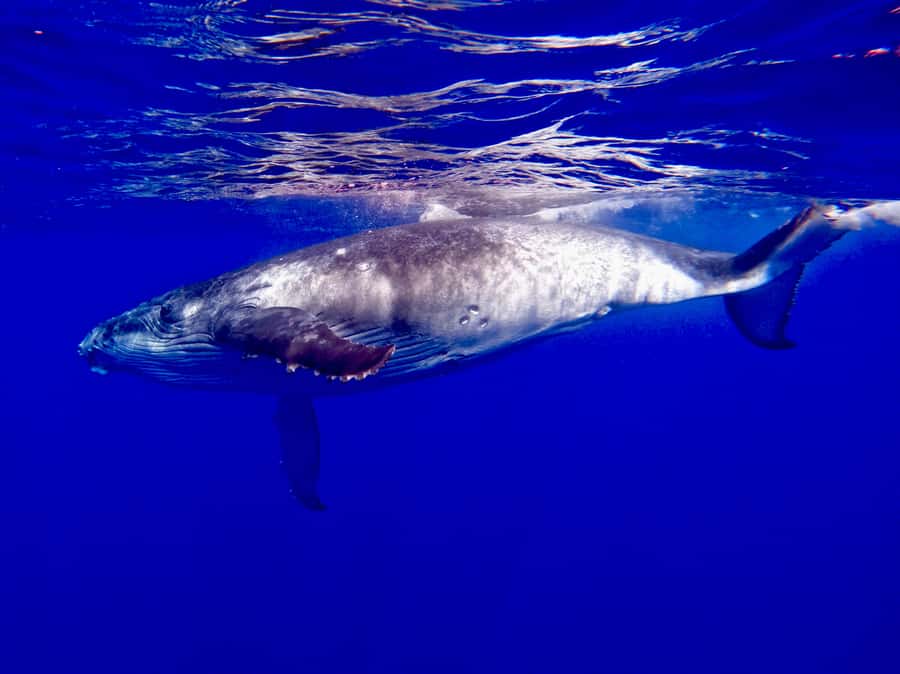
The first chunk of time is focused near Waikiki Beach. You get about 45 minutes here, watching for humpback whales migrating to Hawaii to mate and give birth during the season from January to April.
From the water, Waikiki changes. Instead of looking at it from the sand, you see it in layers. You get the shoreline angle, you notice how boats move in the harbor and out along the coast, and you can use that reference to spot bigger shapes moving below the surface.
This is also a good stretch to get your bearings. If you are new to whale spotting, the first whale surface is when your brain switches from searching to recognizing patterns. The guide commentary helps you catch those patterns early, so later sightings feel more real.
If your goal is to bring home photos, this is a smart moment to start shooting before the light softens too much.
Diamond Head Lighthouse leg: that whale search becomes a hunt
The cruise then shifts toward the Diamond Head Lighthouse area for another 45 minutes of whale watching. This is where the coastline becomes extra dramatic, and where you can often feel the hunt energy rise, because the crew is trying to position the boat for the next sighting.
Diamond Head is a familiar landmark from shore, but from the water it feels closer and more three-dimensional. You also get a better sense of where the whales might be moving in relation to the coast.
This segment is also a great window for spotting both large and smaller marine activity. Some people have reported seeing spinner dolphins along with humpbacks on their outing, which fits the idea that you can get more than one type of wildlife moment when conditions are right.
If you are hoping for that unforgettable “whale comes up close to the boat” moment, this is the time you want your attention fully on the water. Keep your camera ready, but do not block your own line of sight. You want the whale first, the photo second.
You can also read our reviews of more whale watching tours in Honolulu
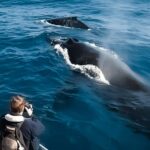
Sunset cruising: why this is the best time to be out there
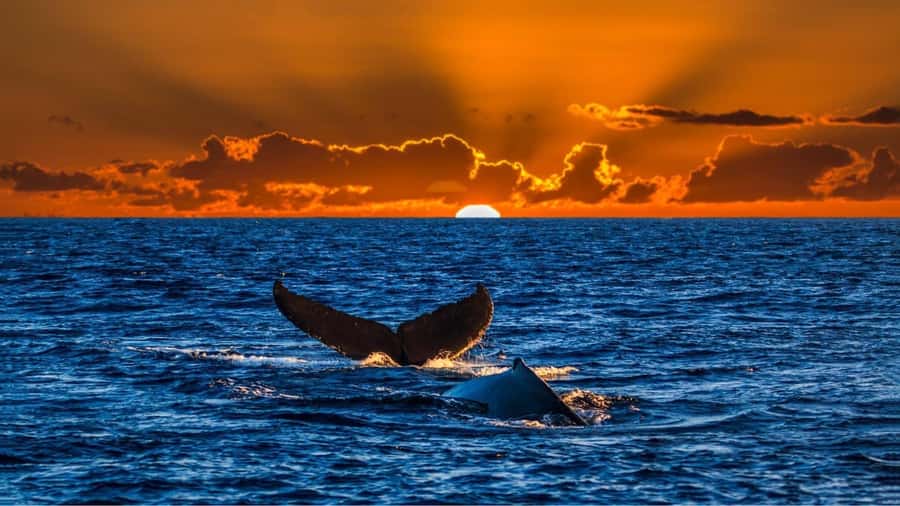
Afternoon and sunset are the sweet spot. That is when you often get a nicer mix of whales plus a sky that makes everything feel special.
The sunset part is not just pretty for postcards. The softer light gives whales and ocean surfaces more contrast, and it makes brief sightings easier to track with your eyes instead of squinting into harsh glare.
There is also a practical side. Some guests noted that the crew helped them take pictures during sunset, which makes sense. When the scenery goes golden and the boat is moving, timing a photo can be tricky, so having support helps a lot.
If you care about photos, I would plan for the last 20 to 30 minutes to be your primary shooting window. That is typically when excitement peaks, especially if you have already seen whales earlier.
What you actually see: humpbacks, plus the behavior details
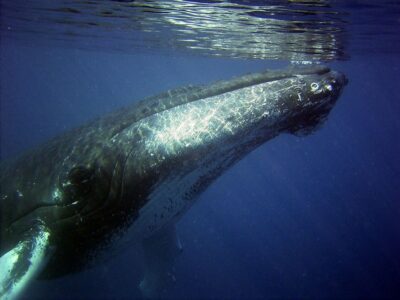
This cruise centers on humpback whales. During January to April, they migrate to Hawaii to mate and give birth, which is why this sailing is tied to those months.
What makes a humpback sighting more than just a dot in the ocean is the behavior. The guide will help you watch for breaches, tail slaps, and playful movements. When those happen, it is not only impressive, it is also easier to tell what the whale is doing, instead of guessing.
People have also reported seeing a mom and calf, and those moments tend to stick in your memory because they feel intimate and real. It also helps explain why whale watching is different from just spotting wildlife on a nature trail. You are watching a life cycle unfold in motion.
Even when the whales are not right next to the boat, the search experience is still part of the fun. The guide commentary helps you interpret what you see, and that makes the time on the water feel purposeful.
Price and value: is $56 per person a fair deal?
At $56 per person for a roughly 90-minute cruise, you are paying for three things: access to the water, a dedicated search, and live guide interpretation.
What pushes the value higher is the small set of inclusions that reduce extra costs. You get light snacks and sodas, juice, and water, so you do not have to immediately buy your first drink to feel comfortable. You also get live guide commentary, which turns whale spotting from luck into something you can follow.
The other value lever is the free return trip if you do not spot any whales. Whale watching is always weather and timing dependent, so it is smart that the operator builds in a redo option when the ocean does not cooperate.
One caution for value: if you go at a bad time, like missing afternoon or sunset, you might feel like you spent money on a “nice boat ride” rather than a whale experience. So pick the time window that matches your priorities.
Who should book, and who might want a different plan
This cruise is best for adults and older kids who can handle open water and want to focus on wildlife. The experience is not suitable for children under 3 years, pregnant women, people with back problems, or people prone to seasickness.
If you are sensitive to motion, consider your options carefully. A whale cruise is not a calm lake tour, and power boats are designed to move and reposition, not to creep slowly. If you know you feel rough on boats, this might not be the right first ocean outing.
On the other hand, if you enjoy nature but also want a dose of Hawaiian scenery, this works well. You get views of Waikiki Beach and Diamond Head from sea level, and you still have a clear wildlife mission.
The meeting point flow: what to do before you board
Plan to meet at Pier B in Kewalo Basin Boat Harbor. Give yourself enough buffer time so you are not rushing in, because once you are on board, you want to settle in and get ready to watch.
Bring the essentials listed for the outing: sunglasses, a hat, camera, and sunscreen. Those cover the big comfort issues, from glare to sunburn to capturing quick moments.
Once on the boat, follow the simple rules: no smoking and no alcohol or drugs. That keeps things cleaner and more comfortable for the majority of people who came for wildlife and sunset.
My verdict: should you book this Oahu whale watching cruise?
If your priority is seeing humpback whales during the migration season, this is a strong pick because sightings are described as very common and the guide helps you interpret what you are seeing. Add the double-decker setup for viewing, the Waikiki and Diamond Head scenery from the water, and a free return if nothing shows up, and the risk feels lower than most whale cruises.
I would book it if you can do afternoon or sunset and you are comfortable on the water. I would skip or look for a calmer alternative if you have seasickness tendencies or any of the listed suitability limits.
If you want, tell me your travel month and your general tolerance for boat motion, and I’ll help you decide whether afternoon or sunset is the smarter choice for you.
FAQ
Where do I meet for the whale watching cruise?
Please meet at Pier B in Kewalo Basin Boat Harbor.
How long is the cruise?
The duration is about 90 minutes (with a schedule that can run in the 1.5-2 hour range).
What is the price per person?
The price is listed as $56 per person.
When are humpback whales most likely to be seen on this trip?
The whale migration season for humpbacks on this schedule is January to April, and afternoon and sunset are described as the best times to be out on the water.
Are whale sightings guaranteed?
Whale sightings are very common, but not guaranteed. If you do not spot any whales, you’re offered a free return trip.
What type of boat is used?
You ride on a double-decker power boat with access to good viewing locations.
Is food and drink included?
Yes. Light snacks and sodas, juices, and water are included. A bar is also mentioned for snacks and drinks available for purchase.
Is hotel pickup and drop-off included?
No, hotel pickup and drop-off are not included.
What should I bring?
Bring sunglasses, a hat, a camera, and sunscreen.
Who should not book this tour?
It is not suitable for children under 3 years, pregnant women, people with back problems, or people prone to seasickness.
More Whale Watching Tours in Honolulu
More Boat Tours & Cruises in Honolulu



More Tour Reviews in Honolulu





Not for you? Here's more nearby things to do in Honolulu we have reviewed








Oahu Whale Watching Cruises, compared.
 ★ 4.52-Hour Oahu Whale Watch from Ala Wai Harbor, WaikikiFrom $491,929 reviews
 ★ 4.5Luxury Snorkel Cruise, Local Buffet with Whale & Dolphin WatchFrom $1741,334 reviews
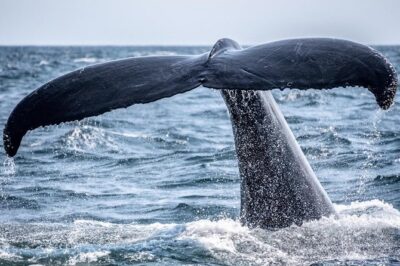 ★ 4.5Waikiki, Oahu 2-Hour Whale Watching: Guaranteed SightingsFrom $451,064 reviews
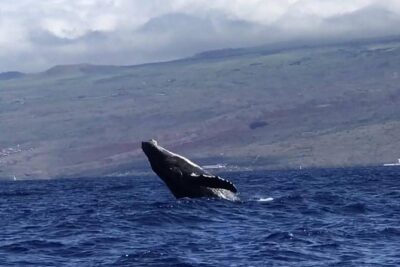 ★ 4.5Waikiki Deluxe Catamaran Whale WatchFrom $89638 reviews
 ★ 4.5Early Bird Whale Watching Cruise from WaikikiFrom $68202 reviews
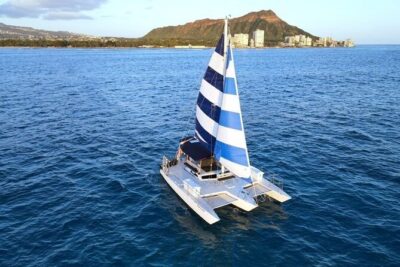 ★ 4.5Best Waikiki Whale Watching in Honolulu: Whales GuaranteedFrom $79196 reviews
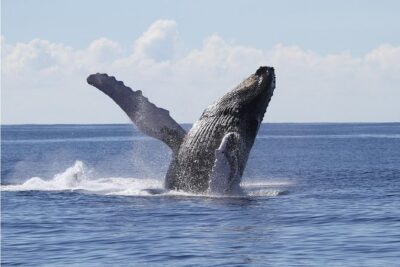 ★ 4.5Whale Watch Cruise Aboard The MajesticFrom $85193 reviews
 ★ 3.5Honolulu, Oahu: Waikiki Whale Watching CruiseFrom $39166 reviews
Browse the lists this tour appears in