
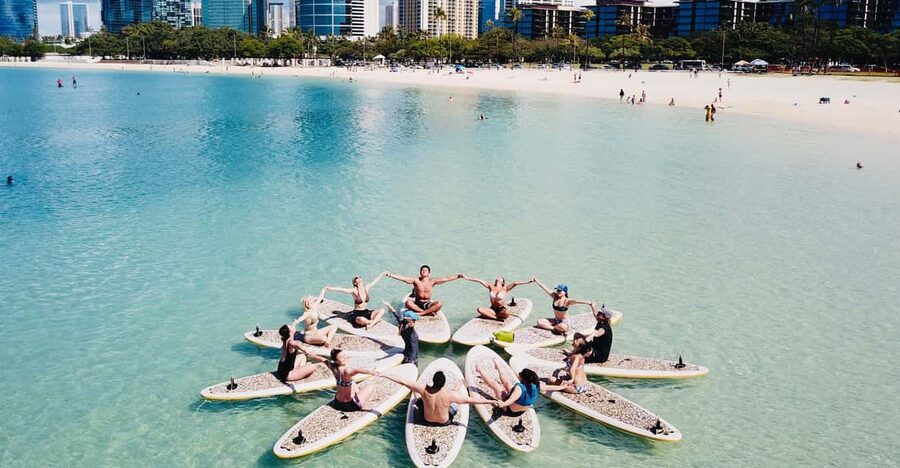
REVIEW · OAHU KAYAK & PADDLE TOURS
Honolulu: SUP (Standup Paddleboard) Yoga Class
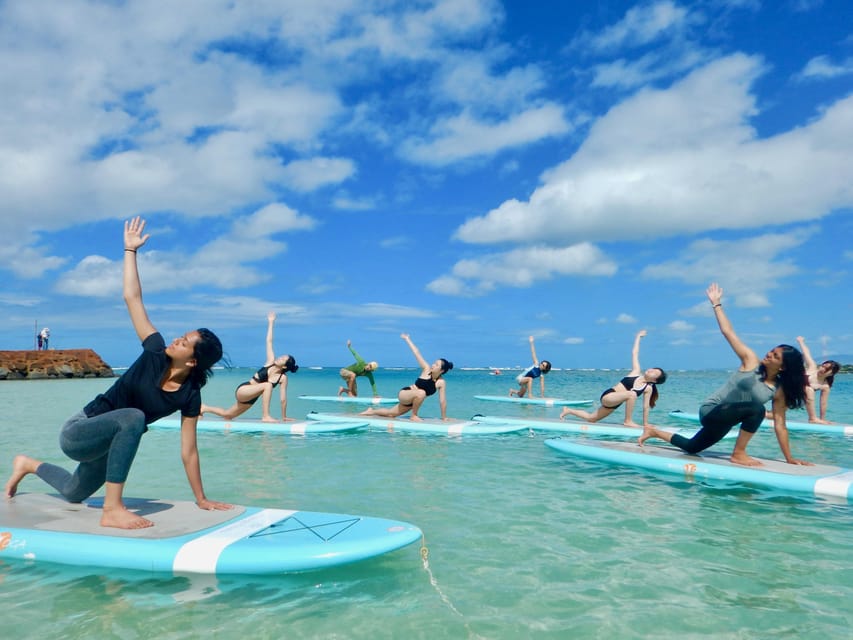
Yoga, but with waves under you. If you like your yoga a little less predictable, this Honolulu SUP yoga class at Magic Island mixes classic pose flows with paddleboard balance in Hawaii’s calm water. I love how the instructor adapts familiar seated, kneeling, and reclining moves for the board, and I love that the session ends with savasana while the ocean gently rocks you.
One key consideration: you should be ready to get wet, even with the anchored, shallow setup, and it’s not suitable for children under 12 or pregnant women.
Key things I’d circle on your planning list
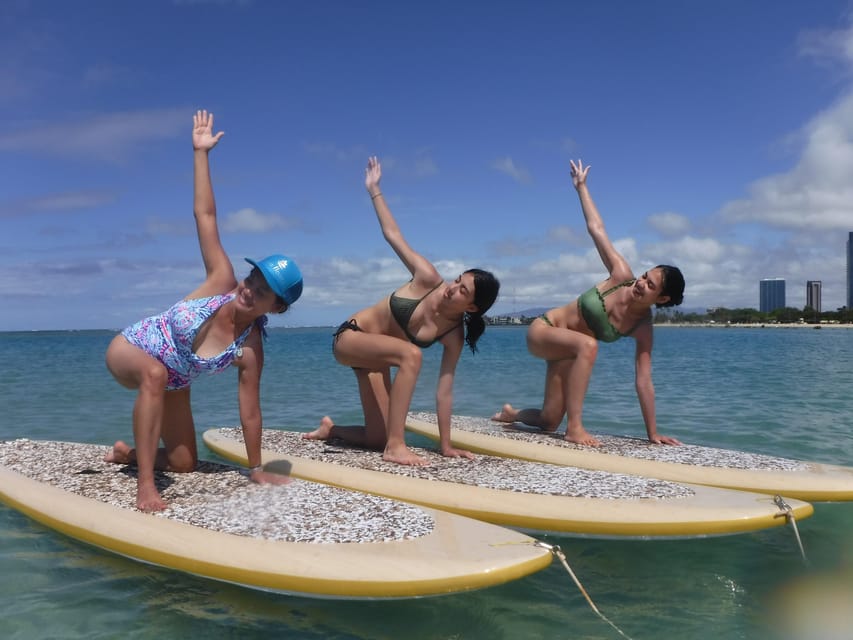
- Small group (up to 10) means more personal coaching as you learn balance and footing.
- Waist-deep, anchored water keeps things manageable, especially if you are not a strong swimmer.
- All-level pose options range from seated and kneeling shapes to standing balance challenges.
- Rocking meditation and savasana let the ocean do the soothing work.
- Equipment and storage included, so you can focus on movement instead of logistics.
Finding your boards at Magic Island, Ala Moana
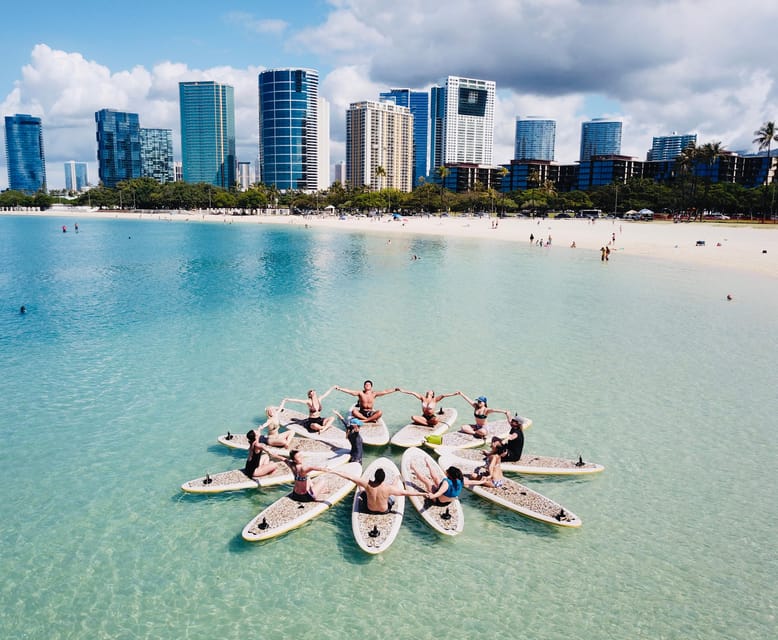
Meet at the south end of the Magic Island parking lot, and look for white and gray boards in the grass, or the colorful Yoga Floats van. It helps to arrive with enough time to check in and get oriented before you’re tugging fins on and off or adjusting your setup.
This location is a big part of why the class works. Magic Island and nearby Ala Moana Beach Park tend to feel open and breezy in the mornings, which makes it easier to get into a steady rhythm. A small group also matters here. With a limit of 10 participants, you’re not lost in a crowd, and the instructor can spot wobble patterns early.
If you’re coming from a beach day, keep your expectations simple. This is not a sightseeing tour. It’s a practical, movement-first session on water, with some mindfulness built in. And yes, one instructor named in the experience is Allie, known for being friendly and very informative, which matches what you want before you trust a board with your body.
More Oahu tours and island experiences worth comparing
From shore briefing to an anchored, waist-deep start
Before anyone gets out into the water, the instructor covers the basics right on shore. You’ll get the paddleboard yoga principles you actually need: how to stay balanced and centered on the board. That sounds simple, but it’s the difference between “This feels scary” and “Okay, I can work with this.”
Then you wade out with your board until you’re waist-deep. Here’s the safety detail that matters most for comfort: the class uses an anchor and stays shallow the whole time. So you’re not doing a deep-water workout where you have to survive waves and distance. It’s designed to reduce stress and let you focus on yoga alignment and balance.
Once you’re set, the session begins with a seated meditation. That creates a nice mental switch. Your body is already on a moving surface, but your mind gets a quiet start. After that, you move into a series of yoga poses adapted for the water.
How common yoga poses become balance challenges on a board
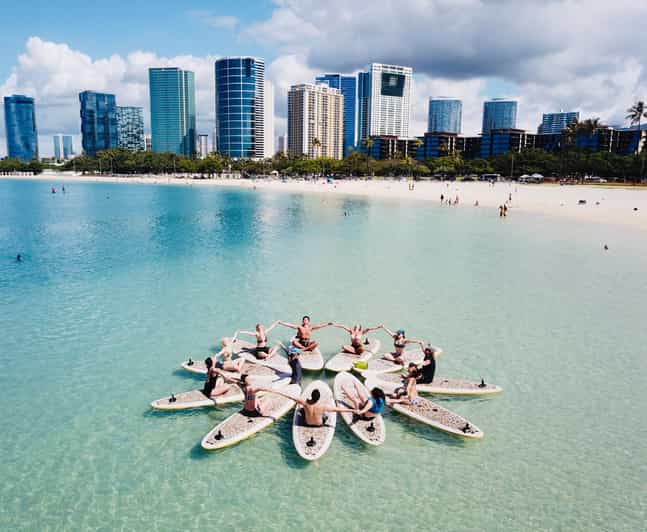
The structure is built around your familiarity. You’re adapting poses you likely know, but on a board that shifts under you. Expect options for seated, kneeling, and reclining positions first, which makes sense because they let you learn the board without going straight to full standing.
The best part is that the instructor doesn’t treat your ability level as a yes or no. Throughout the class, you get variations to match how you’re feeling. That is where the “all skill levels” promise turns real. Beginners can focus on stability and simple shapes, while more experienced yogis can choose harder variations when confidence grows.
You’ll also work core stability, because balancing on a paddleboard is basically an all-body job. Your legs and hips do a lot, but your torso has to stay engaged to keep your center of gravity from drifting. If you tend to lose posture in shaky situations, this class will train you to reset.
And if things go a little wobbly, that’s part of the learning curve. The vibe is relaxed, with a sense of humor. Falling is not treated like a failure, it’s treated like part of learning to move with the water.
Standing sequences, core work, and the “wobble becomes yoga” moment
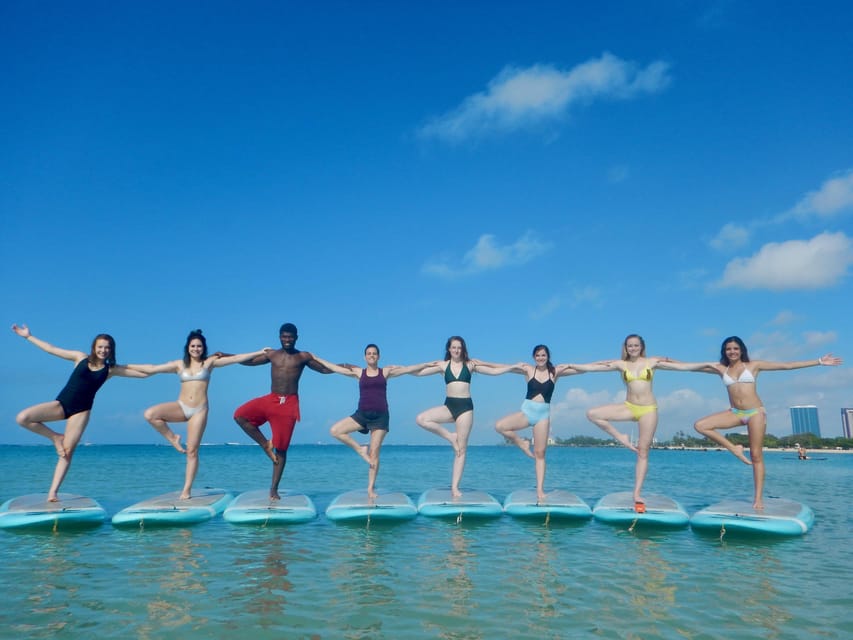
As the class progresses and you gain confidence, standing poses show up. This is where you’ll feel the board most. It’s not just balancing for one second either. You’re practicing control long enough to notice what your body is doing, then adjusting as the board rocks.
You may also get moments of free time to work on poses you want to revisit. That choice matters. Some classes push a set flow with no room to adjust. Here, the structure gives you space to slow down and find your version of a pose.
The standing balance challenges can be as mild or spicy as you choose. You can keep your stance more stable, or you can try options that require stronger control through ankles and hips. Either way, you’re building a kind of balance that transfers beyond the board.
Practical tip: treat your gaze like a stabilizer. Holding your focus steady helps your body stop chasing every wobble. It can turn a chaotic feeling into a manageable one fast.
Meditation and savasana, powered by the ocean
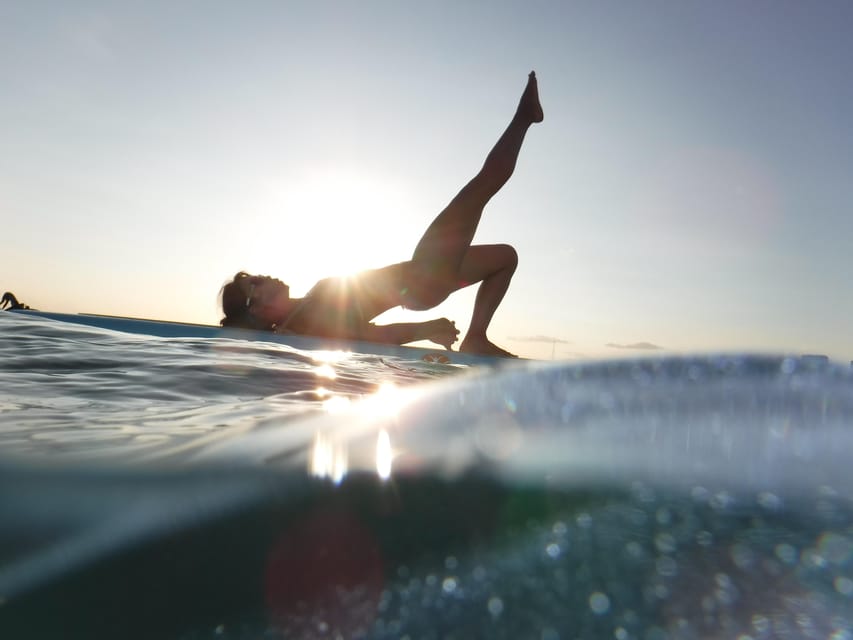
One standout moment is the lying meditation, followed by a blissful savasana. Instead of a still floor, you get the gentle rocking of the ocean waves. That changes the whole sensation of relaxation. Your body might feel like it’s floating, even while you’re still working toward calm.
It’s a subtle detail, but it’s why people love these water-based classes even if they’re not hardcore yoga fans. You’re not just stretching. You’re getting a sensory reset.
The class closes with savasana while your fingers and toes can trail in the water. That small interaction is a nice reward. It brings you out of the “effort mode” and into a quiet, slightly playful finish.
If you’re the type who finds savasana awkward because you feel restless, this may feel easier. The ocean does some of the work by giving gentle motion that keeps you from feeling overly tense.


What to pack, wear, and know before you go
Keep your packing list short and real. Bring swimwear, a towel, sunscreen, and water. You’ll be in the ocean environment, so sunscreen is not optional if you want to stay comfortable.
You should also plan for damp conditions. Even when the water stays shallow and anchored, you’re on a board in the surf area, and you should expect wet splashes. Choose swimwear you feel good moving in, since you’ll transition from seated poses to standing balance.
Included items make it easier to travel light. You get all necessary equipment, plus a safe place to store belongings. That matters because you want to avoid juggling bags, shoes, or phone cases while you’re trying to focus on breath and alignment.
On the rules side: smoking is not allowed, and alcohol and drugs are not allowed. The goal is calm focus, not a party atmosphere.
One small heads-up: the instructor is listed as English. Also, the guidance says they do not receive text messages at the provided number, so if you need help finding the meeting spot, call.
Price and value: what $53 buys you in real terms
At $53 per person for 75 minutes, you’re paying for more than instruction. You’re paying for coaching on a skill that’s half yoga and half balance training, plus the gear that makes it possible.
Here’s where the value comes from:
- Professional guide and small-group format (up to 10) for individualized options.
- All necessary equipment, which can save you from renting or sourcing a board.
- A safe, anchored, shallow setup designed so the class stays accessible.
- A full flow, not just a quick taster, with meditation and a true savasana finish.
What’s not included is worth knowing. There’s a photo package available for $10 per person, but it’s not part of the base price. Transportation to and from the activity is not included either, so factor that into your schedule and day planning.
If you like structured classes, this is a good deal. The instructor handles safety, technique, and the progression of poses. If you are the kind of traveler who loves learning one new thing and then turning it into a repeatable practice, this class fits that style well.
Who should book this SUP yoga class, and who should skip it
This class is suitable for all skill levels, and the teaching style supports beginners without making advanced students feel bored. You’ll start with seated meditation and lower-impact adaptations, then move into standing poses as you choose or as you’re ready.
It’s a strong option if you want a new way to practice yoga without abandoning the basic language of yoga. You’ll still do recognizable shapes, just with water balance and ocean motion added.
But it’s not for everyone. It’s not suitable for children under 12, and it’s not suitable for pregnant women. That’s a clear eligibility rule, and it matters for safety and comfort.
If you’re mildly nervous about water, the shallow, anchored setup helps. The session is designed so you’re not being pushed into deep water just to make it feel adventurous.
Finally, if you hate the idea of getting splashed or you want a dry, studio-style practice, this one might not match your mood. It’s a water class. You go for the water part, even at the calm level.
Should you book Honolulu SUP yoga with Yoga Floats?
Book it if you want a yoga session that feels fun and different, with real structure and room to choose options at your level. The anchored, waist-deep plan plus a small group makes it a practical first step into paddleboard yoga.
Skip or reconsider if the idea of being on water makes you uncomfortable enough that it blocks your enjoyment, or if you fall into the stated limits (children under 12, or pregnant women). Also skip if you are trying to keep the day strictly dry and predictable.
If you want to take home a few images, consider the $10 photo package. Otherwise, plan to save your own pictures for before or after the class, since your focus should be on balance and breathing.
FAQ
Where exactly do I meet for the class?
Meet at the south end of the Magic Island parking lot. Look for white and gray boards in the grass or the colorful Yoga Floats van.
How long is the Honolulu SUP yoga class?
The class runs for 75 minutes.
Do I need to be a strong swimmer?
No. The class stays shallow the whole time, and you wade out to waist-deep water where the board is anchored.
Is the class suitable for beginners?
Yes. The class is listed as suitable for all skill levels, with options provided throughout.
What should I bring?
Bring swimwear, a towel, sunscreen, and water.
Is equipment provided?
Yes. All necessary equipment is included.
How big is the group?
The group is limited to 10 participants.
Is the $53 price a full package, or are there add-ons?
The price includes the professional guide and equipment. A photo package is available for $10 per person, and transportation to and from attractions is not included.
What if my plans change?
You can cancel up to 24 hours in advance for a full refund.
More Workshops & Classes in Honolulu

More Tour Reviews in Honolulu
Not for you? Here's more nearby things to do in Honolulu we have reviewed








Oahu Kayak & Paddle Tours, compared.
 ★ 5.0Kailua Bay, Oahu: Epic Kayak and Snorkel to IslandsFrom $1141,311 reviews
 ★ 5.0Kailua 2-Hour Guided Kayaking Excursion, OahuFrom $199442 reviews
 ★ 5.0Kailua Twin Islands Guided Kayak Tour, OahuFrom $275379 reviews
 ★ 5.0Self-Guided Kayaking Discovery in Kailua, OahuFrom $110249 reviews
 ★ 5.0Haleiwa River Paddle Board Rental with Blue Planet Adventure Co.From $39215 reviews
 ★ 5.0Family, Private & Group Standup Paddle Lessons in WaikikiFrom $118143 reviews
 ★ 5.0Lunar Legends Night Stand up Paddle Kayak Water ExperienceFrom $107141 reviews
 ★ 5.0Polynesian Canoe Sunset Sail126 reviews
Browse the lists this tour appears in