
REVIEW · OAHU SURF LESSONS
1.5-Hour Private Surfing Lesson in Honolulu
Waikiki surf lessons can change your whole day. This private 1.5-hour Honolulu session begins on the sand with surf safety and ocean awareness, then gets you in the water for wave reading. I love the sand-first approach that builds confidence fast, and the one-on-one coaching that helps you catch waves at your own pace. The main consideration is that everyone must know how to swim, and if tides or conditions do not cooperate, ride time can be affected.
Instructors are trained for first aid and lifeguard CPR, which matters when you are learning in moving water. In the real world of family lessons, names like Trevor and Tommy show up in feedback as patient, steady guides who helped kids stay calm and handled small scrapes when they happened.
Key Things You’ll Notice About This Waikiki Private Surf Lesson
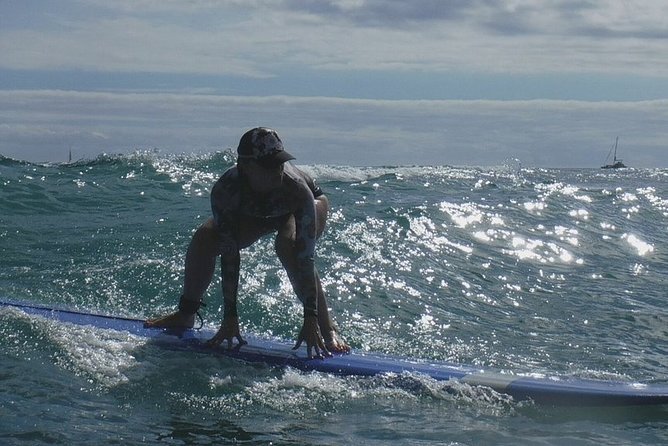
- Sand-first safety coaching so you start with the right ocean habits, not just a board under your feet
- True private pacing with one instructor focused on your technique and comfort level
- First aid and lifeguard CPR trained staff for peace of mind in the water
- Hands-on wave-reading and takeoff instruction designed for beginner success
- Hawaiian surf etiquette lessons so you know how to share Waikiki responsibly
- Optional photo add-on captured on the waves and delivered by email for easy download
Waikiki Surf Lesson Basics, What This 1.5 Hours Really Means
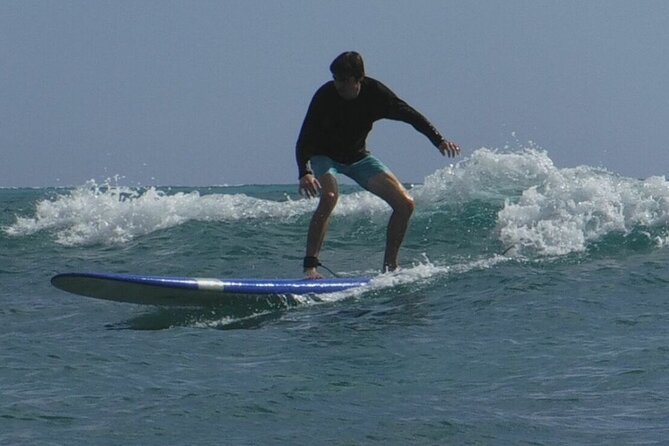
This is a private surfing lesson in Honolulu built around one simple idea, practice with support. You are not shuffled into a crowd. You work with a single instructor who can slow down when you need it and push a little when you are ready.
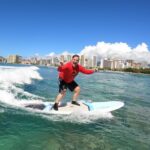
The format is also smart for beginners. You begin on Waikiki Beach with safety training, then you head into the water to ride beginner-friendly waves. That time split matters, because the ocean is the real teacher. If you do not understand what to watch for, even a short session can feel chaotic.
You should also know what the lesson is and what it is not. It is not a long, full-day surf school. It is a focused 1.5-hour session that aims to give you a real shot at standing up and riding, while still teaching you how to stay safe and surf respectfully in Waikiki.
You can also read our reviews of more private tours in Oahu

Meeting Point and Timing, So You Start Calm
The lesson starts at 2169 Kālia Rd, Honolulu, HI 96815, and ends back at the same meeting point. It is listed as near public transportation, which is helpful if you are not renting a car for your Oahu days.
You are looking at about 1 hour 30 minutes on-site time, give or take conditions. If your schedule is tight, leave a little buffer so you are not sprinting from the beach after you get out of the water.
One more practical point, this experience depends on decent conditions. Weather and wave availability can change throughout the day. If you are flexible, you get the best chance at a smooth lesson with actual wave riding.
Step One: Sand Safety Training on Waikiki Beach
The lesson begins where it should, on the sand in Waikiki. Your instructor gives a personalized overview of ocean awareness, surf safety, and the conditions you will be dealing with. This is where you learn the rules of the beach and the rhythm of the water, before you get pulled into the chaos.
Think of this as your mental warm-up. You learn what to pay attention to, things like how sets come in, how to judge the surf zone, and how to position yourself so you are not fighting the ocean blindly.
You also get surf safety basics that help you make good decisions in the moment. The big win here is confidence. When you know what you are looking at, the water feels less random.
It is also where etiquette starts. Even first-timers need to understand how surf breaks work, how to behave around other people, and how to avoid creating problems. Waikiki can get busy, so this education is not just nice to have.
Step Two: Getting In the Water and Reading Waves
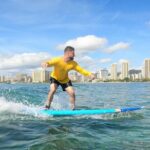
After the sand coaching, you head straight into the water. This is the part most people come for, but it is not just about getting wet. Your instructor helps you learn how to read the waves and set up for takeoff.
For beginner surfers, the biggest hurdle is usually timing. You can have strong legs and still fail if you are paddling at the wrong moment or turning too early. The coaching is designed around that.
You will practice positioning and technique in real time, with guidance that adjusts to you. One of the best parts of the private setup is that you are not repeating instructions in your head for someone else’s benefit. Your instructor can watch your body position, make a correction, and get you back into the action quickly.
This is also where wave-reading becomes practical. You start to understand how to spot the right wave shape, where it is breaking, and how it might respond to you once you are up. You may not walk away as an expert, but you will leave with usable skills for your next attempt.
Takeaway Technique: From Paddling to Standing Up
Even if you have never surfed before, the lesson focuses on the core progression that matters most.
You’ll learn how to:
- set yourself up for an effective takeoff
- position correctly so you are not wasting energy
- interpret conditions so you pick better attempts
Good instruction here is not about complicated theory. It is about small, repeatable movements and timing cues you can remember once you are out beyond the sand.
If you are a parent with kids, this pacing is especially important. The ocean can get cold fast, and kids often need reassurance. In feedback from families, instructors like Tommy helped bring a child in when cold, then handled small scrapes with first aid supplies like bandages. That kind of responsiveness is part of what makes learning feel safe enough to keep going.
More Oahu tours and island experiences worth comparing



Surf Etiquette in Waikiki, The Stuff You Should Know
Surf etiquette can feel like a detail until it matters. Waikiki is a shared place, and your lesson tries to make you part of the community, not just a visitor trying to get lucky.
Your instructor teaches local Hawaiian surfing etiquette and helps you understand proper surf behavior. That usually means learning how to share the lineup, how to respect who has priority, and how to avoid dangerous situations while you are learning.
Even if you only catch a few waves, etiquette training makes the experience more respectful and more enjoyable. You are less likely to end up frustrated or confused when the water gets crowded.
Safety and CPR Trained Instructors, Why It Matters
The instructors for this lesson are certified and trained for first-aid and lifeguard CPR. That is more than a checkbox. It affects how the whole lesson is run.
On a calm day, it is easy to assume surfing will be fine. On a choppy day with falls and scrapes, the difference shows up. Having trained staff means your instructor can respond quickly if someone gets hurt, and you can focus on learning without carrying extra worry.
It also helps with how they coach. A safety-minded instructor tends to teach ocean awareness clearly, not just throw you into waves and hope for the best.
If your group includes kids, this matters a lot. Small reef cuts, sudden cold, and panic moments are all part of learning the ocean. In at least one family lesson, a child got a few scrapes from the reef and the instructor provided bandages. That is the kind of preparation you want on a surf trip.
Gear and What to Bring, Simple and Practical
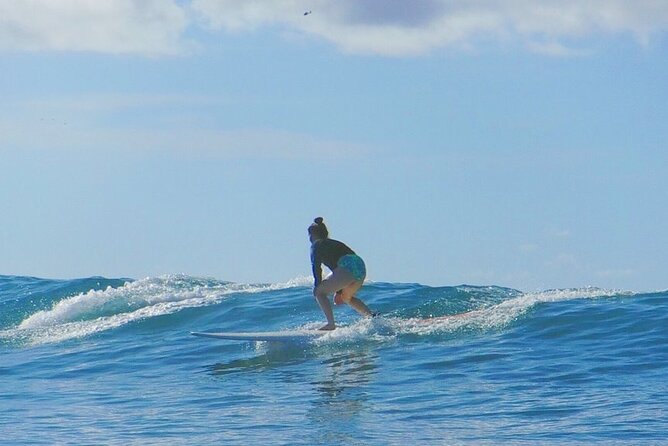
The tour info does not list specific gear requirements, so plan based on comfort and ocean safety.
Here is what you should consider:
- Reef protection. If you have sensitive feet, you might want reef walkers or water shoes to reduce cuts from the reef.
- Sun protection. Waikiki sun is intense, especially when you are focused on technique and forget to reapply.
- A towel and a dry change of clothes. Your lesson ends back at the meeting point, so you will likely want to rinse off and change fast.
Because everyone must know how to swim, your comfort in the water matters. If you get nervous in open water, tell your instructor right away. Private lessons are built for adjustments.
Photos and the Optional Photographer Add-On
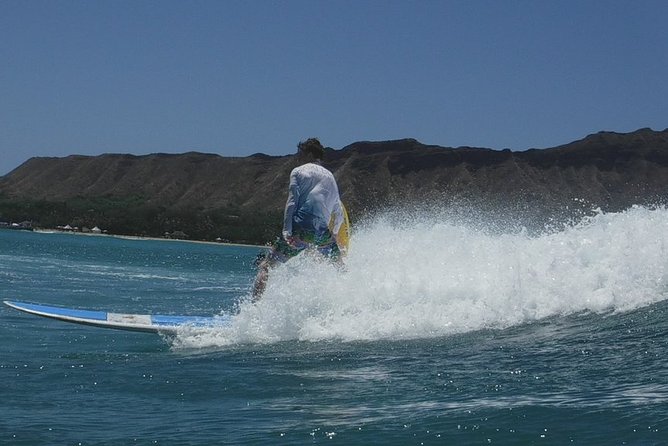
This lesson can include action photography. A photographer may be out on the waves, capturing shots while you ride. Photos are available for separate purchase, and the process is designed to be easy.
In feedback, people described receiving an email the evening of the lesson, previewing images, then using a link to download after payment with minimal friction. For many first-timers, this is a big value. You are usually too busy watching the wave to photograph your own progress from shore, and the pictures become proof you actually stood up in Waikiki.
One caution, if photos are a must-have for your group, confirm what is included when you book. There has been at least one unhappy outcome tied to photographer availability and expectations about photos. Most likely your experience will be smooth, but if you care about getting images, you should set expectations early.
Conditions, Tides, and Why Your Lesson Might Shift
Waikiki waves depend on conditions. Even when you book a private lesson, the ocean decides how friendly it will be.
If tides make it hard to ride, you might see a reschedule. One family shared that a lesson at 2pm was adjusted due to high tide with no waves to ride, and they were moved to the next day at 10am to make sure they got a good session. That kind of problem-solving is something you should appreciate, because wave availability is not something an instructor can force.
So if you have a tight itinerary, build in flexibility. Choose a time when you can afford an adjustment, especially if your surf lesson is a top priority during your Oahu stay.
Who This Private Surf Lesson Is Best For
This private 1.5-hour lesson is a strong match for:
- First-timers who want focused instruction without sharing the instructor’s attention
- Families with kids who need calm coaching and responsive safety care
- Guests who want Hawaiian surf etiquette explained, not just taught a stance
- People who can swim comfortably and want real coaching in a short window
There are also a few clear requirements. The minimum age is 5 years, and all participants must know how to swim. Travelers should have a moderate physical fitness level, since you will be paddling, balancing, and repeatedly getting in and out of the water.
For children under 13, the rules emphasize safety and require booking on a private lesson. That is a good fit for parents who want their kid’s instruction tightly controlled.
If you are comfortable with swimming but unsure about ocean confidence, bring that honesty. A private format is built for adjusting how you move and what you attempt, so you can still have a great time even if you are not instantly fearless.
Value for Money, What You’re Actually Paying For
There is no itemized menu of costs here, but you can judge value by what is included: private instruction, ocean safety coaching, wave-reading teaching, and local surf etiquette guidance.
The lesson is also built to maximize your time in the water. You are not spending hours walking around learning theory. You get sand safety first, then you work. With one instructor focused on you, you spend less time guessing and more time practicing.
The optional photo add-on can be part of the value calculation too. If your phone stays in your bag during the action, those photos can turn the trip memory into something you can actually show your friends.
If you are comparing this to larger group lessons, the private format is where you tend to feel the difference most. When the water gets busy and your timing is off, personalized coaching makes learning quicker. It is the classic trade-off, pay more for attention and reduce frustration.
Quick Booking FAQ for a Smooth Surf Morning
If you are wondering when to book, here is the practical angle.
Pick a day when you can adapt if conditions are not right. Keep your schedule flexible. That gives you the best chance at riding waves instead of just doing beach training.
Also, if kids are in the group, book with private lessons in mind. The rules for under 13 are there for a reason, and it keeps the whole experience safer and easier to manage.
Finally, if you care about photos, confirm expectations early. Most sessions include action photography, but you want clarity on what you will receive.
Should You Book This Private Surf Lesson in Honolulu?
I think you should book it if you want a real beginner-friendly surf lesson with sand safety, hands-on wave coaching, and local etiquette taught in plain language. The private setup is ideal when you want an instructor who can focus on your comfort, your pace, and your technique in the moment.
You might want to skip or reconsider if your group cannot swim, if the physical demands feel like too much, or if your schedule is so rigid that a reschedule would ruin your whole day. With ocean conditions changing, flexibility is part of the deal.
If you can swim, you are ready for a short, high-impact Waikiki experience, and you want the kind of guidance that makes standing up feel possible, this is a smart way to spend 1.5 hours in Oahu.
FAQ
How long is the private surfing lesson in Honolulu?
The lesson is about 1 hour 30 minutes.
Where does the lesson start?
It starts at 2169 Kālia Rd, Honolulu, HI 96815, USA, and ends back at the meeting point.
Is this a private lesson or a group lesson?
It is private. Only your group participates.
Do the instructors have first-aid or CPR training?
Yes. The instructors are trained for first aid and lifeguard-level CPR.
What are the age and swimming requirements?
The minimum age is 5 years. All participants must know how to swim.
Is moderate fitness required?
Yes. Travelers should have a moderate physical fitness level.
Are photos included in the lesson?
Souvenir photos are not included. A photographer may be available, and photos can be purchased separately.
What if weather or waves are not good?
This experience requires good weather. If it is canceled due to poor weather, you will be offered a different date or a full refund.
More Workshops & Classes in Oahu
More Private Tours in Oahu


More Tour Reviews in Oahu





Not for you? Here's more nearby things to do in Oahu we have reviewed








Oahu Surf Lessons, compared.
 ★ 4.5Open Group Surfing Lesson in Waikiki, HawaiiFrom $112582 reviews
 ★ 4.9Beginner-Friendly Waikiki Beach Surfing LessonFrom $125425 reviews
 ★ 5.0Waikiki Private Group Surf LessonFrom $123298 reviews
 ★ 4.9Waikiki 2-Hour Beginner Group Surf LessonFrom $103191 reviews
 ★ 5.0Surf Lesson Without the Crowds Including GoPRO VideosFrom $125167 reviews
 ★ 4.5North Shore Beginner Surf Lesson, HawaiiFrom $104114 reviews
 ★ 5.0Oahu Private Surfing LessonFrom $226113 reviews
 ★ 5.0Private Surf Lesson at Waikiki BeachFrom $179107 reviews
Browse the lists this tour appears in