
REVIEW · OAHU SCUBA & WRECK DIVES
Open Water Scuba Certification
If you want scuba skills without the guesswork, this is it. The Open Water course in Honolulu is built around a steady progression from beach practice to ocean check-out sessions, all within an SSI framework.
I like that it’s a full SSI certification path over four days, spread across two consecutive weekends. I also like the small-group format (max 8 students) and the strong coaching vibe people describe, including instructors like Lenny, Theo, Nick, Jess, Jake, Ed, Chandler, Hunter, and Anna.
One thing to weigh: you are responsible for your own transportation, and you need to complete the required online learning before day one. If that schedule does not work, the course is not flexible.
Key Points That Matter Before You Commit
- Two consecutive weekends, four days total: training that stays logical and repeatable, instead of rushed tryouts.
- SSI Open Water certification outcome: you finish with SSI certification plus four local scuba training sessions logged.
- Small group size (up to 8): more time with the instructor and faster feedback during skills.
- Gear included, but not everything: scuba equipment is provided, yet you bring mask, snorkel, fins, and boots (or buy them on-site).
- Clear safety prerequisites: health questionnaire required, and flying close to training is discouraged.
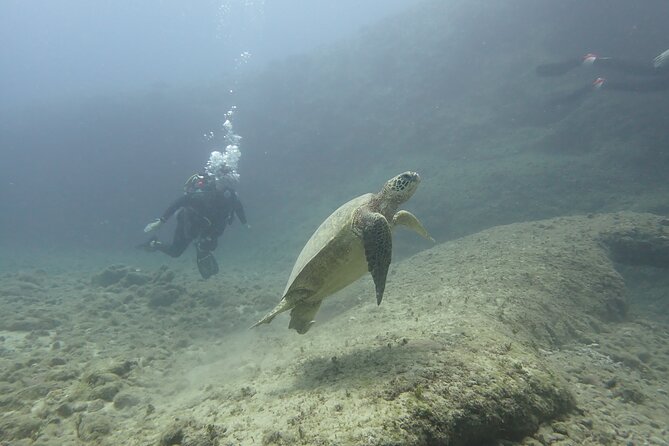
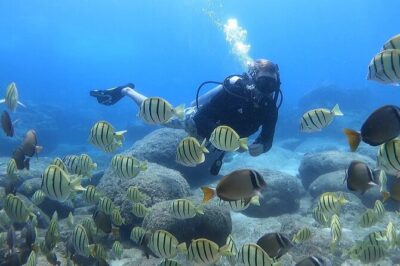
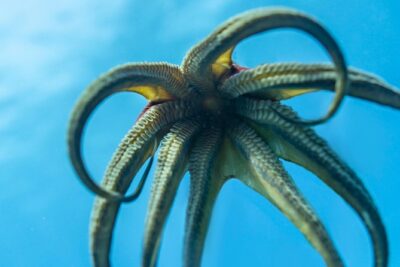
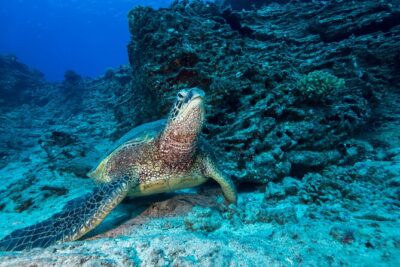
- Marine life focus: sea turtles, octopuses, and lots of colorful tropical fish are a real goal here.
Why Honolulu Works for SSI Open Water Skills
Honolulu is a smart place to earn your Open Water certification because you get a “real world” setting right from the start. You are not just learning the theory. You are practicing buoyancy, breathing control, and gear use in conditions that feel like what you came to Hawaii to see.
This course is also structured in a way that helps your brain settle. You do your initial learning and review, then you practice confined-water skills. After that, you move into ocean sessions where you apply the exact same techniques under gentle supervision. That progression matters, especially if you are nervous. People consistently mention instructors being patient and making sure you feel comfortable rather than pushing you past your comfort zone.
The best part for practical travelers: you are not trying to cram everything into one chaotic week. The two-weekend rhythm gives you time to absorb the online learning and remember the skills between days.
You can also read our reviews of more scuba diving tours in Oahu

Meeting Point and Your Early Start
The class starts at Honolulu Scuba Company, 670 Auahi St, suite a-1, Honolulu, HI 96813. Start time is 7:00 am, and the activity ends back at the same meeting point.
That 7:00 am start is not random. Scuba days run on tight timing, especially when you are coordinating equipment prep, checklists, and getting everyone ready on-site. If you are staying off-site, plan buffer time so you do not feel rushed. And because you need your own transportation, you will want a simple plan for getting there quickly.
Also note the group size cap of 8 travelers. That is usually where you get calmer logistics and more personal attention.
Day 1: Exam Review Plus Confined-Water Training From the Beach
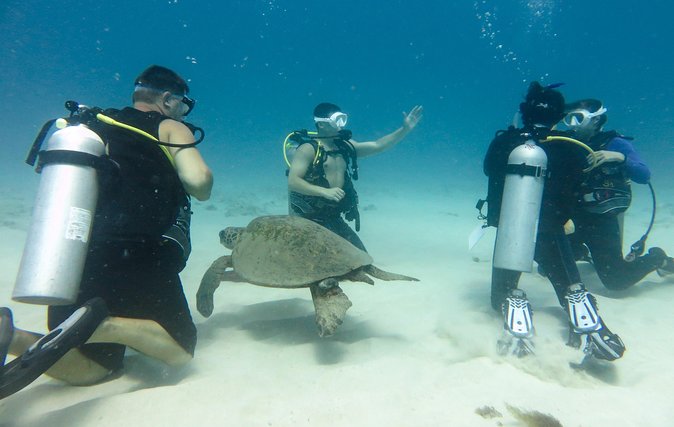
Day one is all about preparation and fundamentals. You will review the final exam and do confined-water scuba training from the beach. This is where you learn how the gear behaves, how breathing feels, and how to communicate and manage tasks underwater.
If this is your first scuba course, confined water is your friend. It lets you practice the motions without dealing with bigger variables. You can focus on the basics: controlling your buoyancy, using your equipment correctly, and staying calm if anything feels unfamiliar.
Digital learning is included and required before day one. The operator provides access, and you should treat this as part of the course, not optional homework. If you show up having done the online portion, day one feels much more teachable.
The vibe people talk about with this company is that instructors take time with each student. Names you might work with include Lenny, Theo, Nick, Jake, Ed, Chandler, Hunter, and Anna, depending on the schedule.
Day 2: Two Ocean Sessions to Prove It Clicks
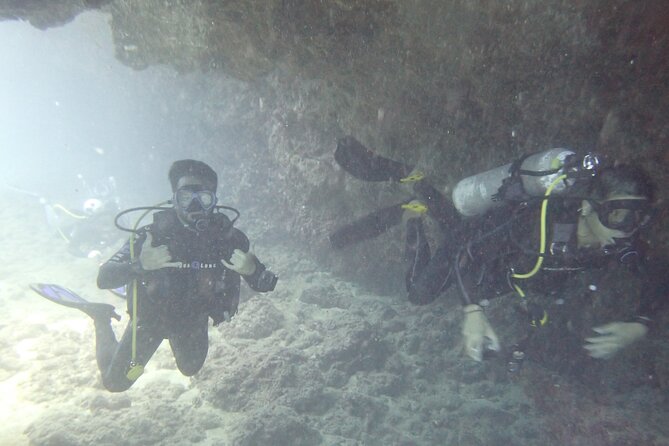
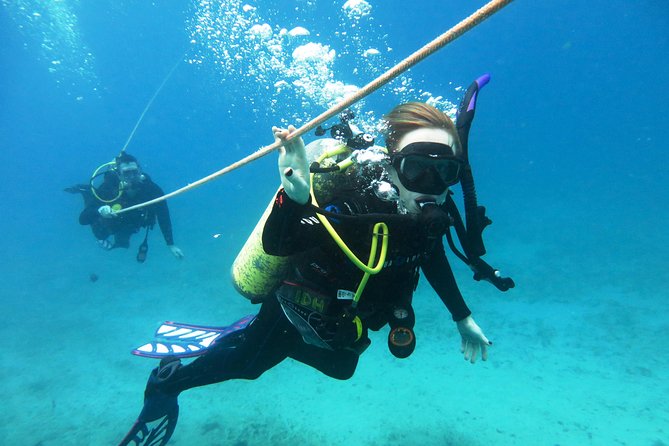
Day two is where the course leaves the beach environment and moves into the ocean. You complete two ocean sessions (open water training) designed to test the skills you practiced in confined water.
This is a big step. Not because it has to be scary, but because the ocean changes everything slightly: visibility, current feel, and the way your body reacts when you are not just in a controlled space.
From an outcomes perspective, this day matters because it bridges the gap between “I can do the skills” and “I can do the skills while things are moving and I am experiencing the ocean for real.” If your breathing feels steady and you can handle basic gear tasks, you will be in great shape for day three.
This is also where marine life becomes part of the motivation. The course aims for classic Hawaii sightings like sea turtles, octopuses, and a wide variety of colorful tropical fish. Even if you do not see everything, the point is that the training is tied to the environment you came to experience.
Weekend Gap and Day 3: Confined Training to Lock In Confidence
Between weekends, you get a gap day where you can reset. Use that time to review what you learned online and remember what felt easiest and what felt hardest. If you want to show up to day three confident, do not wait until the last minute.
Day three brings you back to confined-water training. The purpose is to clean up the rough edges. This is not just repetition for repetition’s sake. It’s where your instructor can correct technique, improve comfort with the gear, and help you build muscle memory so your skills feel automatic during final check-out sessions.
This stage is also a confidence builder. If you were anxious at first, day three is often the moment where the course stops feeling like a test and starts feeling like real training.




Day 4: Final Check-Out Sessions and Your SSI Certification
Day four is the closing day: the final two check-out sessions. This is where you demonstrate that you can handle the course requirements in open water conditions.
By the end of training, you earn your SSI Open Water Scuba Certification from SSI, and you will have logged four local scuba training sessions. In practical terms, this means you leave with the credential you need to keep diving legally and safely with the right depth and training track for your certification level.
One more positive detail from the highlights: completion ties you into the ocean community as a lifetime member. That is more than marketing. It gives you a reason to keep learning and protect the underwater world you are starting to appreciate.
Equipment: What’s Included, What You Bring, and the Real Cost
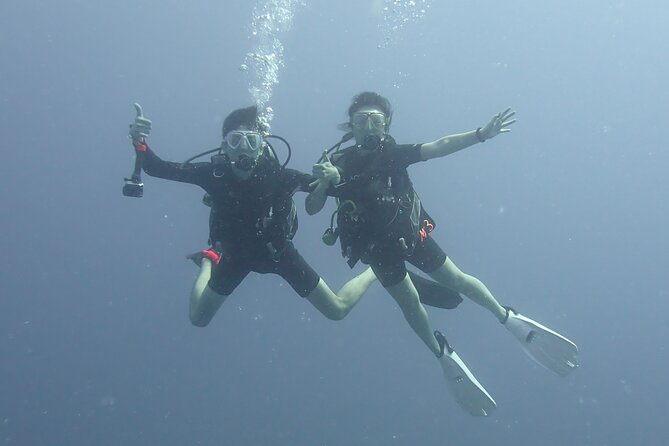
The course includes use of scuba equipment. What is not included is what you put on first: your mask, snorkel fins, and boots.
If you do not already have gear, you have two paths:
- Bring your own (best value if you already own it).
- Buy or rent through the operator, where prices for required items start at $175.
That added cost is worth planning for. When you budget the $495 price, assume you may need to add the cost of mask and fins if you do not own them. If you do own basic gear, you get a simpler, better value math.
Also keep in mind that gear fit affects how training feels. A comfortable mask prevents leaks and distraction. Proper fins help you move with control. Good boots protect your feet during beach transitions.
Instructors and Teaching Style That People Praise
The most consistent praise in the feedback is about instruction quality: people describe instructors as patient, thorough, and focused on safety while building confidence. That combination is huge for first-timers.
You may learn with instructors including:
- Lenny
- Theo
- Nick
- Jess
- Jake
- Ed
- Chandler
- Hunter
- Anna
- plus other staff members you might see in the operation, such as Rhonda (owner) mentioned as especially warm and welcoming.
What good instructors do, and what you can look for during your training, is simple:
- They explain the skill clearly before you try it.
- They help you adjust your gear and comfort level before asking you to perform.
- They watch your breathing and buoyancy choices, not just whether you can follow steps.
- They keep you from rushing, especially if you are nervous.
There are a couple of notes in the feedback that are worth acknowledging for balance. One person flagged concerns about COVID measures, another mentioned equipment condition like a torn wetsuit, and someone else noted an issue with a boat captain’s attitude on a specific outing. Those are not the dominant pattern, but they are enough that you should communicate any concerns on the spot.
Ocean Life You Can Aim For Around Oahu
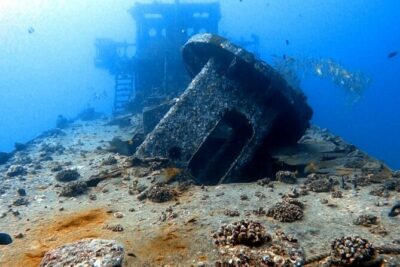
This is not a wreck-tour or a fish-identification seminar. It is a certification course, so marine life is a bonus tied to the experience.
Still, the highlights are specific. You are encouraged to look for:
- Sea turtles
- Octopuses
- A lot of colorful tropical fish
The training format gives you multiple chances across the week. You practice fundamentals in confined water, then you apply them in the ocean on day two, and you get more open-water performance checks on day four. That repetition is exactly what increases your odds of enjoying the scenery rather than just surviving the course.
Price and Value: Is $495 a Good Deal?
At $495 per person, you are paying for a structured SSI Open Water certification course plus coaching and equipment support. Here is what makes it feel like real value rather than just a price tag.
You get:
- A pro guide/instructor setup
- Use of scuba equipment
- Required digital learning
- An SSI certification outcome
- Four local scuba training sessions logged
- A max group size of 8 students
Where cost can change:
- You still need mask, snorkel, fins, and boots, unless you buy them. Starter prices for those items start around $175.
- You need your own transportation, so factor local driving or rides into the overall budget.
When I look at value like this, the deal is strongest if:
- You do not already have a certification and you want it done the right way.
- You will follow the schedule closely, especially the online learning before day one.
- You want patient coaching and small-group attention.
If you already own all needed gear and can make the two-weekend timing work, the $495 price looks more attractive.
Before You Book: Practical Considerations That Affect Comfort
A few things can make or break your experience, even if the teaching is excellent.
First, there is a health check. You must complete a health questionnaire before diving. Some medical conditions like asthma or heart conditions may prevent you from diving, so check with your doctor if you are unsure.
Second, timing with air travel matters. Diving within 48 hours of flying is not recommended. If you are flying in right before the course, adjust your travel plan so you have a buffer day or more. This is the kind of rule that keeps training safer and smoother.
Third, schedule flexibility is limited. The experience is non-refundable and cannot be changed for any reason. That means you should only book if your weekends are truly locked in.
Finally, this is designed for locals, but anyone who can meet the schedule is welcome. Expect to manage your own logistics like getting to the shop and arriving on time with the gear you have.
Should You Book This Honolulu SSI Open Water Course?
Book it if you want a real certification path in a real Hawaiian setting, and you value patient, safety-focused instruction. The small-group limit, the SSI certification outcome, and the structured two-weekend format make it a practical choice.
I would think twice if you:
- Cannot reliably handle the online learning deadline before day one.
- Do not want to manage transportation on your own.
- Might struggle with the health questionnaire requirements.
- Are likely to change your schedule and need flexibility, since the experience is non-refundable.
If your goal is to leave Oahu with an SSI Open Water card and confidence, this is a strong option. You will trade a bit of planning and early mornings for the chance to learn the skills and still look for sea turtles, octopuses, and colorful reef fish along the way.
FAQ
How long is the Open Water certification course?
The course runs for about 4 days total, spread over two consecutive weekends.
What happens on each day of training?
Day 1 includes final exam review and confined-water training from the beach. Day 2 includes two ocean sessions. Day 3 completes confined-water training. Day 4 includes the final two check-out sessions.
What equipment is included, and what do I need to bring?
The experience includes use of scuba equipment, but you need to bring your own mask, snorkel, fins, and boots. If you need to buy them, prices start at $175.
Is digital learning included?
Yes. Digital learning is included and required before your first day of class. Access is provided by contacting the operator.
Are there any health requirements?
Yes. You must complete a health questionnaire prior to diving. Some pre-existing medical conditions (such as asthma or heart conditions) may prevent you from diving, so you should consult your doctor.
Do I need transportation?
Yes. Private transportation is not included, so you will need to arrange your own transportation.
More Scuba Diving Tours in Oahu
More Tour Reviews in Oahu

Not for you? Here's more nearby things to do in Oahu we have reviewed



Oahu Scuba & Wreck Dives, compared.
 ★ 5.0First-Time Scuba Diving in Honolulu + Free VideosFrom $893,123 reviews
 ★ 5.0Beginner Scuba Diving Experience with Video Package in HonoluluFrom $77877 reviews
 ★ 5.0Certified Diver: 2-Tank Deep Wreck and Shallow Reef Dive Off OahuFrom $248331 reviews
 ★ 4.5Incredibly Fun Coral Reef Giant Sea Turtles 4hour Boat Scuba TourFrom $299300 reviews
 ★ 5.0Certified Diver: 2-Tank Shallow Reef Dives off OahuFrom $141278 reviews
 ★ 4.5Waikiki 2 Tank World Class Wreck SCUBA Diving – Certified OnlyFrom $269205 reviews
 ★ 5.0DISCOVER Scuba Diving Experience in HonoluluFrom $141202 reviews
 ★ 4.8Waikiki Discovery Scuba Diving for BeginnersFrom $27099 reviews
Browse the lists this tour appears in