
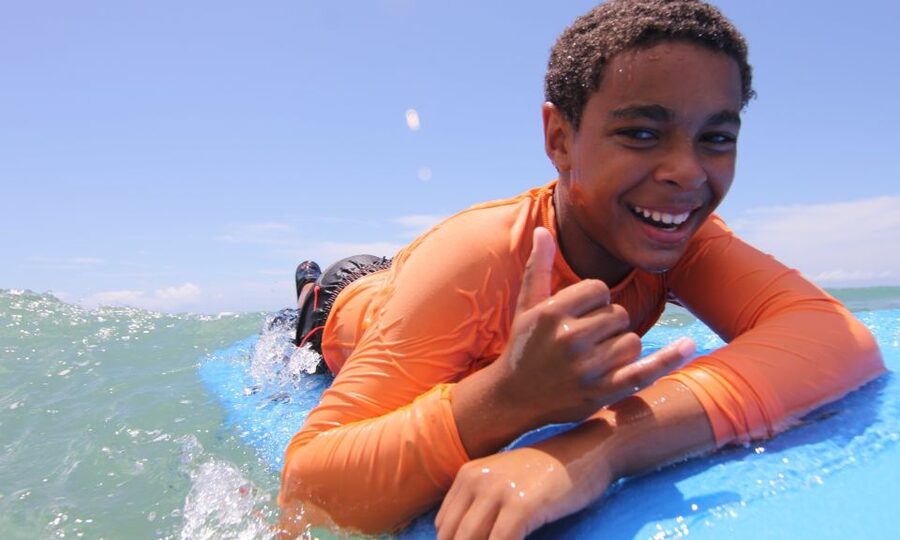
REVIEW · WAIKIKI & DIAMOND HEAD TOURS
Oahu: Waikiki 2-Hour Semi-Private Surfing Lesson
First-time surfers do not need to guess. This 2-hour Waikiki lesson uses a secluded beach near the action, so you learn without feeling swallowed by crowds. I love the 20-minute land lesson that covers waves, currents, winds, tides, and surf etiquette before you ever hit the water, and I also like the semi-private setup with a professional instructor who can adjust to your skill level. One possible drawback: the instructor language is English, so if you need another language, plan ahead.
You start on dry land, learn how to position yourself, and get your board setup basics in a quick but practical way. Then you move into the water to practice paddling, turning, and finally standing and riding waves. The lesson includes the key gear, but you still need to bring essentials like a towel and sunscreen.
If you have mobility limits, back issues, are pregnant, or you are a young child who is not a strong swimmer, this is not a good fit. Also, because it’s a surf lesson at ocean conditions, you should expect it to be physically active, even at a beginner level.
Key things to know before you go
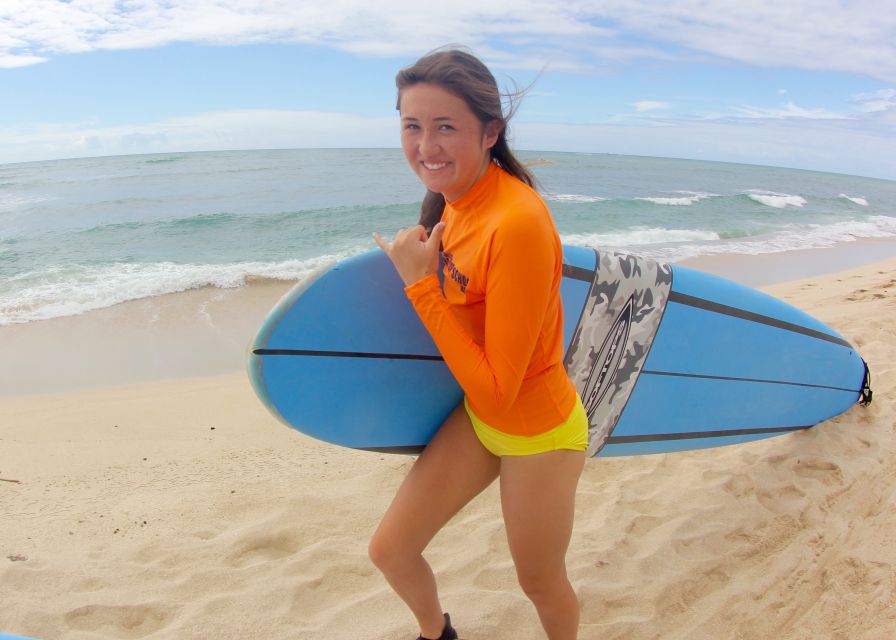
- Secluded Waikiki-area beach: you get first-wave focus without constant distractions
- 20-minute land session first: waves, currents, winds, tides, and water safety are covered up front
- Semi-private coaching: you work with a pro instructor who can correct your positioning and paddling
- All major equipment included: board, leash, rash-guard, reef, and booties
- English instruction: you will want to be comfortable with English coaching cues
- Safety rules for kids: children 10 and under or weak swimmers require private one-on-one
A Secluded Waikiki Coastline, Built for Your First Stand
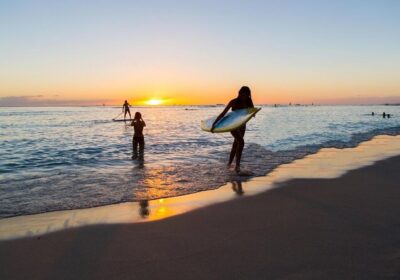
Waikiki is famous, and you can still have a more relaxed surf start. This lesson takes place at a secluded beach near Waikiki, which matters more than it sounds. When you are learning, you want time to think, paddle, and reset without feeling rushed by constant boat traffic, waves that are too chaotic for beginners, or a shoreline full of spectators.
I like that the format is designed for real progress in only 2 hours. You are not just watching from the beach and hoping for the best. You get structured instruction, your gear is selected for your level, and you practice the sequence that actually gets you standing: paddling, turning, maneuvering, then catching a ride.
One more plus: the instructor builds in Hawaiian surf culture basics along the way. That is a big deal because surf is not just a physical skill. It has rules, etiquette, and respect for the ocean and other surfers.
You can also read our reviews of more private tours in Oahu

The 20-Minute Land Lesson That Makes the Water Easier
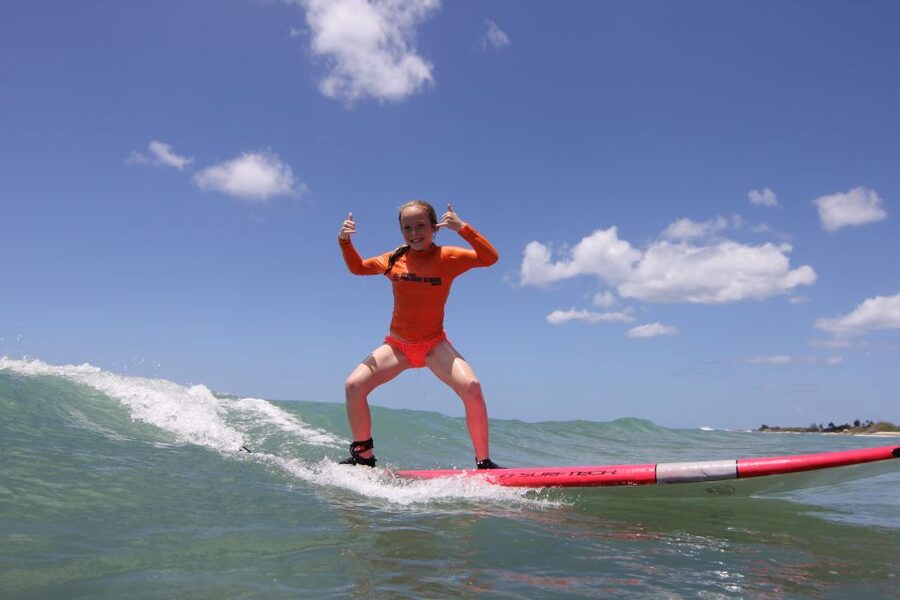
Your lesson begins with a quick 20-minute land session. Even though it is short, it sets you up for fewer mistakes once you are in the water.
Here is what you learn on land:
- How waves, currents, winds, and tides affect what you see and where you should be
- Proper positioning so you can paddle with purpose and line up for the wave instead of chasing it
- Surf etiquette and water safety, so you know what to do when someone else is also on the wave
- How to stand up correctly from your board setup, not just by copying a random body position
Then you get a board-specific briefing. You go through how to use your surfboard, leash, and fins. That sounds basic, but it matters because a leash used wrong can tangle. Fins used wrong can make your turning clumsy. When you know what each piece is for, your first attempts feel less like trial and error.
If you are a true beginner, this land session is the difference between feeling lost and feeling guided. If you are an experienced surfer, it still helps, because you are learning how local conditions and local etiquette translate into better decisions in the water.
Gear Included, and Why Reef and Booties Matter
You do not need to show up with a surf-rental checklist. The lesson includes the big items:
- Surfboard
- Leash
- Rash-guard
- Reef and booties
That means you avoid the most annoying part of a surf day, which is realizing you rented gear that does not fit your comfort or the ocean conditions. Rash-guard plus reef gear helps with the kind of friction and salt exposure you can deal with during repeated paddling and wave attempts.
The included booties also make sense here because reef or rocky contact can happen at many shorelines. You may not notice hazards until you need to step around. Having proper footwear reduces that stress, so you can focus on learning.
You still have two simple must-brings:
- Towel
- Sunscreen
If you forget sunscreen, you will feel it later, especially with sun on the water and reflected glare. Bring a towel you are actually comfortable using right after you come out, because you will likely want to dry off fast and cool down.
Getting Into the Water: Maneuvering Over Crashing Waves
Once you are geared up, you head into the water with your instructor. This is where the lesson earns its keep. You are not thrown into random conditions with zero coaching. The instructor gives you a run down on how to maneuver over crashing waves.
Then you practice the sequence that leads to standing:
- Paddling techniques so you can position your board and gain the right momentum
- Turning and maneuvering so you are not just going straight, you can aim and adjust
- Riding waves after you learn how to stand from your setup
This is also where the semi-private structure helps. With fewer people than a huge group setup, you can get corrections tied to what you did wrong in your last attempt. That matters in surfing, because the smallest change in timing, paddling angle, or foot placement can shift you from wobble to wave ride.
Also, you will learn water safety and surf etiquette as part of the overall lesson flow. That is not just a preface. It is what you rely on when you are sharing the water.
Paddling, Turning, and Standing: Your 2-Hour Timeline
The whole lesson is 2 hours, with the land session taking about 20 minutes. That leaves a solid block for actual ocean practice, which is what you came for.
A realistic way to think about the timing:
- Early minutes in the water are about getting your paddling and board control going
- Mid-lesson is where turning and maneuvering get coached, since that is what helps you line up with waves instead of getting stuck
- Later focus shifts to standing and riding, with the instructor helping you correct your position as you try again
The “stand and ride” goal is stated clearly, but the lesson is still built for beginners. If you never surfed before, your job is to learn the movement chain. If you have surf experience, your job is to refine technique for local conditions.
One of the most praised parts of this lesson is how the beach setup gives you space for those first meters. A quiet start lets you practice the basics without feeling like you are being pushed around.
More Oahu tours and island experiences worth comparing



Surf Culture and Etiquette: More Than a Fun Add-On
Some surf lessons teach technique only. This one also aims to build your understanding of Hawaiian surf culture. That is a subtle but meaningful difference.
Why it matters to you:
- Surf etiquette helps keep you safer and calmer while you share waves with others
- Knowing the etiquette and basic cultural context makes the experience feel more respectful, not just transactional
- It helps you interpret what you see, like where people are choosing to paddle and how they position around the line
In other words, you are not just learning how to stand up. You are learning how surfers operate, what rules they follow, and how to behave in a way that supports everyone.
It is hard to put a price tag on respect and good practice. Yet it is exactly the stuff that makes a lesson feel real once you are on the board.
Price and Value: $156 for Gear, Coaching, and Real Practice Time
At $156 per person for a 2-hour semi-private surf lesson, the value depends on what you expect to get.
What you are paying for that many cheaper options skip:
- A structured land session with fundamentals like waves, currents, winds, tides, positioning, etiquette, and water safety
- A professional instructor who adjusts to your level and works with you to make the right moves
- Equipment included, including rash-guard, reef, and booties
If you add up the cost of surf gear rental, plus the cost of an instructor with safety coaching, the price starts to make sense. The included equipment is not a small add-on. It removes uncertainty and helps you focus on learning instead of hunting for gear that might not fit.
The semi-private format also improves your odds of getting helpful corrections. That is what accelerates learning, especially when you only have two hours.
Who This Lesson Fits Best (And Who Should Skip It)
This is aimed at both ends of the surfing spectrum. It works well if you are:
- A complete beginner who wants a clear path from land basics to standing on waves
- An advanced surfer who wants to learn local conditions and surf them with better local decision-making
You should skip this lesson if:
- You are pregnant
- You have back problems
- You have mobility impairments
The activity is clearly not set up as a gentle sit-and-watch experience. It has paddling, maneuvering, and getting into and out of the water repeatedly.
Age matters too. Children 10 and under, or weak swimmers, are required to take a private one-on-one lesson for safety. If that is your situation, you will get a safer, more suitable setup by choosing the private option.
One more practical note from the experience setup: instruction is in English. The lesson is listed with an English-speaking instructor, and one participant reported a language mismatch when they selected a Spanish class but received English. If you want a specific language, confirm before you book, so you do not end up fighting the coaching cues.
Small Practical Tips for a Smoother Surf Lesson
You can’t control ocean conditions, but you can control how ready you are.
- Wear sunscreen before you get in the water. Reapply if you expect a long day, but for this lesson, just start protected.
- Bring a towel you can use quickly. You will likely want to dry off fast after you finish.
- If you know you get cold easily, plan for quick warming after the session, because you will be wet and in salt air.
- If English is not your comfort language, consider how you will process instructions. Surf requires fast body responses, and the cues come quickly.
These are not fancy tips. They just make the lesson feel smoother, so you can spend more time learning and less time adjusting.
Should You Book This Waikiki Surf Lesson?
If you want a short, structured way to learn to surf in the Waikiki area, this is a strong pick. The biggest reason is the setup: a brief land session with safety and wave basics, then time in the water practicing paddling, turning, maneuvering, and standing. Plus, you get the key gear included, and you are coached by a professional instructor in a semi-private setting.
Book it if:
- You want a clear beginner-to-wave plan
- You value safety and etiquette, not just tricks
- You want equipment handled for you
Skip or rethink it if:
- You need an instructor in a language other than English
- You fall into the not-suitable categories (pregnancy, back problems, mobility impairments)
- You are bringing a young child or a weak swimmer, since this setup requires a private one-on-one option for those cases
If you want a realistic first surf lesson that helps you actually ride, this one is worth your attention.
FAQ
How long is the Waikiki semi-private surf lesson?
The lesson duration is 2 hours.
Where does the lesson take place?
It runs at a secluded beach near Waikiki.
Do I need surfing experience?
It works for complete beginners and also for more advanced surfers who want to learn local conditions.
Is there any instruction on land before getting in the water?
Yes. You get a quick 20-minute land session first.
What surf gear is included?
The lesson includes a surfboard, leash, rash-guard, reef, and booties.
What should I bring with me?
Bring a towel and sunscreen.
What language is the instructor?
The instructor speaks English.
What type of group is this lesson?
It is a private group, listed as semi-private in the experience title.
Who is this lesson not suitable for?
It is not suitable for pregnant women, people with back problems, and people with mobility impairments.
What is the cancellation policy?
You can cancel up to 24 hours in advance for a full refund.
More Workshops & Classes in Oahu
More Private Tours in Oahu


More Tour Reviews in Oahu





Not for you? Here's more nearby things to do in Oahu we have reviewed








Waikiki & Diamond Head Tours, compared.
 ★ 5.0Parasailing Experience in Waikiki, HIFrom $447,692 reviews
 ★ 4.5Waikiki Trolley Hop-On Hop-Off Tour of HonoluluFrom $224,783 reviews
 ★ 5.0Waikiki, Hawaii: Turtle Canyon Snorkel ExcursionFrom $794,656 reviews
 ★ 5.0Waikiki Trolley Blue Line Coastline & Local Grindz Hop-on Hop-offFrom $354,159 reviews
 ★ 5.0Turtle Canyon Snorkel Adventure in Waikiki, OahuFrom $853,197 reviews
 ★ 5.0The Magical Mystery Show! at Hilton Waikiki Beach HotelFrom $992,754 reviews
 ★ 5.0Oahu Grand Circle Island Experience from WaikikiFrom $992,317 reviews
 ★ 5.0Oahu’s Waikiki Coast: Moana’s Sunset Cocktail SailFrom $892,205 reviews
Browse the lists this tour appears in