
REVIEW · PEARL HARBOR & BATTLESHIP TOURS
Oahu: Pearl Harbor Aviation Museum Entry Ticket
Ford Island brings the attack into focus. I love walking through Hangar 37 and seeing WWII aircraft up close, and I also like how the exhibits trace the story from the hours leading up to December 7, 1941. The one drawback to plan around is the strict no-bag rules for the shuttle and on-site security.
This ticket is a smart way to experience Pearl Harbor from an aviation angle, not just a memorial angle. You get a free audio guide across multiple hangars, plus a documentary screening and a chance to follow aircraft history from World War II into later wars. If you like to move slowly and read, give yourself extra time, because the displays are the kind you want to revisit aisle by aisle.
Key things to know before you go
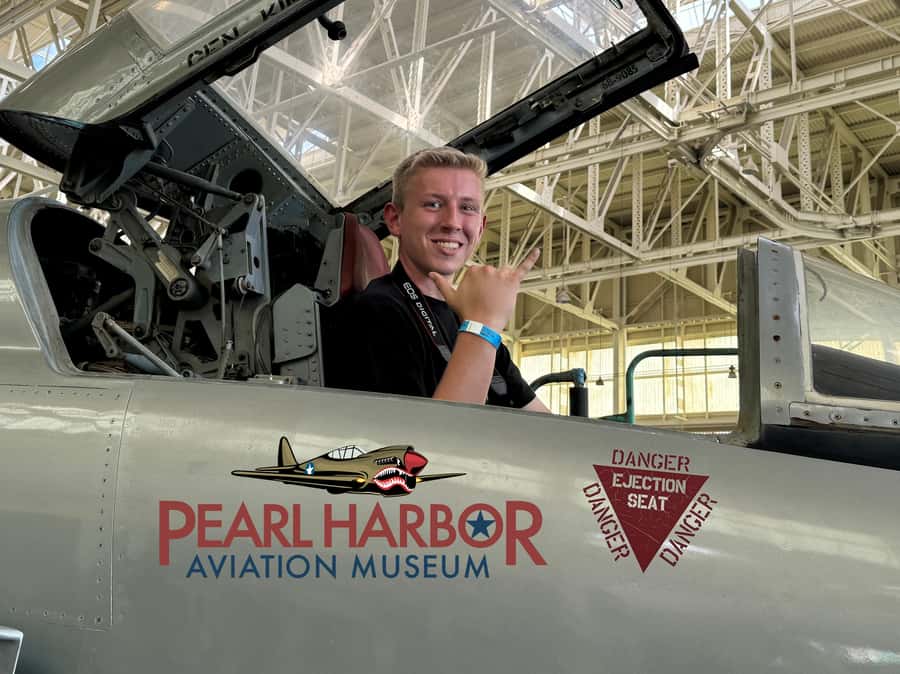
- Hangar 37 is the main emotional pull: you walk through an authentic WWII-era setting with aircraft and the story of the attack.
- Over 50 aircraft and lots of exhibits: plan on real time in the 25,000 square feet of indoor galleries.
- Hangar 79 extends the story forward: you’ll see aircraft from the Gulf, Korean, and Vietnam wars plus the Shealy Restoration Shop.
- Raytheon Pavilion adds scale to the collection: it helps connect what you see overhead with what’s documented on the ground.
- The optional Top of the Tower tour is limited: you get a 360-degree view, but access is capped and stair-heavy.
- No backpacks or large bags: storage is available, but it costs extra and you’ll want to arrive prepared.
Pearl Harbor, seen through aircraft, not crowds
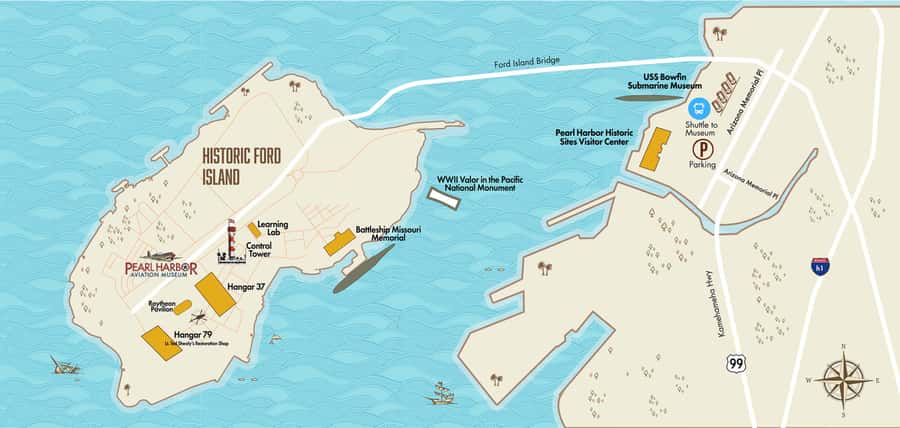
The Pearl Harbor Aviation Museum works because it keeps pulling you back to one idea: the attack was not just ships and headlines, it was air power, training, readiness, and rapid change. The setting on Ford Island also helps. You’re on historic military ground, accessed by shuttle, which gives the whole visit a grounded, real-feeling atmosphere.
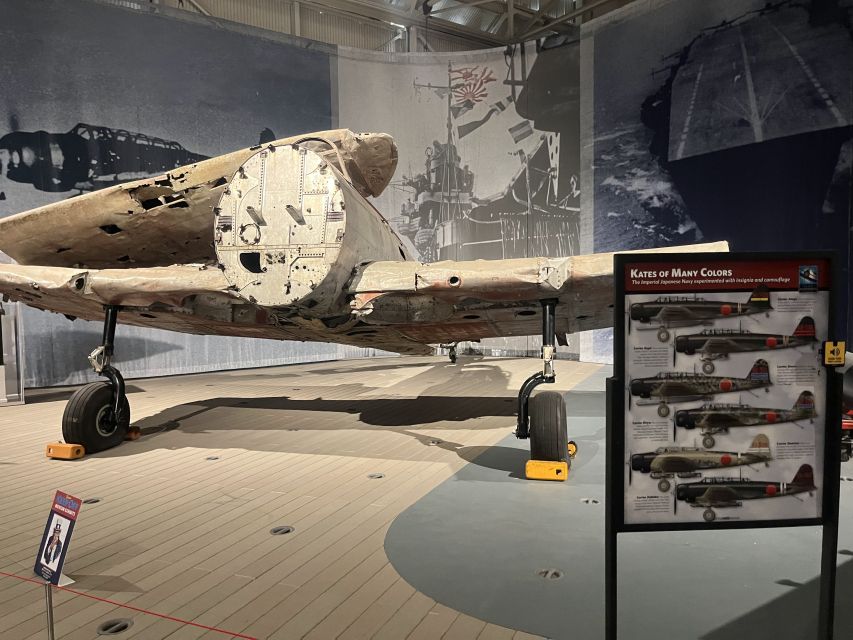
My favorite part is the mix of scale and detail. You’re surrounded by aircraft you can actually get close to, but the story doesn’t stop at the day itself. The exhibits move across decades, so the museum becomes more than a single date stop.
Value-wise, $29 for a full-day ticket makes sense because you’re not buying one room and done. You’re paying for access to multiple hangars, the Raytheon Pavilion, and a free audio guide, with the shuttle included.
More Oahu tours and island experiences worth comparing



Getting there smoothly: Ford Island shuttles and bag rules
Your day starts at the Pearl Harbor Visitor’s Center, where you’ll take the free shuttle to Ford Island. Shuttles depart every 15 minutes from 8:00 AM to 4:00 PM, and the shuttle runs until 5:00 PM.
Here’s the practical issue that can trip people up: no bags on the shuttle bus for security. That includes backpacks and large bags. If you show up with too much, you’ll have to find the bag storage facility first, which is located at the Bowfin Submarine Park shuttle bus stop. Storage costs $6.00 per bag, or $7.50 for large bags and/or luggage.
My best advice is to travel light on purpose. Wear what you need, carry a small day bag only if allowed by the on-site rules, and consider packing snacks and water before you arrive so you’re not forced into extra stops.
Hangar 37: where the WWII aircraft story feels real
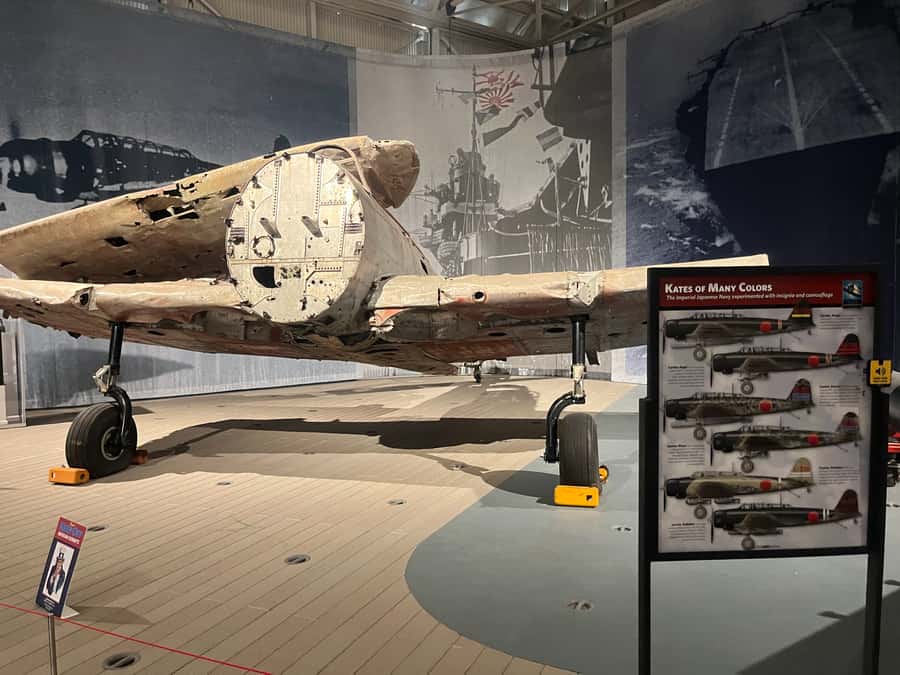
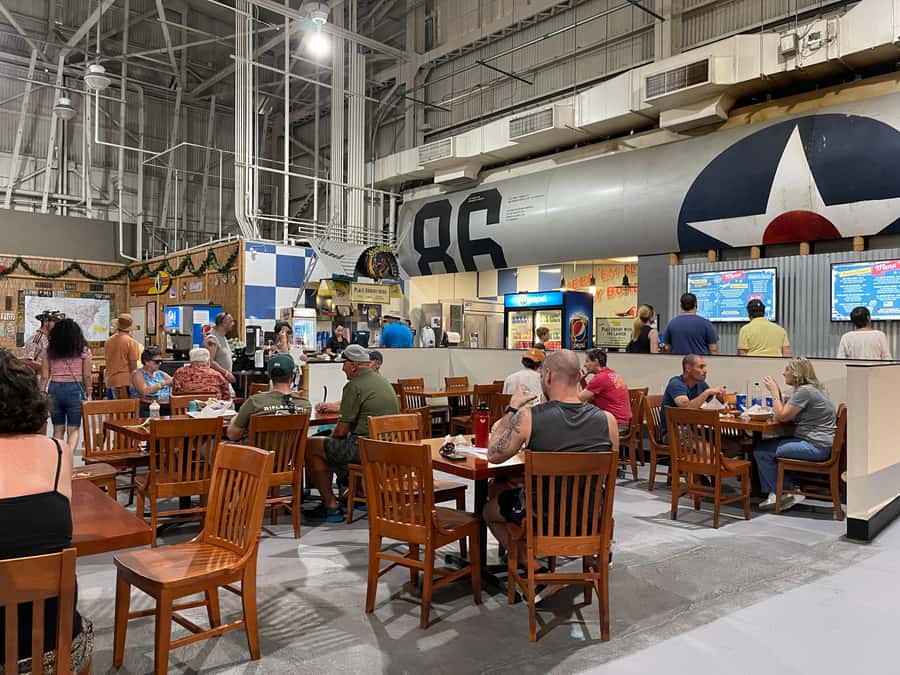
Hangar 37 is the heart of the museum experience. This is where you’ll spend time if you want the most direct connection to the December 7, 1941 attack and its immediate aftermath. The hangar setting matters because it’s not just an exhibit room. It’s an actual WWII-era hangar environment, so the aircraft feel like they belong to the space.
As you walk through, the museum uses exhibits to trace what was happening leading up to the attack. You’ll see details that make the days before the attack clearer, and then the story snaps into the moment of impact. That “before and during” structure helps if you’ve only seen the basics elsewhere.
You’ll also find a documentary screening as part of your visit. Watch for East Wind Rain, an award-winning film that supports what you’re seeing in the hangar by explaining the context of life on Oahu before the war and at the moment of the attack.
If you’re an aircraft fan, this is also where the collection feels most focused. The museum’s total aircraft count is over 50, but Hangar 37 gives you the most concentrated WWII experience.
Your free audio tour: languages and how to use it
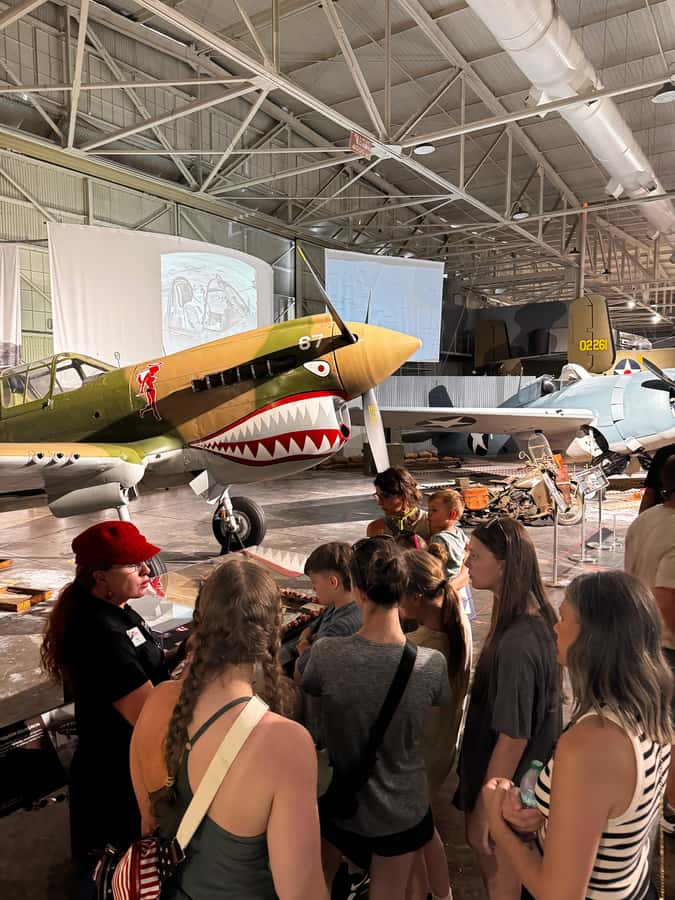
Included with your ticket is a free audio tour, available in English, Japanese, Spanish, Korean, and Chinese. This matters because the museum’s layout can feel like a lot at first. The audio guide helps you pace yourself and choose what to pay the most attention to.
I recommend using the audio guide actively, not just passively. Plan to listen in blocks, like one hangar at a time. That keeps you from missing the connections the museum is trying to make between different aircraft, exhibits, and time periods.
Because it’s self-guided, you control your speed. And that’s where the advice to “take more time” pays off. If you rush, you’ll mostly see aircraft. If you slow down, you start understanding why each display is there.
Moving on to Hangar 79 and the Shealy Restoration Shop
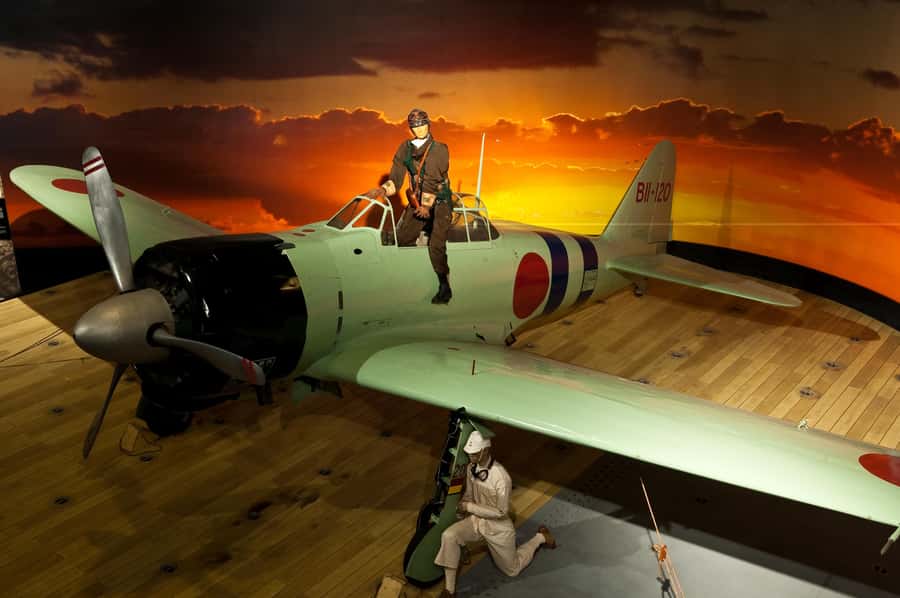
After Hangar 37, head to Hangar 79 for the story that stretches beyond WWII. This is where the museum feels like it’s documenting aviation history, not just commemorating one day.
In Hangar 79, you’ll see aircraft connected to later conflicts, including the Gulf, Korean, and Vietnam wars. That forward motion is useful because it shows how aircraft roles, technology, and military needs evolved after 1941.
One of the most interesting sections here is the Shealy Restoration Shop. Even if you’re not a restoration-nerd, it’s a reminder that the aircraft you see aren’t static artifacts. They’re maintained and preserved, which is why they can be displayed and studied.
If you like seeing what’s not on the display wall yet, you’ll appreciate the aircraft waiting for future exhibit plans. One example mentioned is the B-17 Swamp Ghost.
You can also read our reviews of more museum experiences in Oahu
The Raytheon Pavilion: where the full collection makes more sense
The Raytheon Pavilion helps tie everything together. It’s an indoor space that supports the hangar experience by offering more exhibits and context as you move through the collection.
This is often the spot where you get your bearings. If you’ve been focused on walking from aircraft to aircraft, the Pavilion can help you step back and see the bigger timeline and themes.
Think of it as the “connective tissue” between the emotionally heavy WWII hangar and the later-war hangar. It makes the whole visit feel more organized, and it’s a good place to reset if you start feeling like there’s too much to take in.
East Wind Rain and the power of context

The documentary screening, East Wind Rain, is more than a bonus. It gives you a narrative anchor so the aircraft don’t just look like objects.
The museum explicitly uses it to show what life was like on Oahu pre-war and what changed at the moment of the attack. That helps you shift from “I’m looking at planes” to “I’m understanding the environment those planes were operating in.”
If you tend to watch documentaries fast and move on, try the opposite here. Give it your full attention. It will make the rest of your visit read better.
Optional Top of the Tower: the best view, but know the limits
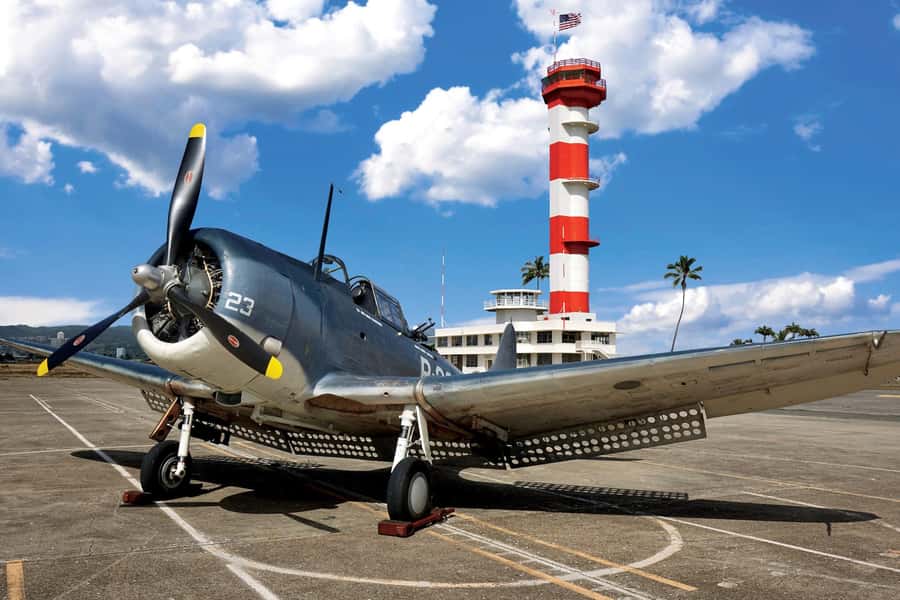
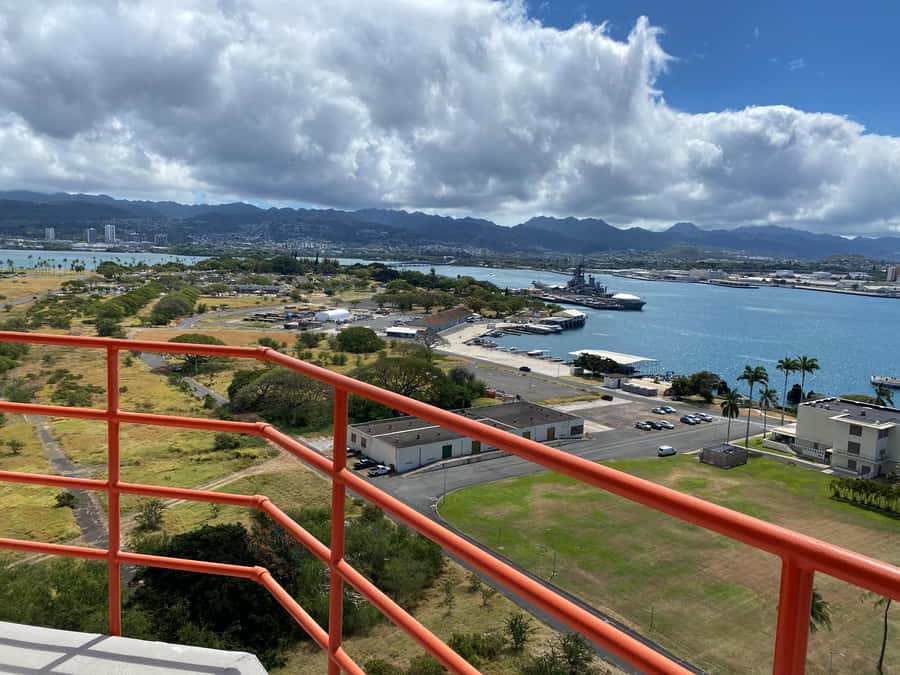
If you add the Top of the Tower tour, you’ll get a unique perspective from the Ford Island Control Tower. This is one of those add-ons that feels worth it because it changes how you picture the battlefield.
The tower tour is offered daily from 9:40 AM to 4:20 PM. Tours run every 40 minutes, and you should arrive at least 10 minutes early. The visit at the top is limited to no more than 30 minutes per guest, so don’t count on lingering for long photo sessions.
There are also access limits for kids. For safety reasons, children must be 42 inches tall to access the Top of the Tower Tour, and infants and toddlers are not allowed.
Physical access matters too. The Ford Island Control Tower is historic, and reaching the observation deck requires ticket holders to use handrails to climb two flights of steep stairs. If stairs are tough for you, this add-on might not be the best match.
Still, if you can handle the climb, the 360-degree view from the observation deck is the kind of payoff that makes the whole day click into place visually.
How long you really need (and how to pace it)
The ticket is valid for 1 day, and you’re moving across multiple hangars and exhibit areas. In practice, the museum is the type of place where your time goes faster than you expect if you keep stopping to read and watch.
I suggest planning your day around at least a relaxed, un-rushed pace through Hangar 37 first, then Hangar 79, then the Raytheon Pavilion. If you’re adding Top of the Tower, you’ll want to coordinate that with the tour schedule, since it runs in fixed time slots every 40 minutes.
A simple pacing strategy:
- Morning: Hangar 37 and the WWII-focused exhibits
- Midday: the documentary screening and Raytheon Pavilion context
- Afternoon: Hangar 79 and the Shealy Restoration Shop
- Late slot: Top of the Tower if your legs and timing hold up
Also, consider that your shuttle rides have a practical window. Shuttles depart until 4:00 PM (every 15 minutes) and the service runs until 5:00 PM, so don’t plan to be sprinting at the end.
Price and value: $29 for multiple hangars, audio, and shuttle
At $29 per person for a full-day entry ticket, this isn’t priced like a one-room museum. You’re getting access to Hangar 37, Hangar 79, and the Raytheon Pavilion, plus a free audio tour and the free shuttle between 8:00 AM and 5:00 PM.
The value gets even better if you like aviation across time periods, because you’re not trapped in one era. WWII is the emotional anchor, but the later-war displays give you a more complete view of military aviation history.
There are two important “don’t assume” notes:
- Fighter Ace 360 Simulator is not included with this entry ticket.
- The Top of the Tower tour is included only if you select that option.
So if your must-do is the simulator, you’ll need to plan for it separately. If your must-do is the view from the tower, select the add-on before your day begins.
Who this ticket is best for
This experience is a strong fit if you:
- Want the aviation angle on Pearl Harbor, not just the memorial basics
- Like aircraft detail and historical exhibits in an aircraft-first setting
- Appreciate context, especially the museum’s timeline approach from pre-war life to the attack
- Want a self-guided museum day with a helpful audio guide
It’s also a good choice for couples and small groups who can move at their own speed. If you like structured group tours with a loud guide voice nonstop, you might find yourself wanting more, but the audio tour helps you stay on track without that constant pressure.
Should you book this Pearl Harbor Aviation Museum ticket?
I’d book it if you want the best value way to spend real time on Ford Island without stacking multiple separate tickets. Hangar 37 is the big draw, and Hangar 79 plus the Shealy Restoration Shop keeps the story moving so the day doesn’t feel one-note.
I would hesitate only if you know you’ll struggle with the no-bag shuttle rule, or if you’re counting on the Top of the Tower view but don’t handle steep stairs well. Otherwise, $29 buys you a full-day experience built around aircraft, context, and a setting that makes Pearl Harbor feel immediate in a way photos can’t.
If you’re the type who likes to slow down, this place rewards that. Plan a relaxed pace, travel light for the shuttle, and you’ll get much more out of every hangar than rushing from plane to plane.
FAQ
What’s included with the entry ticket?
Your ticket includes entry to the Pearl Harbor Aviation Museum, access to Hangar 37, Hangar 79, and the Raytheon Pavilion, and a free audio tour. It also includes the optional Top of the Tower tour if you choose that option, plus a free Pearl Harbor shuttle between 8:00 AM and 5:00 PM.
Where do I meet for the shuttle to Ford Island?
You take the shuttle from the Pearl Harbor Visitor’s Center. Shuttles depart every 15 minutes from 8:00 AM to 4:00 PM.
Is the audio guide available in multiple languages?
Yes. The audio tour is available in English, Japanese, Spanish, Korean, and Chinese.
Can I bring a backpack or large bags?
No. Oversize luggage, luggage or large bags, plastic bags, and backpacks are not allowed. Also, no bags are allowed on the shuttle bus to Ford Island for security reasons.
Is there a place to store bags if I need it?
Yes. There is a bag storage facility at the Bowfin Submarine Park shuttle bus stop. Fees are listed as $6.00 per bag or $7.50 for large bags and/or luggage.
What’s the Top of the Tower tour schedule and limit?
The Top of the Tower tour runs daily from 9:40 AM to 4:20 PM, with tours every 40 minutes. Ticket holders are limited to no more than 30 minutes at the top.
Is the Fighter Ace 360 Simulator included?
No. The Fighter Ace 360 Simulator is not included with this entry ticket.
More Museum Experiences in Oahu
More Tickets in Oahu



More Tour Reviews in Oahu





Not for you? Here's more nearby things to do in Oahu we have reviewed









Pearl Harbor & Battleship Tours, compared.
 ★ 4.5Salute to Pearl Harbor Including USS ArizonaFrom $597,433 reviews
 ★ 4.5Pearl Harbor USS Arizona MemorialFrom $555,209 reviews
 ★ 5.0Pearl Harbor Remembered TourFrom $1435,143 reviews
 ★ 5.0Pearl Harbor, USS Arizona Memorial & Honolulu City TourFrom $944,866 reviews
 ★ 5.0Pearl Harbor City TourFrom $694,254 reviews
 ★ 4.5Pearl Harbor USS Arizona Memorial & Battleship MissouriFrom $1492,276 reviews
 ★ 4.5Pearl Harbor, National Memorial Cemetery and Honolulu City TourFrom $591,777 reviews
 ★ 4.3Pearl Harbor, USS Arizona, and City TourFrom $691,572 reviews
Browse the lists this tour appears in