
REVIEW · EVENING EXPERIENCES
Honolulu Sunset & Light Painting Experience
Night photos get easier fast. This half-day experience turns Honolulu sunsets into hands-on night photography, with tripod support and real light-painting gear. The plan moves from dramatic views to starry skies, so you learn the “why” behind the settings, not just the where.
I especially liked the small group size (max seven). It means your guide can slow down, check your results, and help you fix issues on the spot, whether you’re using a camera or your iPhone. Another highlight for me was the way guides like Mac, Andrew, and Curt mix humor with practical tips, including long exposure techniques and how to get better shots with an iPhone tripod setup.
One consideration: this is a good-weather activity. If skies are cloudy or conditions are rough, you may lose part of the photo plan, and the timing of sunset and stars can be less dramatic.
Key Things You’ll Remember
- Sunset to stars in one run, with night-focused coaching built into each stop
- Tripods and light-painting tools included, so you can focus on shooting instead of gear hunting
- China Walls, Makapu‘u Point, and Makapu‘u Beach provide a natural photo progression
- Steel wool photography at the beach for a dramatic, long-exposure effect
- Max group size of seven gives you more hands-on help, not just a group photo stop
- Guides like Mac and Andrew are known for iPhone night tricks and patience
Why Makapu‘u Turns a Sunset Into Real Night Photography
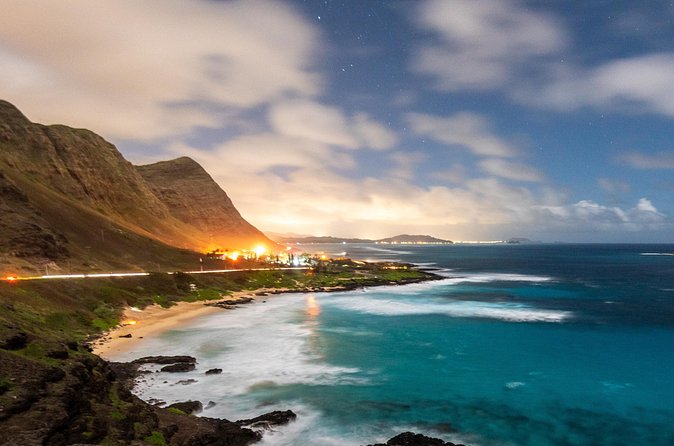
Oahu does sunsets well. What makes this experience different is that you don’t stop at pretty photos and call it a day. You keep shooting as the light drops, moving from an epic horizon view at China Walls to star-heavy scenes at Makapu‘u.
That matters because night photography is mostly timing and technique. The tour helps you practice in the exact order you need: start with a sunset that still has enough light to frame settings, then shift into darker scenes where shutter speed and exposure control take over.
And you do it with the right support. You’re not stuck guessing how to stabilize a shot, because tripods are part of the experience. Then you get light-painting tools so you can learn an effect that looks wild in photos but is very doable once someone shows you the moves.
You can also read our reviews of more evening experiences in Oahu

Getting Oriented: Honolulu Zoo Start, Waikiki Pickup, and a 4-Hour Flow
The tour starts at Honolulu Zoo, 151 Kapahulu Ave in Honolulu. It also ends back at the same meeting point, so you’re not doing a complicated transfer across town at night.
Pickup is only offered at selected hotels in Waikiki. If that’s you, you’ll need to confirm your exact pickup location by contacting the provider directly, since it is not universal pickup across every Waikiki property.
The total time is about 4 hours. That’s long enough to cover three meaningful shooting environments, and short enough that you’re not spending your whole evening in a car. For solo visitors and couples, it’s a clean way to get a concentrated photo education without burning a full day.
Stop 1 at China Walls: Sunset Compositions That Don’t Feel Random
China Walls is where the tour starts for a reason. It’s a dramatic shoreline spot that gives you a horizon you can frame, plus a view that helps you understand how your camera behaves when the sun is still above the horizon.
You’ll spend about one hour here. In plain terms, you’re using that time to learn how to set up for success before the light gets tricky. Sunset is forgiving compared to full night sky shots. The guide can walk you through composition, then you can start experimenting with settings while you still have enough brightness to check your results.
Two practical wins you get at China Walls:
- You learn the pacing of night shooting, meaning when to change settings as the scene darkens.
- You can practice framing with a clear subject, so later star shots feel less like chaos.
If you’re traveling with a camera, you’ll have a tripod available. If you’re using your phone, your guide should help you understand how to stabilize and control exposure so you get the longer-look images people came to capture.
Stop 2 at Makapu‘u Point: Setting Up for the Night Sky
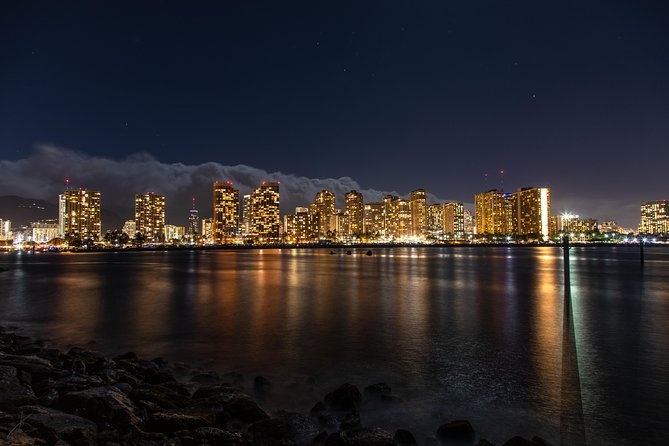
After China Walls, the tour shifts to Makapu‘u Point. This stop is shorter, about 30 minutes, and it’s all about getting your bearings.
Think of Makapu‘u Point as your transition station. The light is fading, you’re getting ready for star-oriented shots, and your guide can confirm what your equipment can do and what you should aim for next.
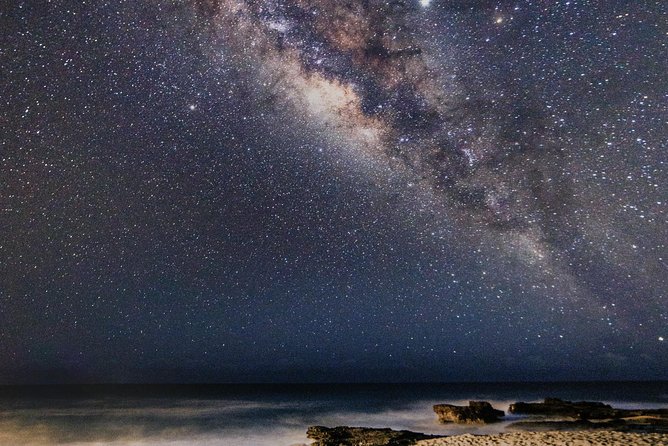
This part matters because star photography has its own rules. You need stability, and you need to be realistic about what will show up in a single exposure. A good guide helps you avoid the most common mistake, which is trying to force a perfect sky shot without understanding the basics of exposure time and darkness.
Stop 3 at Makapu‘u Beach: Stars, Lighthouse, Light Painting, and Steel Wool
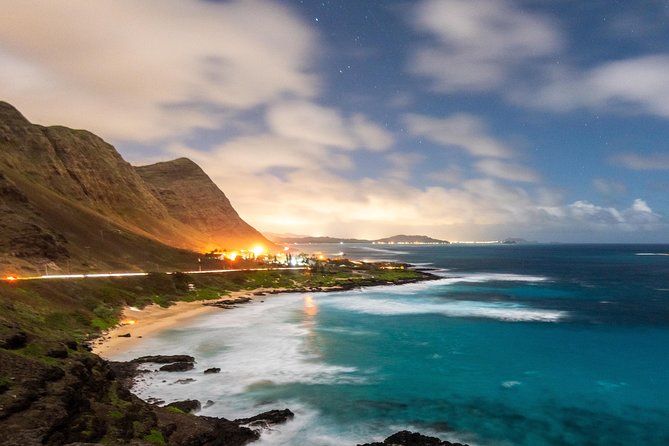
Makapu‘u Beach is the grand finale and it’s where the tour goes from “learn photography” to “make art.” You’ll have about one hour here, with multiple photo activities building on each other.
First, you’re set up for star and lighthouse type images. Lighthouse scenes tend to be easier to keep interesting than a plain sky, because you have a strong vertical element to anchor the frame.
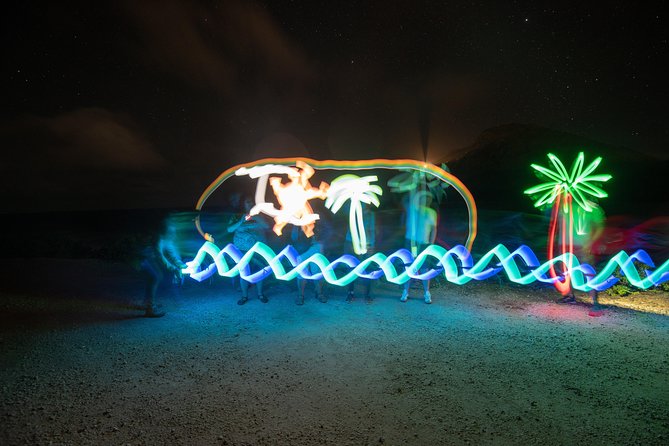
Then the fun kicks in: you’ll do light painting and steel wool photography.


Light painting, without guessing
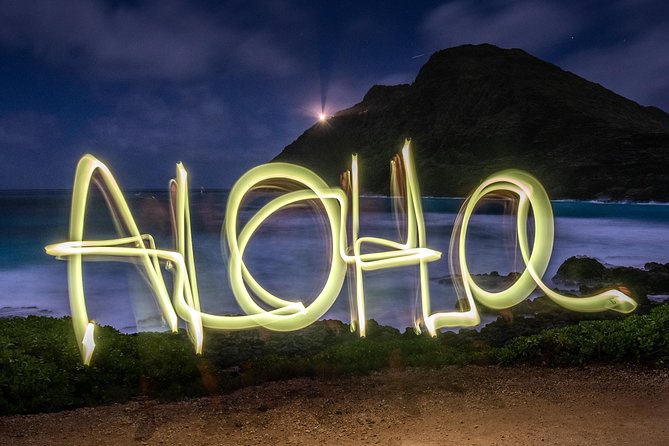
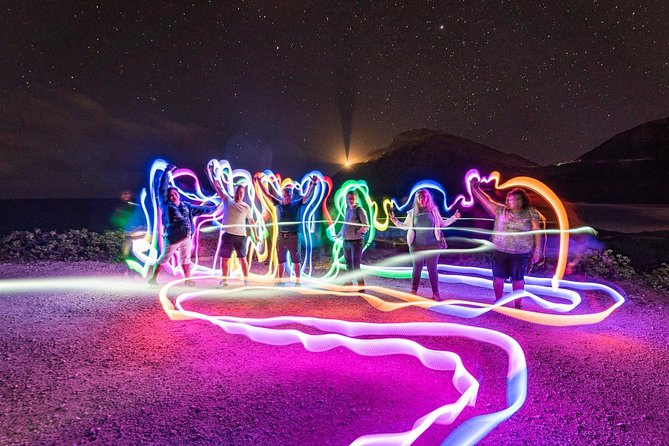
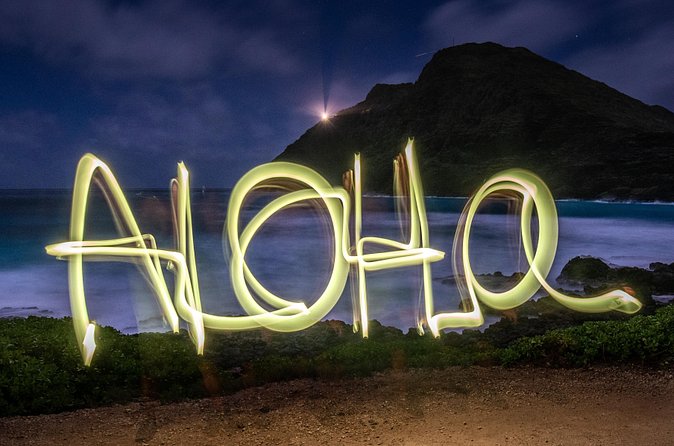
Light painting looks intimidating until you see it done step by step. The tour provides light-painting tools and a tripod, which is the winning combo. A tripod handles the camera stability, and the light tool gives you a controlled way to draw visible streaks in a dark environment.
What I like about learning light painting during a guided night shoot is that you’re practicing it with an actual plan. You’re not just told to wave a stick around. You’re taught how to get results, so your first attempt is not a blank frame.
Steel wool photography, the dramatic party trick
Steel wool creates those spark trails that look like magic in photos. It’s also a technique where timing and safety habits matter, so having a guide leading the process is the key reason this tour format works.
The experience is described as adventurous and memorable in participant accounts, and it’s one of the reasons people call this a standout Oahu night activity. If you’re curious about long exposure effects, this is the moment you’ll probably be talking about afterward.
One more thing to keep in mind: full darkness makes every detail more visible. If you’re lucky with conditions, you may catch extra surprises like a bright meteor. But don’t count on it. The real value is learning your technique so your results improve even if the sky is just “good,” not perfect.
How the Photo Instruction Actually Helps: Tripods, Exposures, and iPhone Tips
The tour is built around one idea: night photography improves when you get direct coaching during the moments you need it.
Here’s what you can realistically expect your guide to help with:
- Using the tripod correctly for long exposures so your images don’t blur
- Understanding how exposure changes as the sun sets and the sky deepens
- iPhone night photography tips, including how to get better long-exposure results using a tripod setup
- Short, practical tweaks, like how to test settings and adjust based on what you’re seeing on your screen
In multiple accounts, guides such as Mac are praised for spending extra time helping with iPhone shooting. That’s not a small detail. Many people travel with only a phone for photos, and night shots can be frustrating when your camera skills are limited. Getting clear guidance early in your trip can pay off later, because you’ll carry those exposure habits into other photos around Oahu.
Even if you’re confident with photography, you’ll likely still benefit. Night work is a different world from daytime. A guide’s job is to help you stop wasting time, so you capture more keepers with less trial and error.
Small Group Size: The Real Advantage Is Personal Attention
Max group size is seven, and that changes the whole feel of the evening. You’re not a number in a line. Your guide can check your framing, help reset your setup, and keep you moving at a pace that matches your comfort level.
That also explains why this works for families. When kids and teens are involved, you want an environment where adults can get help without losing patience. Accounts mention guides being fun, engaging, and patient, which is exactly what you need when you have younger participants trying new techniques for the first time.
And for couples and solo travelers, the small size helps you feel less self-conscious while you experiment. Night photography often means doing something a little weird on purpose, like adjusting settings in the dark or moving slowly during light painting. Small groups make that feel normal.
Weather and Timing: When the Plan Changes Mid-Route
This is a weather-dependent tour. If conditions are not good, the provider states it requires good weather, and your experience may be canceled and rescheduled or refunded depending on what happens.
So how should you think about it?
- If you’re booking during a season with stable skies, you’re more likely to get that clean sunset and better star visibility.
- If your trip timing is flexible, you’ll have an easier time choosing a day that gives you strong night conditions.
Also, night sky results can vary. The goal is to learn and practice skills, not to guarantee a specific number of stars in every frame. Still, clearer skies obviously make the photos look better.
What to Bring So You Don’t Lose Time
The tour includes tripods and light-painting tools, which cuts down what you have to carry. But you still should come prepared for a night shoot.
At minimum:
- Bring your own camera or phone (and any charging cable you like)
- Consider bringing water, since bottled water is not provided, and there is no food or drinks on the tour
If you like having options, bring a couple of different shooting modes on your phone. Night photography is often about quick testing, and you’ll waste less time if you already know how your device behaves.
Is This Tour Right for You?
You’ll probably love this if:
- You want to learn night photography techniques instead of only taking scenic photos
- You want a guided setup for long exposure shots with a tripod
- You’re excited by creative effects like light painting and steel wool photography
- You like small group experiences where the guide can troubleshoot your results
You might consider a different kind of tour if:
- You’re not comfortable with informal, relaxed guide energy. Most accounts describe guides as funny and engaging, including Mac and Andrew, but one person reported a mismatch in how they felt about the tour tone. If you prefer a strictly formal vibe, ask how the group will be handled and go into it with your expectations set.
Should You Book Honolulu Sunset and Light Painting?
Yes, book it if you want a night photo lesson that’s active, creative, and actually structured around real shooting conditions. The combination of China Walls for sunset, Makapu‘u Point for sky setup, and Makapu‘u Beach for lighthouse stars plus light painting and steel wool makes this more than a standard sightseeing loop.
It also has strong practical value because the tools are included and the group stays small. If you’ve been hoping to bring home night shots that look intentional, not accidental, this is one of the smarter half-day bets on Oahu.
FAQ
How long is the Honolulu Sunset & Light Painting Experience?
It runs about 4 hours.
Where does the tour start and end?
The tour starts at Honolulu Zoo, 151 Kapahulu Ave, Honolulu, HI 96815, USA, and ends back at the same meeting point.
Is hotel pickup available?
Pickup is only available at selected hotels in Waikiki. You’ll need to confirm your pickup location by calling the provider.
What’s included in the tour?
Tripods and light-painting tools are included.
Is bottled water or food provided?
No. Bottled water is not provided, and the tour does not include food or drinks.
Does it require good weather?
Yes. The experience requires good weather, and if it’s canceled due to poor weather you’ll be offered a different date or a full refund.
More Evening Experiences in Oahu

More Tour Reviews in Oahu

Not for you? Here's more nearby things to do in Oahu we have reviewed




Evening Experiences, compared.
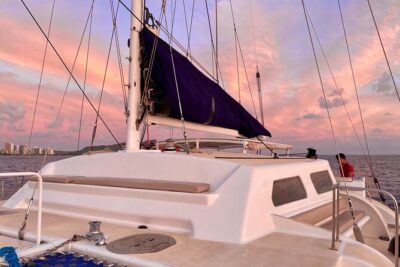 ★ 5.0Oahu’s Waikiki Coast: Moana’s Sunset Cocktail SailFrom $892,205 reviews
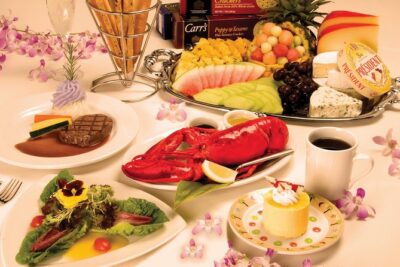 ★ 4.5Honolulu: Three Star Deluxe Sunset Dinner Cruise and ShowFrom $1931,204 reviews
 ★ 4.0Sunset Dinner Cruise in Honolulu, Hawaii1,023 reviews
 ★ 4.5Waikiki Signature Sunset Catamaran SailFrom $89890 reviews
 ★ 5.0Oahu Catamaran Waikiki Sunset on 40 Foot Catamaran: Food and BYOBFrom $44836 reviews
 ★ 5.0BYOB Sunset Cruise off the Waikiki CoastFrom $44694 reviews
 ★ 4.5Honolulu: Pacific Star Sunset Dinner Cruise and ShowFrom $139633 reviews
 ★ 4.5Waikiki: Friday Night Fireworks Catamaran CruiseFrom $67610 reviews
Browse the lists this tour appears in