
REVIEW · OAHU NEIGHBOR ISLAND DAY TRIPS
Hawaii Volcanoes National Park Experience from Oahu
One day. Two islands. Lots of volcano talk. This Oahu to Big Island day trip is built to get you to Hawaii Volcanoes National Park and the best nearby stops, without you wrestling rental cars or complicated driving.
I like the pacing here. You ride in an air-conditioned vehicle with a local guide who explains what you are seeing as you move from Kona coffee country to the crater area. I also love the mix of stops, from Greenwell Farms to the black sand shoreline at Punaluʻu.
One thing to plan for: it is a long day with a lot of driving and walking. If you have respiratory issues, volcanic gases can be a problem, so it is smart to talk with your doctor and bring any meds you need.
Key highlights to look for on this Big Island day
- Round-trip flights from Honolulu to Kona are included, so you skip the scariest part, the inter-island logistics
- Small-group comfort with an air-conditioned vehicle and a guide who keeps the day coherent
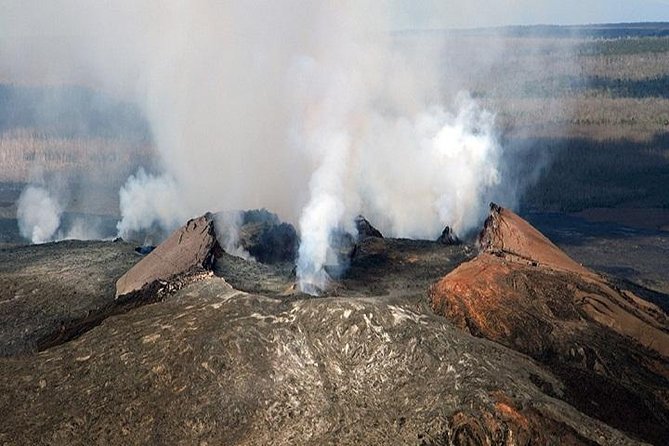
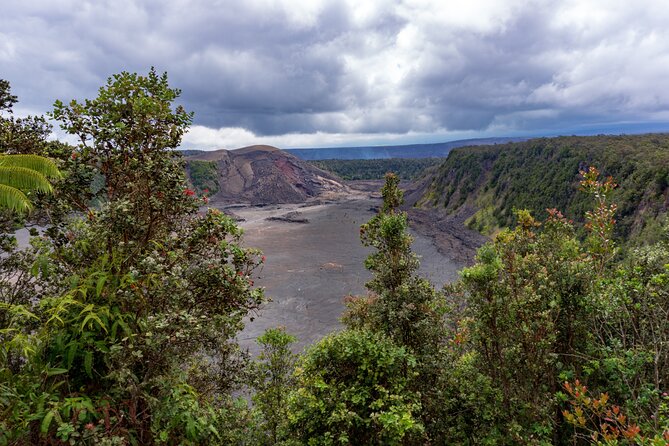
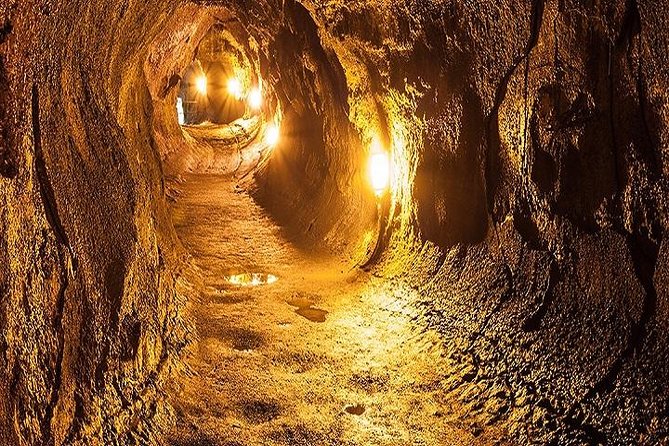
- Kīlauea focus at Volcanoes National Park, including Halemaʻumaʻu Crater, Kīlauea Iki lookout, Thurston Lava Tube, and steam vents
- Coffee stop at Greenwell Farms on the Mauna Loa slopes, plus free admission for the farm visit
- Punaluʻu Black Sand Beach for the iconic basalt sand and the chance to spot green sea turtles
- Mauna Kea Access Road and Hilo round out the day with cold-at-the-top views and local culture
Oahu to Kona in one day, with the driving handled
The big deal for me is that this trip is set up like a true day plan, not a DIY puzzle. You get round-trip airfare from Honolulu to Kona International Airport included, then a guide meets you on the Kona side so you can focus on the sights.
On paper, the day runs about 8 to 10 hours, and the Volcanoes portion alone is a solid chunk at around 2 hours. That matters because Volcanoes National Park is not a place you rush through and still feel like you understood what you saw.
Practical note: transportation to the Honolulu airport is not included. If you are staying on Oahu, you will want a plan for getting yourself to HNL that does not eat into your morning peace.
You can also read our reviews of more tours and experiences in Honolulu.


Greenwell Farms coffee stop on the Mauna Loa slopes
Your first stop is Greenwell Farms, a long-running Kona coffee producer with roots dating to 1850. It is famous for operating on the slopes of Mauna Loa, where the combination of volcanic soil, sunny mornings, and afternoon cloud cover helps coffee develop that classic Kona flavor.
What you get in the time you have: a brief chance to look around and connect the coffee you drink later to where it grows. Admission is free for this stop, and the visit is about 30 minutes.
A quick consideration: coffee farms are still farms. Expect uneven ground, some sun, and weather that can shift. Wear shoes you can trust, and bring a hat if you burn easily.
Manuka State Wayside Park: a calm break on Highway 11
Next up is Manuka State Wayside Park, a quieter 13-acre stretch along the Hawaii Belt Road (Highway 11). This is where the day slows down a bit. You get about 30 minutes, plus the chance to walk the 2-mile Manuka Nature Trail through wet and dry forest areas.
The value here is that it adds ecology, not just scenery. You are moving through a mix of plant types shaped by the island’s geology, and you will see interpretive signs along the trail that connect the landscape to Hawaii’s volcanic past.
You might also spot birds like the Hawaiian hawk and honeycreepers, but do not count on it. This stop is more about resetting your brain than chasing a checklist.
Punaluʻu Bake Shop lunch, plus a real taste of local flavors
Then you hit Punaluʻu Bake Shop in Naʻālehu, known for Hawaiian sweet bread in flavors like taro, guava, and mango. It is also described as the southernmost bakery in the U.S., and that makes it a fun landmark stop even before you start eating.
You have about 30 minutes here. This is also where the tour stops for lunch, and the bakery has options like sourdough sandwiches, Kalbi beef, and Hawaiian plate lunches, plus baked goods you can take with you.
Here is my practical advice: go hungry, and have a backup snack idea in mind. One of the reviews in the set points out that the bakery can get overloaded, and you may not love the wait or the selection if you arrive during a busy window. Since meals are at your own expense, it is smart to budget for it and consider bringing a small snack if you are the type who gets cranky when lines form.
Punaluʻu Black Sand Beach and sea turtles on basalt sand
From lunch, you move to Punaluʻu Black Sand Beach, one of the Big Island’s most photogenic stops. The black sand comes from volcanic basalt, so it is literally volcanic material turned into coastline.
You get about 30 minutes. The big reason to come is the scenery and the chance to see Hawaiian green sea turtles basking near shore. The ocean can be rough, so this is not a swim-and-play beach for most people.
Keep expectations simple. This is a look-and-observe stop. Stay on safe areas, give turtles space, and watch for conditions if the surf is high.

Hawaii Volcanoes National Park: the stops that connect the dots
This is the headline portion of the day, around 2 hours inside Hawaii Volcanoes National Park. The visitor center first helps you get bearings fast, with the park’s geology and history explained before you start walking out to the viewpoints.
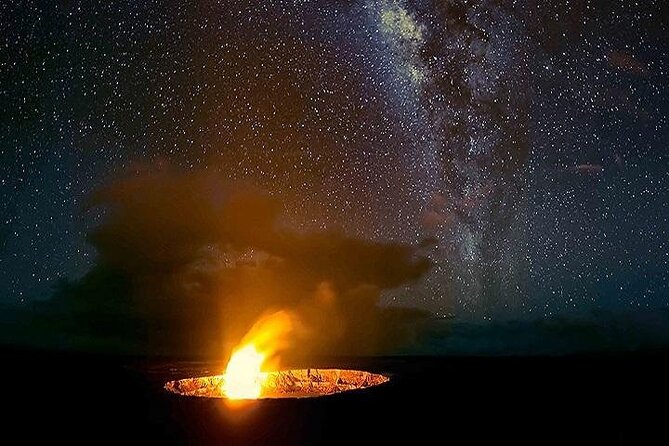
At Halemaʻumaʻu Crater, you are looking at the kind of volcanic activity that makes Hawaii feel like it is alive, not just scenic. If conditions allow, you may see a glow from molten lava. Even when you do not, the crater view still gives you a scale and setting that is hard to replicate elsewhere.
Next is Kīlauea Iki Rainforest Lookout, which gives you contrast. You go from active volcanic drama to a lush, crater-edge view that shows how quickly nature moves in once lava and heat make their mark.
Then you get the human favorite: the Thurston Lava Tube. Walking through a tube like this is one of the best ways to understand how flowing lava can create empty channels. It is not just a photo stop. You actually get inside the process.
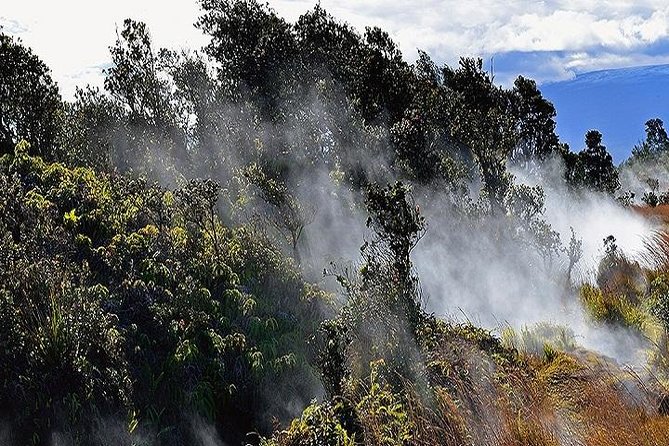
Finally, the active steam vents bring heat and smell into the experience. Volcanic gases are part of the real deal here, and the tour explicitly warns that this can be harmful for those with respiratory issues, such as sulfur dioxide. If you have asthma or similar concerns, take that seriously and plan accordingly.
Two more practical tips that help a lot here:
- Wear sturdy, closed-toe shoes because you will be on uneven ground and may encounter sharp volcanic rock
- Expect limited or no cell service in many parts of the park, so download anything you need before you go
Mauna Kea Access Road, Kohala Coast views, and a quick Hilo culture taste
The day does not stop at volcanoes. After the park, you also travel up toward Mauna Kea Access Road, which is described as steep and winding from the Saddle Road area (Route 200) to the summit. As you climb, you pass through different climate zones. Air gets thinner. Temps can drop fast.
That cold factor is not a minor detail. Bring layers even if you start the day in warm Kona weather. The tour notes it can get cool and wet at higher elevations, so a rain jacket is a smart move, not a fashion choice.
From there, you also get the Kohala Coast area, known for drier conditions compared to other parts of the island. It is a scenic transition, and it helps break up the day so you do not only feel volcano fumes and lava rock all day.
Then you reach Hilo, which is where the tour shifts from physical geology to people and place. You can expect stops connected to the Lyman Museum, the Hilo Historic District, the Pacific Tsunami Museum, and Liliuokalani Gardens. If you have time on your stop day, the Hilo Farmers Market is also mentioned as a lively local hub.
This section is shorter by nature, so you get a sense of Hilo’s story rather than a full deep dive into any one museum. Still, it is a nice counterweight to the park, because it reminds you that Hawaii’s natural forces also shaped the communities living here.
What you are paying for: $589.99 value check
At $589.99 per person, you are paying for more than admission and a vehicle. You are paying for the whole inter-island framework: round-trip airfare from Honolulu to Kona plus an air-conditioned ride and guide-led stops.
That is why it can feel worth it if you are time-limited. A do-it-yourself day would mean booking flights, renting a car on the second island, and trying to match schedules with park entry timing. Here, someone else handles the sequencing and the guiding.
Where the price might feel less satisfying is expectations. This is a packed day. You do not get all-day free roaming. You get smart stops, mostly short visits, and you focus on the major highlights like Volcanoes National Park and Punaluʻu.
Also, meals are not included, and the data says that clearly. Lunch at Punaluʻu Bake Shop is part of the flow, but budget for food beyond that, and carry small essentials like water and sunscreen because services can be limited once you are in the park.
Guide power matters more than you think
In this experience, the guide is not just background. The reviews tied to real names like Henry and Mel describe guides who explain volcano science and Hawaiian context in a way that keeps the day moving.
I like tours most when I feel guided, not herded. From the overall description and the review notes, this tour style is structured, with narration throughout, and designed for a wide range of ages and abilities. That is also backed by the fact that most travelers can participate, and the tour has a group cap of 22 travelers.
One more smart detail: tips are appreciated, and the tour suggests tipping in cash. If you like this kind of high-effort guide day, bring a little cash with you.
Before you go: bring layers, water, and a turtle mindset
This day has a few hazards and annoyances you can avoid with prep.
- Volcanic gases: the tour warns about sulfur dioxide and other gases that can affect respiratory conditions. If that applies to you, plan with your clinician.
- Staying safe in the park: follow safety guidelines and stay on marked trails.
- Weather shifts: bring layers, especially a rain jacket for higher elevations.
- Footwear: skip flip-flops. Closed-toe shoes help on uneven, sharp volcanic terrain.
- No cell service: download maps or guides before you lose signal.
- Limited services: bring water, snacks, sunscreen, and a hat.
Finally, remember that the park includes culturally significant sites. The tour asks you to respect sacred areas, meaning do not disturb or remove anything you see.
Should you book this Hawaii Volcanoes National Park day from Oahu?
Book it if you want a high-efficiency Big Island day that prioritizes the must-see science stops at Volcanoes National Park, includes flights from Honolulu, and still gives you breaks at coffee country, black sand beach, and Hilo culture.
I would skip it or rethink it if you hate long days. You will be on the go, with limited time at each stop, and the altitude on Mauna Kea access makes packing layers non-negotiable. If you have respiratory sensitivity to volcanic gases, treat that as a deal-breaker question, not an afterthought.
If your goal is to leave with the big picture of Kīlauea and the island’s story, this tour is one of the easiest ways to do it in a single day.
FAQ
Is round-trip airfare from Honolulu included?
Yes. Round-trip airfare to and from Kona International Airport is included as part of the experience.
Where do I meet the guide when I arrive in Kona?
If you fly into Kona International Airport, meet at the lot behind Alaska Baggage claim B-2.
How long is the tour?
The duration is listed as about 8 to 10 hours.
What language is the tour offered in?
The tour is offered in English.
Is Hawaii Volcanoes National Park admission included?
Yes. Hawaii Volcanoes National Park admission is included.
Are meals included?
No. Meals are at your own expense. The tour includes a lunch stop at Punaluʻu Bake Shop, where you can purchase food.
What should I bring for the day?
Bring water, snacks, sunscreen, and a hat, plus layers. Wear sturdy, closed-toe shoes for uneven volcanic terrain, and consider a rain jacket since weather can change quickly.
Is cell service reliable during the tour?
No. The tour notes that cell phone service is limited or nonexistent in many parts of the park.
Is this tour risky for people with respiratory issues?
The tour specifically warns that volcanic gases, like sulfur dioxide, can affect people with respiratory problems. If you have asthma or similar conditions, you should take precautions and follow safety guidance.
Can I cancel and get a full refund?
Yes. You can cancel for a full refund if you cancel at least 24 hours before the experience start time. If you cancel less than 24 hours before, it is not refunded.
More Tour Reviews in Honolulu
Not for you? Here's more nearby things to do in Honolulu we have reviewed









Oahu Neighbor Island Day Trips, compared.
 ★ 4.0Day Trip from Oahu to Hilo: Volcano AdventureFrom $654570 reviews
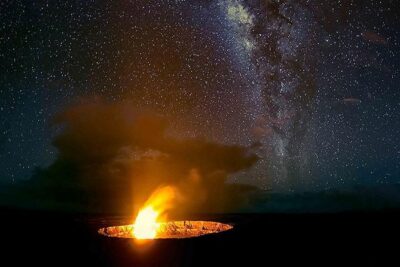 ★ 5.0Hawaii Volcanoes National Park Experience Departing from OahuFrom $589240 reviews
 ★ 4.5Day Trip from Oahu to Maui: Road to Hana AdventureFrom $664179 reviews
 ★ 4.0Day Trip from Oahu to Kauai: Waimea Canyon & Wailua RiverFrom $65471 reviews
Day Trip from Oahu to Hilo: Active Volcanoes & Helicopter TourFrom $98759 reviews
★ 4.0Day Trip from Oahu to Kauai: Waimea Canyon & Wailua RiverFrom $65471 reviews
Day Trip from Oahu to Hilo: Active Volcanoes & Helicopter TourFrom $98759 reviews
 ★ 4.0Day Trip from Oahu to Kauai: Highlights & Movie SitesFrom $65454 reviews
 ★ 4.0Day Trip Oahu to Maui: Sips, Sites and BitesFrom $68448 reviews
 ★ 4.5One Day Heavenly Hana Tour: Island Hopping from Oahu to MauiFrom $54017 reviews
Browse the lists this tour appears in